



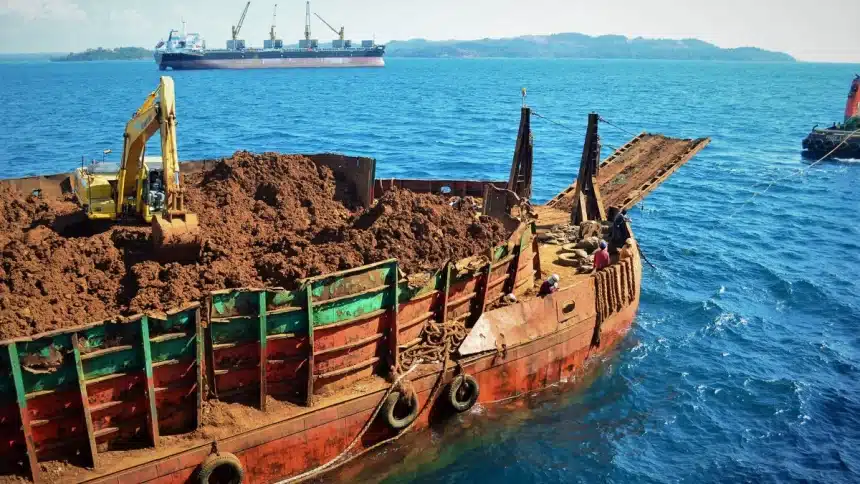
Indonesia’s nickel industry continues to grow aggressively throughout 2025 and is projected to remain a strategic sector until 2026. Smelter growth, industrial estate expansion in Sulawesi and Maluku, and the increasing global demand for raw materials for electric vehicles have significantly increased nickel shipments.
However, despite these significant business opportunities, new challenges are emerging that industry players are beginning to experience: the increasing complexity of insurance placement for high-value nickel cargo. Many companies still assume that marine cargo insurance can be handled as standard, similar to regular commodity shipments. However, nickel cargo has a much more complex risk profile, requiring specialized insurance structures and strong market capacity.
Therefore, the role of brokers in maintaining market backup, insurer capacity, and placement stability is now increasingly crucial for the modern mining and logistics industries. Furthermore, to ensure your cargo shipments have optimal protection and adequate market capacity, you can directlyGet a Premium Simulation Now for a cargo risk audit with L&G Insurance Broker experts. Contact us via WhatsApp at 0811-8507-773 or email us athalo@lngrisk.co.id.
Key Takeaway
- Indonesia’s nickel industry continues to grow throughout 2025 and is projected to remain large until 2026.
- Nickel cargo has a higher risk profile than ordinary commodities.
- Large value shipments require special placement and backup market structures.
- Many insurers are starting to be more selective about mining cargo.
- Brokers have an important role in maintaining capacity and continuity of coverage.
Indonesia’s Nickel Industry Remains Vast Through 2025
Throughout 2025, Indonesia will remain a major player in the global nickel industry. Indonesia even controls more than 60% of the world’s nickel supply following massive smelter expansion and downstream processing in recent years. This growth is driven by the growing demand of the global electric vehicle and battery industries.
According to various industry reports, Indonesia’s nickel smelter capacity in 2025 is estimated to reach around 2.5 million tons of nickel per year with more than 50 smelter facilities in operation.

In addition, significant investment from China and various global companies continues to flow into Indonesia’s nickel downstream sector, particularly for the construction of High Pressure Acid Leaching (HPAL) facilities and the production of electric vehicle battery derivatives.
This situation will cause nickel shipment activity by sea to increase significantly throughout 2025.
Nickel Industry Prospects Until 2026 Remain Very Large
Entering 2026, the prospects for Indonesia’s nickel industry are expected to remain strong, despite the global market facing oversupply pressure and price fluctuations.
Indonesia is projected to remain a global EV supply chain hub because it has:
- largest nickel reserves
- large smelter industrial area
- government downstream support
- HPAL project expansion
Several new nickel processing facilities are also expected to begin operations throughout 2026, so shipment volumes of ore, nickel matte, and MHP are projected to continue to increase.
This means that the need for marine cargo logistics for the nickel industry will likely remain very high in the next few years.
However, the larger the shipment volume, the greater the concern regarding shipping risks and insurance capacity.
Why Nickel Cargo is Considered High Risk in Marine Insurance
Many business people view nickel as simply a common mining commodity. However, from a marine insurance perspective, nickel cargo poses a much more complex risk profile than other general shipments.
Some of the underwriter’s main concerns include:
- moisture content
- cargo liquefaction
- self-heating
- vessel stability
- accumulation exposure
When the water content of the material is too high, the cargo can shift during the voyage and affect the ship’s balance.
Therefore, nickel cargo is often included in the high exposure cargo category in marine cargo underwriting.
Increasing Shipment Values Make Underwriters More Cautious
As the nickel industry grows throughout 2025 and 2026, shipment value will also increase significantly.
In one voyage, the value of cargo can reach tens to hundreds of billions of rupiah.
This condition makes insurance companies start to be more careful about:
- shipment bulk commodity
- multi-barge operation
- transhipment exposure
- accumulated risk in one voyage
Some insurers are starting to:
- reduce line capacity
- limit per shipment
- tighten underwriting
- request additional survey
This makes nickel cargo placement no longer as simple as it was a few years ago.
Not all markets are willing to bear the burden of nickel cargo.
This is a challenge that is starting to be felt by many traders, smelters, and mining logistics companies.
Not all insurance companies have an appetite for nickel cargo, especially for large-value shipments and certain routes.
Some markets are starting to be more selective because:
- high exposure of marine mining cargo
- risiko catastrophic loss
- weather exposure
- vessel condition
- volatility industri nickel
Furthermore, the global nickel market, which is still experiencing oversupply pressure, has made many insurers increasingly cautious about managing their accumulated risk in this sector.
Backup Market Becomes a Very Important Factor
In large-value cargo shipments, one insurer is often not enough to cover the entire value of the shipment.
Therefore, brokers usually need to prepare:
- co-insurance structure
- layered placement
- facultative support
- backup insurer
The goal is to ensure capacity remains available when one of the markets:
- decline
- reduce capacity
- tighten underwriting
- changing appetite for mining cargo
Without a strong market backup, large-value shipments can experience placement difficulties or even be underinsured.
The Biggest Risk Isn’t Always Cargo Sinking
Many companies focus on the risk of cargo damage or ship sinking.
In fact, in the modern nickel industry, the biggest losses often come from supply chain disruptions.
If shipment is late:
- smelters may run out of feed
- production is disrupted
- demurrage costs increase
- affected sales contracts
In the modern smelter industry, continuity of material supply is very important because operations run on a large scale and continuously.
Therefore, shipment stability is now a major concern for the industry.
The Role of Brokers Is No Longer Just to Help Policies
In modern mining cargo shipments, brokers have a far more strategic function than simply assisting with policy issuance.
Brokers help:
- looking for market capacity
- maintain backup insurer
- structure placement
- negotiation wording
- maintaining continuity of coverage
In addition, brokers also help companies understand each insurer’s appetite for nickel cargo.
In increasingly selective market conditions throughout 2025 and 2026, the broker’s relationship with the market will become a very important factor.
Why L&G Insurance Broker is Trusted in Mining Cargo Placement
L&G Insurance Broker has experience in handling marine cargo placement for the mining, energy, and commodity trading sectors.
We understand that high-value nickel cargo requires a different placement approach than regular shipments.
Therefore, we help clients:
- keep market capacity available
- structuring co-insurance
- manage multi-market placement
- coverage and wording negotiations
- marine cargo claims coordination
With a risk management-based approach and market understanding, we help companies obtain more stable and optimal protection.
Conclusion: Modern Nickel Cargo Requires a More Strategic Insurance Approach
The growth of Indonesia’s nickel industry throughout 2025 and its prospects through 2026 create enormous business opportunities. However, the larger the shipment and the greater the cargo value, the more complex the insurance protection requirements.
Nickel cargo is no longer just a typical commodity shipment. Underwriters are beginning to view it as a high-exposure cargo that requires a more specialized placement structure and market capacity.
Therefore, broker support with market access and backup capacity is a crucial factor in maintaining the sustainability of cargo protection amidst an increasingly selective underwriting market.
If you want to ensure that your nickel cargo shipment has a secure protection structure and adequate market capacity, you can immediatelyGet a Premium Simulation Now for a cargo risk audit with L&G Insurance Broker experts. Contact us via WhatsApp at 0811-8507-773 or email us athalo@lngrisk.co.id.
Get a Marine Cargo Premium Simulation Now with L&G Insurance Broker experts.
L&G 24-HOUR HOTLINE: 0811-8507-773 (Phone – WhatsApp – SMS)
Website: lngrisk.co.id
Email: halo@lngrisk.co.id