



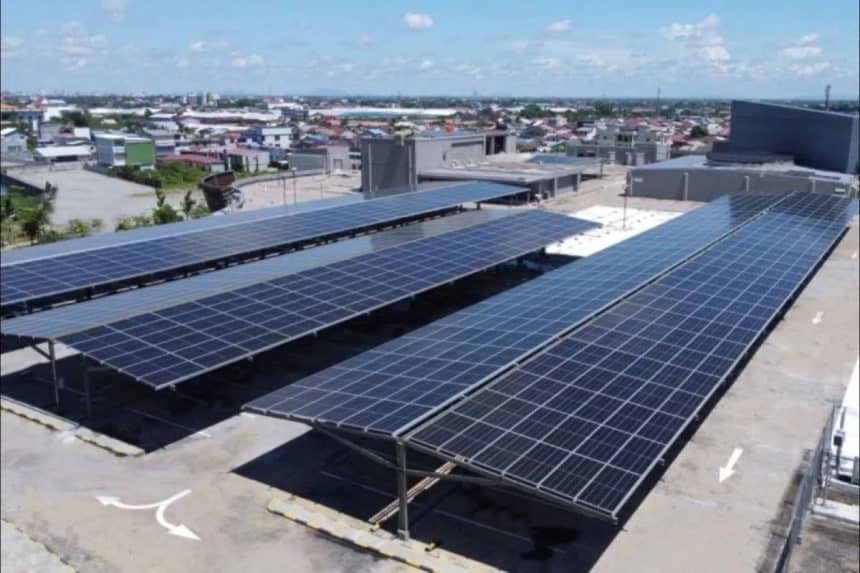
The Importance of Claims Management in the Sustainability of Solar Power Plants
Indonesia is in a crucial phase towards a clean energy transition.
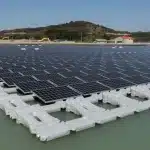
The government, through the Ministry of Energy and Mineral Resources, is targeting a solar power plant capacity of 31 GW by 2060, making it the largest renewable energy source in the country.
However, behind the enthusiasm for developing solar power plants — both in the EPC (Engineering, Procurement, Construction) and operational (Operation & Maintenance) sectors — there is one major challenge that is often overlooked:
👉how to handle insurance claims quickly, accurately, and successfully when disaster strikes.
A slow, incomplete, or improper claims process can hinder system repairs, reduce electricity production, and even threaten business sustainability.
This is where the role of insurance brokers such as PT Liberty and General Insurance Broker (L&G) becomes very important.
L&G not only helps purchase policies, but also accompanies clients throughout the claims process until payment is successfully received.
Why the Solar Power Plant Claim Process is Often a Challenge
Solar power systems, especially those with large capacities or located in industrial areas, involve many parties: project owners, EPC contractors, O&M operators, insurance companies, and other third parties.
This complexity makes the claims process often complicated and time-consuming.
Here are some of the main causes:
- Incomplete Documentation
Many projects lack adequate technical documentation or photos of damage. - Risk Identification Error in Policy
For example, fire in the inverter is not covered because it is not listed in the extension clause. - Delay in Claim Reporting
Many claims are rejected because the report was submitted after the deadline (usually 7–14 days from the incident). - Lack of Supporting Evidence for Repair Costs
Claim amounts are difficult to verify without an invoice, technician’s report, or replacement equipment quotation. - Lack of Coordination between Insurance, Loss Adjuster, and Contractor
Especially if there is no broker to regulate communication between the parties.
Therefore, managing solar power plant claims requires a professional and systematic strategy.
Common Types of Claims in Solar Power Plant Projects and Operations
In both the construction and operational phases, the risk of loss covered by insurance can give rise to claims in various forms:
|
Insurance brokers must understand this type of claim in order to help clients prepare evidence and reports that comply with the policy provisions.
Strategic Stages in Solar Power Plant Claim Management
An effective insurance claims process involves 5 main stages, all of which are facilitated by a broker such as L&G Insurance Broker:
1. Initial Notification
The first step is to report the incident as soon as possible to the insurance company and broker.
Ideally within a maximum of 3 days after the incident, even if the value of the loss is not yet known.
Basic information that must be submitted:
- Date and time of incident.
- Location of the solar power system.
- A brief chronology of events.
- Initial damage estimate.
- Supporting photos/videos.
🔹 Example:
“On January 10, 2025, a lightning strike occurred on the rooftop of the ABC factory, causing damage to the main inverter of the 500 kWp solar power plant.”
L&G will usually immediately prepare an official notification letter (Notice of Loss) to the insurance company to ensure that the reporting deadline remains safe.
2. Collection of Claim Documentation
Brokers help clients collect and prepare supporting documents according to insurance company standards, including:
- Final insurance policy and endorsement.
- Technical damage report from contractor or technician.
- Invoice and quotation of repair costs.
- Photos of the damage before and after repair.
- Minutes from local security or agencies (if relevant).
💡 Notes:
L&G uses LIGASYS’s internal digital system, which allows all claim documents to be uploaded and tracked online — ensuring transparency and efficiency of the process.
3. Survey and Investigation (Survey & Adjustment)
The insurance company will appoint an independent loss adjuster to verify the damage and its cause.
The broker’s job is to accompany the client at this stage to ensure there is no technical miscommunication.
L&G’s role at this stage:
- Provide technical data of the solar power system (panel specifications, inverter, capacity).
- Explain the chronology of events in detail.
- Ensure all damage items are recorded by the surveyor.
- Clarifying the difference between defects And insured peril so as not to misclassify.
4. Claim Evaluation & Negotiation
After the investigation results are out, the broker will compare the loss adjuster’s report with the policy provisions.
If there are any deductions or exceptions that are not appropriate, the broker will ask for clarification or renegotiation.
Example intervention broker:
“Damage to the inverter due to lightning strikes should be covered, because the policy includes an extension.Lightning and Power Surge, which applies to the entire PLTS electrical system.”
With a professional approach, brokers can minimize claim deductions and speed up payment decisions.
5. Claim Settlement and Payment
After all documents and evaluations are approved, the insurance company will issue a Letter of Acceptance and make payment according to the agreed value.
Brokers like L&G ensure payments are received on time and help clients:
- Prepare a final claim report.
- Provide technical recommendations to prevent similar incidents from recurring.
- Update the insurance value if there is a new component replacement.
Case Study: Successful Claims Due to Broker Assistance
Case 1 – Industrial Solar Power Plant in Karawang
A 1 MWp solar power plant on the factory roof experienced a minor fire in the inverter due to a power surge.
Total loss: Rp. 420 million.
Without a broker, the previous project owner had a claim denied because “internal electrical damage is not covered.”
But this time, with the assistance of PT Liberty and General Insurance Broker (L&G):
- L&G helpfully points out that the policy has a “Power Surge Extension” clause.
- Loss adjuster re-verifies.
- Claims are paid in full within 28 working days.
As a result, the system was back up and running, and the plant did not lose more than 3 days of productivity.
Case 2 – 2 MW Solar Power Plant EPC Project in Sulawesi
During the construction phase, a solar panel was broken by a forklift while unloading at the port.
Damage value: Rp. 300 million.
L&G immediately reported the claim to the insurance company that covered Marine Cargo & Erection All Risks (EAR).
Within 3 weeks, the claim was fully approved because all evidence was collected completely from the start.
Common Mistakes to Avoid in Solar Power Plant Claims
- ❌Delaying reporting because I want to calculate the exact value first.
- ❌Do not keep visual evidence (photos/videos) at the scene of the incident.
- ❌Not understanding the policy exclusion clauses.
- ❌Replacing components without surveyor’s approval.
- ❌Do not involve the broker in communication with the loss adjuster.
Brokers like L&G ensure the entire process is carried out according to policy procedures and prudent principles, so the chances of a claim being approved are much greater.
The Strategic Role of PT Liberty and General Insurance Broker (L&G) in Claims Management
L&G is not only an insurance consultant, but also a professional claims manager with experience in energy, EPC and infrastructure projects.
L&G’s specialized services in claims management:
- 📞24-hour hotline for reporting energy project emergency claims.
- 📂LIGASYS digital system for online claims tracking.
- 🤝Direct coordination with loss adjusters, insurers, and EPC parties.
- 📑Review the policy wording to ensure the solar PV risks are covered correctly.
- ⚡Technical and legal advocacy in case of differences in interpretation in the policy.
With this approach, L&G is able to maintain the project’s reputation and client trust.
L&G Tips for Speeding Up Solar Power Claims
- Create complete documentation from the start of the project.
Keep all invoices, contracts, and technical specifications of the solar power system. - Report every incident, no matter how small.
It is better to report and follow up than to be late. - Involve the broker from the start of policy design.
So that all potential risks are explicitly guaranteed. - Maintain active communication with the loss adjuster.
Provide all technical information transparently. - Conduct an annual policy review.
To ensure that the coverage and risk remain relevant.
The Added Value of Professional Claims Management for Solar Power Plants
Real benefits gained from professional claims management:
| Benefit | Impact on Project |
|---|---|
| 🕒Fast claim process | Shorter system recovery time |
| 💰Optimal claim payment | Fully covered financial losses |
| 📈Project credibility increases | Investors and lenders have more confidence |
| 🔧Recurrence risk can be prevented | The project is getting more and more reliable technically |
| 🤝Good relationship with insurer | The next policy premise could be more efficient |
Conclusion: Solar Power Plant Insurance Claims Must Be Managed Professionally
Claims are not just an administrative process — they are a true test of the effectiveness of a solar power project’s risk management.
With the support of competent insurance brokers such as PT Liberty and General Insurance Broker (L&G), the entire claims process can be:
- Run fast and transparent,
- Provide optimal payment results, and
- Maintaining the operational sustainability of clean energy projects.
Solar power plants are a long-term investment for Indonesia’s energy future.
Insurance protects it, and brokers like L&G make sure that protection actually works when needed.
—
DON’T WASTE YOUR TIME AND SECURE YOUR FINANCES AND BUSINESS WITH THE RIGHT INSURANCE.
HOTLINE L&G 24 JAM: 0811-8507-773 (PHONE – WHATSAPP – SMS)
Website: lngrisk.co.id
Email: halo@lngrisk.co.id
—