



Various events in the insurance industry have once again been in the spotlight this week. From regulatory developments, strengthening public protection, to law enforcement in the insurance sector, all demonstrate that risk management and good governance are increasingly becoming priorities.
On the other hand, the growth of industry assets, the planned implementation of the Policy Guarantee Program, and the adoption of new accounting standards are positive signals for increasing transparency and public trust in the Indonesian insurance industry.
Here is a summary of 7 latest insurance news which needs to be of concern to business actors, risk management practitioners, and the public.
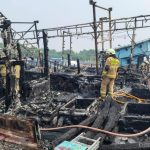
Jagadiri Insurance Provides Free Protection for 1,016 Firefighters
The firefighting profession carries a high level of occupational risk, ranging from exposure to extreme temperatures, toxic fumes, and the potential for accidents while performing their duties. These conditions make financial protection through insurance a crucial need to provide a sense of security for workers and their families.
As a token of its commitment to high-risk professions, Jagadiri Insurance provides premium-free personal accident insurance coverage to 1,016 firefighters in South Jakarta. This program also includes financial literacy and inclusion activities to support the implementation of OJK Regulation No. 3 of 2023 concerning the Improvement of Financial Literacy and Inclusion.
During the event, participants received education on the importance of financial management, including the application of the 50-30-20 budget allocation principle for basic needs, personal expenses, savings, and financial protection. Additionally, participants received one month of personal accident insurance through the Jaga Aman product, which provides compensation for death due to accidents and reimbursement of hospital care costs according to the policy terms.
Not only that, Jagadiri Insurance also collaborates with Brawijaya Hospital to provide servicesmini medical check-upFree for 100 officers. This program is expected to raise awareness of the importance of financial and health protection, while also recognizing the officers who are on the front lines protecting the public every day.
OJK: Non-Bank Financial Industry Performance Remains Solid Through June 2026
The Financial Services Authority (OJK) reported that the performance of the Non-Bank Financial Industry (IKNB) and the digital financial asset ecosystem continued to show positive growth until June 2026. This condition reflects the resilience of the non-bank financial sector amidst economic dynamics and developments in financial technology.
In the insurance sector, total industry assets reached Rp1,184 trillion, a 1.86% increase compared to the same period last year. Capitalization-wise, the insurance industry remains healthy, with a Risk-Based Capital (RBC) ratio for life insurance of 461.94% and a Risk-Based Capital (RBC) ratio for general insurance and reinsurance of 318.52%. Both figures remain well above the regulatory minimum of 120%.
In the pension fund sector, total assets reached Rp1,680.5 trillion, representing 6.47% year-on-year growth. Meanwhile, the financing industry also demonstrated stable performance, with growth in financing receivables and a manageable risk level.
Furthermore, the development of digital assets continues to grow. As of June 2026, the number of crypto asset investors reached 22.69 million, with a transaction value of IDR 28.58 trillion. The Financial Services Authority (OJK) assesses that these various indicators demonstrate that the non-bank financial industry (IKNB) and digital financial assets sectors still possess strong fundamentals and have the potential to support the sustainable growth of the national financial services industry.
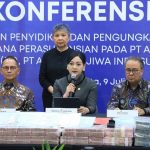
The Financial Services Authority (OJK) and the Indonesian Deposit Insurance Corporation (LPS) are finalizing the policy guarantee program, with premiums deemed to be a reasonable burden for customers.
The Financial Services Authority (OJK), along with the Deposit Insurance Corporation (LPS), continues to prepare for the implementation of the Policy Guarantee Program (PPP), as mandated by the Financial Sector Development and Strengthening Law (P2SK). This program aims to improve protection for policyholders while strengthening the stability of the insurance industry.
The government is currently drafting a draft government regulation (RPP) that will serve as the basis for implementing the program. Following this, the Financial Services Authority (OJK) and the Deposit Insurance Corporation (LPS) will develop technical regulations, including insurance company participation requirements, guarantee mechanisms, and provisions regarding the contributions required by participating companies.
The Financial Services Authority (OJK) emphasized that it is too early to conclude whether the guarantee fee will increase insurance premiums. Meanwhile, the Indonesian Deposit Insurance Corporation (LPS) believes the planned premium burden is relatively small and should not be directly passed on to policyholders. Simulations show that the periodic premium will only reach around Rp3,000 per semester for policies with certain premiums, so the impact on insurance coverage costs is considered very limited.
Through the Policy Guarantee Program, the government hopes to increase public trust in the insurance industry, provide better protection for policyholders, and strengthen the resilience of the national financial system. Implementation of this program is targeted to begin in 2027, once all supporting regulations have been finalized.
PSAK 117 Changes the Way Insurance Companies Read Financial Reports
The implementation of PSAK 117 brings significant changes to the presentation of financial statements for insurance companies in Indonesia. This new accounting standard does not change the business model or insurance products, but rather changes the way companies measure and report their financial performance to better reflect the true economic conditions.
One of the major changes is that premium income will no longer be used as the primary indicator in the income statement. Instead, the company will present insurance revenue, namely income that reflects the protection services that have been provided to policyholders during the current period. In addition, indicators such asInsurance Service Result (ISR), Contractual Service Margin (CSM), and Risk Based Capital (RBC)become an important reference in assessing the health and profitability of a company.
PSAK 117 also provides a clearer distinction between profits from insurance activities and investment returns. This allows investors, regulators, and the public to more transparently understand the sources of a company’s profits.
In addition to improving the quality of financial reporting, the implementation of PSAK 117 creates a more stable profit recognition pattern throughout the policy term. This standard also aligns the reporting practices of Indonesian insurance companies with international standards, facilitating performance comparisons with global insurers and increasing transparency and trust in the national insurance industry.
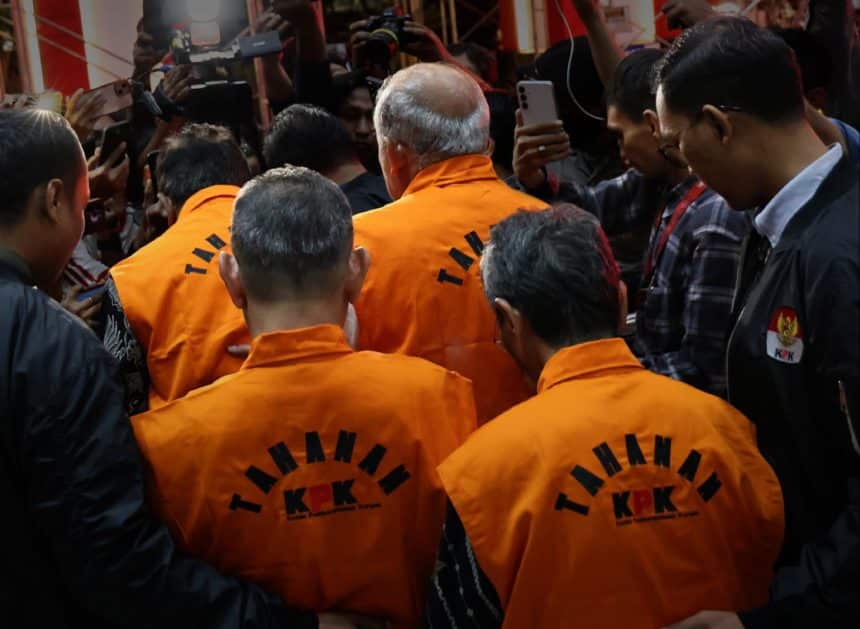
The Corruption Eradication Commission (KPK) has detained four suspects in the alleged corruption case involving PT Pelni’s ship insurance.
The Corruption Eradication Commission (KPK) has arrested four suspects in an alleged corruption case involving PT Pelayaran Nasional Indonesia (PT Pelni) in the procurement of ship insurance services involving PT Asuransi Jasa Indonesia (Jasindo) from 2015 to 2020. The case relates to alleged fictitious agent commission payments in shipping insurance contracts totaling Rp 263 billion.
Based on the investigation, PT Jasindo was directly appointed as an insurance provider to protect PT Pelni’s vessels from various risks, such as sinking, capsizing, and fire. However, commission payments were allegedly made to several insurance agents who failed to provide the services they were supposed to.
A significant portion of the commission funds is suspected of being returned and then channeled to several parties who have now been named suspects. According to calculations by the Financial and Development Supervisory Agency (BPKP), the alleged misappropriation resulted in state losses of approximately Rp15.6 billion.
The four suspects were charged under the Corruption Eradication Law. This case is part of law enforcement efforts to strengthen governance and transparency in insurance services, particularly in the state-owned enterprise (SOE) sector, while also encouraging more accountable and integrity-based business practices.
OJK: Middle East Unrest Has Not Had a Significant Impact on Marine Cargo Insurance
The Financial Services Authority (OJK) stated that geopolitical uncertainty in the Middle East, including the situation around the Strait of Hormuz, has not yet significantly impacted the marine cargo insurance industry in Indonesia. National insurance companies continue to provide coverage for shipments through the region by implementing risk management adjustments based on evolving conditions.
According to OJK, insurance companies continue to carry out risk assessment to determine appropriate mitigation measures. These adjustments can include changes to policy terms and conditions, premium rate adjustments, and strengthening reinsurance programs to ensure ongoing protection against shipping risks.
Overall, the impact of the Middle East conflict on the national insurance industry remains relatively limited, as Indonesia’s marine cargo business portfolio is largely dominated by domestic and regional trade activities. As of May 2026, gross premiums from the marine cargo business line were recorded at approximately IDR 1.97 trillion, despite a 7.36% decrease compared to the same period the previous year.
On the other hand, the Financial Services Authority (OJK) views increased international trade activity as a potential growth opportunity for marine cargo and trade credit insurance. However, insurance companies are urged to maintain prudential principles, strengthen risk management, and ensure adequate reinsurance to withstand global economic dynamics and geopolitical uncertainty.
OJK: Insurance Industry Assets Reach Rp1,184 Trillion, Capital Remains Strong
The Financial Services Authority (OJK) reported that the Indonesian insurance industry continued to demonstrate good resilience until June 2026. Amid global economic uncertainty, the sector continued to record asset growth and maintained strong capital levels to support industry stability.
Total insurance industry assets reached Rp1,184.72 trillion, a 1.86% increase compared to the same period last year. In terms of solvency, the industry remains healthy.Risk Based Capital (RBC)Life insurance reached 461.94%, while general insurance and reinsurance were at 318.52%. Both ratios far exceed the 120% minimum set by the Financial Services Authority (OJK), reflecting the insurance company’s ability to meet its obligations to policyholders.
In addition to the insurance sector, the pension fund industry also recorded positive growth. Total pension fund assets reached Rp1,680.57 trillion, a 6.47% year-on-year increase, while voluntary pension fund assets grew 4.06% to Rp407.33 trillion.
On the other hand, the insurance company sector continues to face challenges, with total assets declining 3.05% to Rp 45.83 trillion. Nevertheless, the Financial Services Authority (OJK) assesses that the insurance, pension fund, and guarantee sectors remain fundamentally sound and capable of maintaining the stability of the non-bank financial services industry in Indonesia.
Conclusion
VariousThe above developments demonstrate that the insurance industry continues to move toward a more transparent, robust, and policyholder-focused system. However, despite these various regulations and industry dynamics, every individual and company must ensure that their risk management strategies are appropriately formulated to meet their needs.
As independent insurance brokers and consultants, L&G Insurance BrokerWe’re ready to help you identify risks, select the appropriate protection program, and provide professional assistance during the claims process. With the right solution, risks can be optimally managed, ensuring your business and assets remain protected in the face of uncertainties.
Want to make sure your insurance protection is optimal?
Contact L&G Insurance Broker now and discuss your risk management needs with our professional team.