



A series of major accidents and incidents has once again rocked various sectors in Indonesia, from transportation and manufacturing to small businesses and healthcare facilities to public utilities. From fatal toll road accidents and warehouse and factory fires to workplace accidents that claimed lives, all of these incidents point to a common thread: real operational risks that often result in significant loss of life, assets, and business disruption. In this edition of 7 Shocking Accidents in Indonesia, we summarize the most crucial incidents and objectively examine their risk implications, including key lessons related to safety management and the need for adequate insurance coverage.
A trailer truck’s metal load broke loose on the Batang-Semarang toll road, killing a passenger and injuring a 7-year-old boy.
A fatal accident occurred on the Batang–Semarang Toll Road, KM 354+200, lane A, in Karanggeneng Village, Kandeman District, Batang Regency, Central Java, on Sunday (January 4, 2026) at around 10:22 a.m. Western Indonesian Time. The incident involved a Hino trailer truck loaded with iron, a Toyota Voxy minibus, and a Mercedes-Benz sedan.
According to police, the accident was caused by a malfunction in the trailer’s steering system, which caused the vehicle to veer to the right and collide with two cars traveling in the same direction. The truck then struck the median, releasing its metal load and crushing the two cars.
The incident killed one passenger in the Toyota Voxy and injured five others, including a 7-year-old child. All victims were rushed to Batang Regional Hospital and QIM Batang Hospital. Police have detained the truck driver for further investigation.
Risk Accident Review
This accident highlights the significant risks involved in transporting heavy loads on toll roads, particularly due to technical vehicle failures and suboptimal load securing. Steering system failures increase the potential for a series of fatal accidents, particularly when a heavy load breaks free and strikes another vehicle. The risks include fatalities, serious injuries, damage to third-party vehicles, traffic disruption, and significant exposure to lawsuits for truck owners and logistics companies. This incident underscores the importance of vehicle maintenance, load securing standards, and comprehensive insurance coverage.
Types of Insurance Needed
- Motor Vehicle Insurance (All Risk & TLO): Covers vehicle damage due to collision.
- Third Party Liability (TPL): Bear legal responsibility for damage and injury to third parties.
- Marine Cargo Insurance (Inland Transit): Protecting iron cargo during the land shipping process.
- Personal Accident Insurance: Compensation for drivers, passengers and accident victims
Two Buses Collide on the Jakarta-Cikampek Toll Road This Morning Due to Failure to Maintain Distance
A multiple-vehicle traffic accident occurred on the Jakarta–Cikampek toll road heading towards Jakarta, just before the West Cikarang toll gate, on Monday (January 5, 2026) at around 5:00 a.m. Western Indonesian Time. The incident involved four vehicles, two buses and two private cars, a Honda Brio and a Nissan.
According to AKP Aris, Head of the Cikampek Toll Road Road Safety and Road Safety Unit, the accident began when two private vehicles in lane three slowed down. The bus driver, who was behind, allegedly failed to maintain a safe distance and was startled, crashing into the vehicle in front. The collision triggered a chain reaction involving all vehicles.
There were no fatalities in this incident. One person reportedly suffered minor injuries and is receiving outpatient treatment. The accident caused traffic congestion. The case has been handed over to the Bekasi Regency Police Traffic Accident Unit.
Risk Accident Review
This accident illustrates the high risk associated with failing to maintain a safe following distance, particularly for large vehicles such as buses, which have longer braking distances. Heavy traffic during rush hour increases the potential for a cascade of reactions when a single vehicle suddenly slows down. Key risks include passenger injuries, damage to third-party vehicles, disruption to fleet operations, and potential liability claims. While this incident did not result in fatalities, it has the potential to result in significant repair costs and potential claims. Risk management through driver training and insurance coverage is crucial.
Types of Insurance Needed
- Motor Vehicle Insurance (All Risk / TLO)
Covers vehicle damage due to multiple collisions. - Third Party Liability (TPL)
Covers damage and injury to third parties due to driver negligence. - Commercial Vehicle Insurance (Bus Insurance)
Special protection for the operational bus fleet. - Personal Accident Insurance
Provide compensation for passengers and drivers. - Passenger Legal Liability
Legal protection against bus passenger claims.
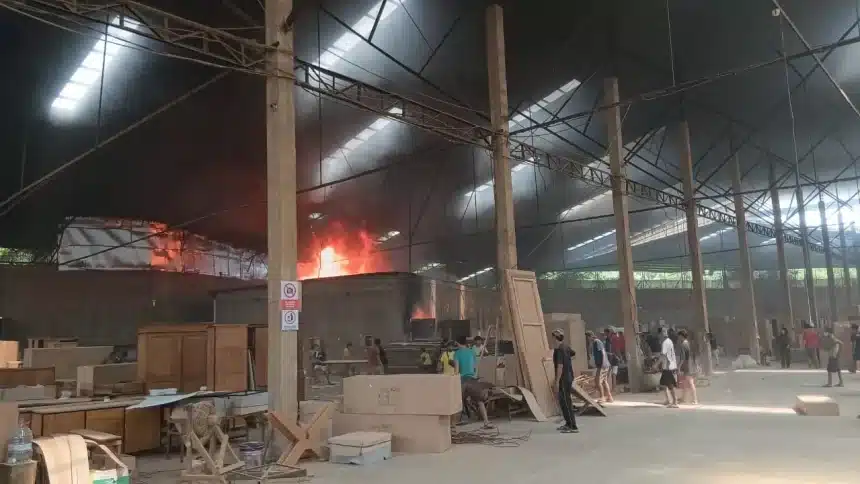
Jepara Furniture Warehouse Burns Down, Losses Exceed Rp20 Billion, Allegedly Due to Welding Activities
A furniture warehouse belonging to PT Pijar Sukma, located in Kecapi Village, Tahunan District, Jepara Regency, was hit by a massive fire on Tuesday afternoon (January 6, 2026). The incident resulted in no casualties, but material losses are estimated at around Rp 20 billion.
According to Jepara Police Public Relations Chief, AKP Dwi Prayitna, the fire destroyed various company assets, including furniture products, six containers ready for export, packed goods, furniture accessories, production equipment, a warehouse building, and other property. The fire was discovered around 5:00 p.m. WIB (Western Indonesian Time) after the fire alarm sounded after employees had finished work.
Initial suspicions suggest the fire was sparked by welding work on the stairs on the second floor prior to the incident. Thirteen fire trucks were involved in the firefighting effort and were finally brought under control around 8:00 p.m. WIB, with cooling operations continuing.
Risk Accident Review
This incident highlights the high risk of fire in the furniture manufacturing and warehousing industries, particularly those involving flammable materials such as wood, chemical finishing, and packaging. Unsupervised welding activities have the potential to ignite sparks that can spread rapidly. Key risks include the loss of physical assets, ready-to-sell inventory, supply chain disruptions, delays in export shipments, and potential third-party claims. Without adequate insurance protection, companies can experience significant financial pressure and disrupt business continuity. Implementing hot work permits, active fire protection systems, and comprehensive insurance are crucial.
Types of Insurance Needed
- Property All Risks Insurance (PAR)
Covers damage to buildings, machinery and warehouse contents due to fire. - Stock & Inventory Insurance
Protecting finished goods, semi-finished goods, and ready-to-ship stock. - Business Interruption (BI) Insurance
Covering losses due to post-fire operational cessation. - Marine Cargo Insurance
Ensure containers and goods are ready for export during transportation. - Public Liability Insurance
Protects against third party claims due to the impact of fire.
A home-based macaroni factory in Ciamis was completely destroyed by fire while residents were asleep. The production furnace is suspected to be the cause of the fire.
The calm atmosphere in the early morning of Cikatomas Hamlet, Gunungsari Village, Sadananya District, Ciamis Regency, suddenly turned into panic after a house used as a macaroni factory was engulfed in flames on Tuesday (January 6, 2026) at around 2:00 a.m. WIB. The permanent building, measuring approximately 10 x 15 meters, caught fire while most residents were still asleep.
Residents only became aware of the fire after hearing explosions from inside the building. The flames quickly spread and completely destroyed the home factory. Budi Rahmat, Head of the Fire and Rescue Division of the Ciamis Public Order Agency (Satpol PP), confirmed the incident and stated that officers received the report at around 3:15 a.m. Western Indonesian Time from the Head of the Cikatomas Hamlet.
Initial suspicions stated that the source of the fire came from the frying stove used in the macaroni production process.
Risk Accident Review
This fire reflects the high operational risks inherent in home industries, particularly food businesses that use hot stoves and cooking oil. Integrated production operations with residential areas increase the potential for total losses in the event of a fire. The main risks include damage to buildings, production equipment, and raw materials, as well as business interruption, which directly impacts family income. The lack of fire protection systems, furnace monitoring, and the absence of production safety procedures exacerbate the risk. Insurance coverage and the separation of production areas from residential areas are crucial factors in risk mitigation.
Types of Insurance Needed
- All Risk Property Insurance
Guaranteeing homes and production buildings from fire risks. - Business Interruption Insurance
Covers loss of income due to business closures following a fire. - Public Liability Insurance
Anticipate claims if the fire impacts the surrounding environment.
PDAM Officer Dies After Being Swallowed by Current While Closing Floodgate
An employee of the Regional Drinking Water Company (PDAM) of Toba Regency, North Sumatra, named Darwin Hutapea (39), died due to a work accident while carrying out his duties on Sunday (4/1/2025) at around 09.00 WIB. The incident occurred at the Sampuran Aek Sidua Dua spring, Sintong Marnipi Village, Laguboti District.
The victim and four of his coworkers were ordered to repair a damaged transmission pipe. Darwin was assigned to close the floodgates at the spring, while the other coworkers connected the pipes. After the job was completed, the victim failed to return. Upon examination, Darwin was found dead, suspected to have been sucked into the strong current. Police stated that the victim’s legs were likely sucked away by the strong current during the process of closing the floodgates.
Risk Accident Review
This accident highlights the high occupational risks in the water utilities sector, particularly activities in spring areas with strong pressure and currents. Key risks include drowning, being swept away, and failure to properly perform safety procedures. The lack of safety equipment, water flow lockout systems, and multiple layers of supervision increase the potential for fatalities. Technical activities in open and wet areas require strict occupational safety and health standards, including lockout procedures, personal protective equipment, and worker protection insurance. Without adequate mitigation, the risk of fatal workplace accidents is very high.
Types of Insurance Needed
- Work Accident Insurance
Guarantees compensation for death and injury due to work accidents. - Personal Accident Insurance
Provides additional benefits outside of BPJS. - Legal Liability Insurance
Anticipating lawsuits from heirs due to work safety negligence. - Employee Health Insurance
For medical protection for high-risk field workers.
A Palmerah restaurant’s kitchen was nearly gutted! A leaking gas cylinder sparked an early morning fire.
A restaurant located on Jalan Kota Bambu Selatan, Kota Bambu Selatan Village, Palmerah District, West Jakarta, caught fire on Friday morning (January 2). The fire was extinguished by officers from the West Jakarta Fire and Rescue Department (Gulkarmat) without any casualties.
Syaiful Kahfi, Head of Operations at the West Jakarta Fire and Rescue Sub-dept., stated that the fire was reported at around 7:00 a.m. Western Indonesian Time (WIB), when the flames had already spread. Ten fire trucks and 50 personnel were immediately dispatched to the scene. The blaze, which covered an area of approximately 50 square meters, was contained within 15 minutes, and the extinguishing process was declared complete at 7:43 a.m. Western Indonesian Time (WIB).
The initial suspicion is that the fire was triggered by a gas cylinder leak due to the rubber valve not being installed properly during cooking.
Risk Accident Review
This restaurant fire highlights the high fire risk in culinary businesses that use LPG cylinders as their primary energy source. A simple technical error, such as improperly installing a valve, can trigger a gas leak and a fire explosion within a short time. The main risks include damage to the building and kitchen equipment, operational disruption, and potential third-party claims if the fire spreads to the surrounding area. The swift response of officers prevented further losses. However, this incident highlights the importance of kitchen safety standards, employee training, regular inspections, and adequate insurance coverage.
Types of Insurance Needed
- Fire Insurance (Property Insurance)
Guaranteeing buildings and business assets from the risk of fire. - Business Contents Insurance / Equipment Insurance
Protects kitchen equipment, machinery and restaurant supplies. - Restaurant Business Insurance (Package Policy)
Special protection package for the culinary sector. - Public Liability Insurance
Anticipating claims of environmental damage. - Business Interruption Insurance
Covers loss of income during business interruption due to fire.
Dr. Harjono Regional Hospital’s Pharmacy Warehouse Burns Down! Emergency Room Temporarily Closed, Nearly Affecting Medicines
A fire broke out at Dr. Harjono Regional Hospital on Sunday afternoon (January 4, 2026), specifically in the pharmaceutical warehouse located on the west side of the Emergency Department (IGD). The fire was first spotted around 4:00 p.m. WIB by security personnel and immediately reported for further action.
The Acting Director of Dr. Harjono Regional Hospital, Dr. Made Jeren, explained that the burned area was predominantly filled with cardboard and paper, including prescription papers and receipts, so medical supplies were relatively safe. To prevent smoke from entering, the emergency room was temporarily closed without any patient evacuation.
Firefighters received a report at around 4:45 PM WIB and deployed four fire trucks. The firefighting effort was hampered by thick smoke and damaged glass partitions. Initial suspicions point to an electrical short circuit as the cause of the fire, but the results of the crime scene investigation are still pending.
Risk Accident Review
Fires in hospital environments are a critical risk because they affect patient safety, the continuity of medical services, and the protection of vital assets such as medicines and medical equipment. Pharmaceutical warehouses store flammable materials such as cardboard, paper, and alcohol, which can accelerate the spread of fire. Although there were no fatalities, the incident impacted emergency room operations and disrupted service systems. Further risks include damage to medical supplies, potential smoke contamination, third-party claims, and disruption to public services. This incident underscores the importance of fire risk management, electrical audits, and comprehensive insurance coverage in healthcare facilities.
Types of Insurance Needed
- Fire & Property All Risks Insurance
Protecting hospital buildings and supporting facilities. - Pharmaceutical Contents & Stock Insurance
Guaranteeing medicines, medical materials and pharmaceutical supplies. - Business Interruption (BI) Insurance
Covering potential losses due to disruption of hospital operations. - Public Liability Insurance
Anticipate claims from affected patients or visitors. - Electrical & Machinery Breakdown Risk Insurance
Protection against damage due to short circuits and system failures.
This string of incidents highlights that the risk of accidents, fires, and operational failures is not merely a possibility, but a real threat that can occur at any time across all lines of activity. Without disciplined risk management, stringent safety standards, and appropriate insurance protection, the financial and legal impact of an incident can far exceed initial estimates. More than just news, each incident serves as an important reminder for companies, businesses, and public institutions to re-evaluate their work safety systems, operational procedures, and the adequacy of insurance coverage. Amidst the increasing complexity of risks, preparedness and prevention are key to maintaining business continuity and human safety.
—
DON’T WASTE YOUR TIME AND SECURE YOUR FINANCIAL AND BUSINESS WITH THE RIGHT INSURANCE.
HOTLINE L&G 24 JAM: 0811-8507-773 (CALL – WHATSAPP – SMS)
Website: lngrisk.co.id
Email: halo@lngrisk.co.id
—