



The construction industry is one of the sectors with the largest investment value in Indonesia. Every year, various infrastructure projects, industrial estates, power plants, smelters, ports, commercial buildings, and manufacturing facilities are built, worth billions or even trillions of rupiah.
However, behind the potential for large profits, this industry also carries various risks that can cause significant financial losses.
Many contractors and project owners focus on material costs, labor costs, heavy equipment productivity, and work schedules. However, in many cases, the primary cause of project cost overruns stems from risks not considered from the outset.
One overturned piece of heavy equipment, one serious work accident, or one third-party lawsuit can turn a profitable project into a loss-making one.
So, what are the risks that most often cause major losses in construction projects?

1. Damage to Work Under Construction
The first and most common risk is physical damage to ongoing construction work.
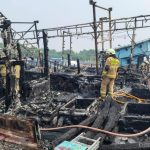
Damage can be caused by various factors such as fire, flood, landslide, earthquake, strong wind, installation errors, and failure of work methods.
Imagine a building project that’s 70% complete, then a fire breaks out in a specific area, requiring partial demolition and rebuilding. In addition to repair costs, the project will also face schedule delays and additional operational costs.
In large-scale projects, losses due to rework can reach billions of rupiah in a short time.
2. Work Accidents that Stop Project Activities
The construction industry is known as one of the sectors with a high risk of work accidents.

Activities at heights, lifting work, use of heavy equipment, electrical installations, and complex field conditions create various potential hazards for workers.
When a serious accident occurs, the impact is not only medical costs or compensation to the victim.
Companies may also face temporary work stoppages, regulatory investigations, decreased productivity, and reputational damage that can affect their chances of winning future projects.
The larger the project being undertaken, the greater the potential losses that can arise from a single work safety incident.
3. Heavy Equipment Damage Worth Billions of Rupiah
Heavy equipment is a vital asset in almost every construction project.
Excavators, crawler cranes, mobile cranes, wheel loaders, dump trucks, and various special equipment have a very large investment value.
Common risks include:
- Overturning
- Collision
- Fire
- Falling
- Damage during lifting operation
- Damage due to work field conditions
In some cases, a single crane failure can result in losses of tens of billions of rupiah, not including the cost of project delays caused by the crane being out of service during repairs.
For contractors, heavy equipment risks are not only an asset issue, but are also directly related to the continuity of project operations.
4. Project Delays That Erode Profit Margins
Many contractors dismiss project delays as technical issues. However, the financial impact can be far greater than anticipated.
Delays can be caused by:
- Extreme weather
- Heavy equipment damage
- Material delay
- Supply chain disruption
- Work accident
- Design changes
When a project is late, field overhead costs continue to accrue. Labor still has to be paid, heavy equipment must continue operating, and in some contracts, there’s even the risk of late fees or liquidated damages.
Not a few projects lose most of their profits just because they are delayed by a few months.
How Much Loss Might Occur?
The following is an overview of potential losses that are often found in construction projects:
| Risk | Potential Losses |
| Excavator badly damaged | Rp. 500 million –Rp5 billion |
| Crane had an accident | Rp5 billion – Rp50 billion |
| Damage to construction work | Rp1 billion – Rp100 billion |
| Project delays | Billions of rupiah |
| Third party claims | Rp1 billion – Rp20 billion |
This value will of course differ for each project, but it is sufficient to illustrate how large the financial impact can be.
5. Third Party Lawsuits
Not all project losses result from physical damage.
In many cases, losses actually arise due to claims from third parties affected by construction activities.
For example:
- The surrounding buildings experienced cracks due to piling.
- Vehicles hit by project materials
- Injuries to visitors or local people
- Damage to public facilities
When lawsuits arise, companies face not only compensation costs but also legal fees and potential reputational damage.
Risks like these often receive less attention at the project planning stage.
6. Damage to Materials and Equipment During Transportation
Many modern projects use materials and equipment that come from different regions and even different countries.
Generators, transformers, turbines, steel structures, and heavy equipment must undergo a lengthy transportation process before arriving at the project site.
During this process there are various risks such as:
- Vehicle accident
- Damage during loading and unloading
- Bad weather
- Lost items
- maritime accident
A single incident during the delivery process can cause losses of tens of billions of rupiah and delay the overall project schedule.
7. Contract and Financial Risks
Not all project failures are caused by technical factors.
Many projects experience problems due to contractual and financial risks, such as:
- Late payment from the owner
- Vendor fails to fulfill obligations
- Subcontractor did not complete the work
- Contract disputes
These risks often cause cash flow disruptions that have a direct impact on the company’s ability to carry out projects.
Therefore, contract risk evaluation and due diligence of work partners are important parts of project risk management.
Why Many Losses Could Actually Be Prevented?
While most construction risks cannot be completely eliminated, they can be identified, controlled, and mitigated before they cause significant losses.
Construction companies that have a good risk management system are generally better prepared to face various unexpected events than companies that only focus on the technical aspects of the project.
This is the reason why risk management is increasingly becoming a major concern in modern construction projects, especially in the infrastructure, energy, industrial, mining and EPC sectors.
Conclusion
The success of a construction project is not only determined by the ability to complete work on time or win tenders at competitive prices.
Success is also determined by the ability to manage risks that may arise throughout the project cycle.
Damage to construction work, work accidents, heavy equipment damage, project delays, third-party claims, material damage during transportation, and contract risks are the factors that most often cause losses of billions of rupiah.
Companies that are able to identify and manage risks early on generally have a greater chance of maintaining project profitability and long-term business continuity.
Need a Construction Project Risk Assessment Checklist?
Before starting your next project, make sure all risk exposures have been properly evaluated.
The L&G Insurance Broker team provides initial consultations regarding risk identification for construction projects, heavy equipment, Marine Cargo, and legal liability to third parties.
📧 Email: halo@lngrisk.co.id
📱 WhatsApp: 0811-8507-773