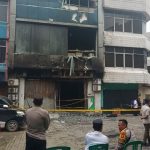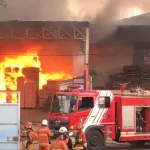





A series of fire incidents, traffic accidents, and workplace accidents that occurred in the past week have once again shaken the public attention and the risk management industry in Indonesia. From the fatal fire at the Terra Drone Building in Jakarta that killed dozens of people, to the blaze at an oil warehouse and electric vehicle facility, to the series of truck accidents and vehicle fires on toll roads—all of these events demonstrate the increasing risk exposure to assets, people, and business operations. The following series of incidents not only caused billions of rupiah in material losses but also exposed serious gaps in safety, technical oversight, and risk mitigation readiness across various business and transportation sectors.
Floods Are Increasingly Brutal, Insurance Claims Explode: Indonesia Re Reveals Real Threat of Disasters by 2025
The increasing frequency and severity of natural disasters throughout 2025 underscores the crucial role of disaster insurance in maintaining the financial resilience of communities and businesses. Indonesia now faces escalating risks of floods, earthquakes, and fires triggered by climate change, with the impact of losses increasing year after year.
Indonesia Re’s Technical Operations Director, Delil Khairat, stated that the surge in natural disasters in 2025 represents a continuation of a long-term trend, particularly hydrometeorological disasters. Large claims were recorded in various regions, from Jakarta and its surroundings to Bali, peaking in Sumatra. Floods in Aceh, North Sumatra, and West Sumatra are predicted to potentially generate significant claims, although verification processes are still hampered by limited field access.
Delil explained that large-scale disaster claims are handled not only by domestic insurance and reinsurance companies but also by international reinsurers. A multi-layered risk protection scheme is necessary to maintain industry stability amidst extreme surges in claims.
General insurance is projected to be the most impacted line, particularly property and motor vehicle insurance due to physical damage to assets. Meanwhile, life insurance claims are expected to increase due to fatalities and medical costs, although the amounts are relatively smaller.
This rising trend in catastrophe claims is expected to impact future reinsurance structures, including pricing, capacity, and risk retention. Indonesia Re affirms its commitment to strengthening risk mitigation and maintaining the resilience of its reinsurance portfolio in the face of increasingly complex catastrophe threats.
As many companies change their names to “Broker,” the OJK emphasizes that this is not a trend, but a requirement.
The Financial Services Authority (OJK) has emphasized that the surge in name changes for insurance brokerage, reinsurance brokerage, and loss adjuster companies throughout 2025 is not merely a branding strategy, but a regulatory obligation. This was conveyed by Ogi Prastomiyono, Chief Executive of the Insurance, Guarantee, and Pension Fund Supervisory Agency, in response to the many companies adding the elements “broker,” “palang,” or “adjuster” to their business names.
The name change fulfills Article 11 of POJK No. 24 of 2023, which requires company names to clearly reflect the business activities they undertake. Insurance brokerage firms are required to include the words “insurance broker,” “insurance broker,” or a similar term. The same applies to reinsurance brokers and insurance loss assessors, which must include the word “adjuster” or a relevant equivalent.
The Financial Services Authority (OJK) has set a deadline for name adjustments of December 22, 2025, or two years from the enactment of the POJK. As the deadline approaches, several companies in the insurance brokerage, reinsurance brokerage, and insurance loss assessor sectors have obtained business licenses with new, compliant names.
This step is considered crucial for increasing transparency, legal certainty, and consumer protection. With a company name that reflects its business activities, it is hoped that the public will more easily understand the roles and responsibilities of each player in the insurance industry.
General Insurance Predicted to Stall in 2026. Claims Rise, Purchasing Power Slumps, Industry Resilience Tested
The general insurance industry’s outlook for 2026 is expected to remain under pressure and show no significant improvement. The national economic slowdown is a major factor limiting the industry’s growth potential. Insurance observer Irvan Rahardjo believes that Indonesia’s projected stagnant economic growth of around 5%—as estimated by the World Bank—will directly impact general insurance performance, with the performance expected to be no better than in 2025.
Another challenge comes from weakening purchasing power due to limited job creation and high layoff rates. This situation has the potential to depress demand for insurance products, both in the retail and corporate segments. Furthermore, the surge in credit insurance claims signals a deterioration in national credit quality. This is exacerbated by premium setting practices that are deemed not to fully reflect the level of risk, increasing pressure on insurance companies’ profitability.
Nevertheless, core business lines such as property, motor vehicle, and credit insurance remain the backbone of the industry, despite ongoing underpricing. To maintain business sustainability, industry players are encouraged to strengthen synergies with banks, particularly through risk-sharing mechanisms. According to OJK data, general insurance and reinsurance premium income reached IDR 123.92 trillion as of October 2025, with 2.33% year-on-year growth—indicating the industry’s resilience, but its cautious approach.
Still Paying High Premiums? Experts Reveal the Importance of Checking Your Insurance at Least Once a Year!
Several financial experts urge the public to regularly review their insurance policies, at least once a year. This step is considered crucial to ensure the coverage remains relevant to current financial conditions and asset values, while also preventing unnecessary premium payments. Virginia Credit Union’s Vice President of Financial Education, Cherry Dale, emphasized that many policyholders are unaware of how their coverage needs change over time.
According to Dale, homeowners need to update their insurance coverage when their property value increases significantly. Without adjustments, the claim funds received risk not being sufficient to rebuild the home in the event of a disaster. The same applies to vehicle owners. By regularly comparing policies, people have the opportunity to obtain more competitive rates. Another recommended strategy is to combine home and vehicle insurance with one provider through a bundling scheme to reduce premium costs.
While understanding your insurance needs can save money, Dale acknowledges that this process requires time and research. He recommends policyholders actively consult with insurance agents and conduct independent online research. Policy reviews should ideally be conducted once or twice a year. Furthermore, asset documentation, such as photos and proof of purchase, is considered crucial to streamline the claims process, especially in the event of a disaster. For high-value items, separate insurance is recommended for optimal protection.
OJK Reveals the Crucial Role of Reinsurance: Underwriters Are Key, Not Just a Risk-Shifting Platform
The Financial Services Authority (OJK) reiterated the strategic role of reinsurance as a risk-sharing mechanism in the insurance industry. Ogi Prastomiyono, Chief Executive of the OJK’s Insurance, Guarantee, and Pension Fund Supervisory Agency, explained that reinsurance is not simply a risk transfer practice, but rather part of measured and professional risk management. In treaty-type reinsurance contracts, all agreed-upon risks must be ceded to the reinsurer. Meanwhile, facultative contracts provide greater flexibility for insurance companies to determine the retention portion based on the results of risk assessments.
Ogi emphasized the importance of quality risk selection at the insurance company level. The OJK encourages companies not to simply accept a risk and then immediately reinsure a large portion without in-depth analysis. This underscores the vital role of competent underwriters in maintaining portfolio health and the sustainability of the insurance business.
In terms of industry performance, the Financial Services Authority (OJK) recorded that the reinsurance industry’s equity, including Sharia and Sharia Business Units (UUS), reached IDR 6.84 trillion as of October 2025. However, reinsurance premiums contracted 1.03% year-on-year to IDR 22.74 trillion. Nevertheless, the insurance industry’s aggregate capitalization remains very solid. The life insurance, general insurance, and reinsurance industries recorded Risk-Based Capital (RBC) of 478.85% and 331.96%, respectively, well above the minimum threshold of 120%. This demonstrates the industry’s continued resilience amidst increasing risk dynamics.
Foreign Tourists Visiting Indonesia Are Required to Have Travel Insurance to Strengthen Protection
The Financial Services Authority (OJK) has expressed its support for the plan to implement mandatory travel insurance for foreign tourists visiting Indonesia. This policy is considered to have the potential to strengthen risk protection for tourists and open up opportunities for the development of the national insurance industry. However, the OJK emphasized that the policy’s implementation still requires in-depth study and cross-sector coordination.
Ogi Prastomiyono, Chief Executive of Insurance, Guarantee, and Pension Fund Supervision at the Financial Services Authority (OJK), explained that this policy cannot stand alone. Its implementation requires synergy with relevant ministries and institutions, particularly in the tourism and immigration sectors. This is crucial to ensure that travel insurance requirements are integrated into the foreign tourist entry system without creating administrative or operational obstacles.
If implemented, mandatory travel insurance is considered capable of providing financial protection for foreign tourists in the event of risks such as accidents, illness, or other emergencies while in Indonesia. From an industry perspective, this policy also has the potential to expand the insurance market and encourage product innovation.
However, the OJK emphasized that the implementation of this policy still requires consideration of ecosystem readiness, clear implementation mechanisms, and consumer protection aspects. A comprehensive review is needed to ensure the policy’s effective, sustainable implementation and avoids obstacles on the ground, both for tourists and tourism industry players.
A U-Turn! Insurance Companies to Buy Rp7 Trillion in Shares in the Second Half of 2025, Will the JCI Rise?
The commercial insurance industry began aggressively investing in stocks in the second half of 2025, after initially holding back at the beginning of the year. According to data from the Financial Services Authority (OJK), the industry increased its stock investments by Rp7.02 trillion between July and October 2025. The value of commercial insurance stock investments increased from Rp119.82 trillion in June 2025 to Rp126.84 trillion in October 2025.
The life insurance sector was the main driver of this increase, with additional investment of Rp6.43 trillion, bringing total investment to Rp121.27 trillion. Meanwhile, general insurance increased its allocation by Rp525.05 billion to Rp5.07 trillion, and reinsurance increased its allocation by Rp70.56 billion to Rp502.29 billion. This surge reflects the recovery in institutional investor interest amid improving capital market conditions.
Ogi Prastomiyono, Chief Executive of the Insurance, Guarantee, and Pension Fund Supervisory Agency (OJK), assessed that the strengthening of stock investment is in line with the recovery in the Jakarta Composite Index (JCI). Throughout the second half of 2025, the JCI recorded a 23.24% increase, or 20.59% year-to-date, as of December 24, 2025, which has also boosted investor confidence.
Nevertheless, the OJK reminds investors to prioritize prudent investment portfolio management and pay attention to risk and liability profiles. Despite showing signs of recovery, the current investment value of commercial insurance stocks remains below previous years’ levels, namely Rp156.32 trillion in 2022 and Rp133.00 trillion in 2024.
Source: https://investor.id/market/423043/asuransi-diamdiam-tambah-muatan-investasi-saham-rp-702-triliun
These incidents highlight that the risks of fire, workplace accidents, and transportation accidents are not sporadic, but rather the result of a combination of technical and human factors, as well as suboptimal risk management systems. Recurring patterns such as electrical short circuits, high-energy battery failures, storage of flammable materials, operator fatigue, and weak safety protection demonstrate the need for a more disciplined and integrated risk management approach. In this context, insurance serves as a last resort when prevention fails to stem losses. For business owners, asset owners, and operational managers, regular risk assessments, enhanced safety standards, and the establishment of appropriate insurance programs are no longer optional but urgently needed to maintain business continuity and protect human lives.
—
DON’T WASTE YOUR TIME AND SECURE YOUR FINANCIAL AND BUSINESS WITH THE RIGHT INSURANCE.
HOTLINE L&G 24 JAM: 0811-8507-773(CALL – WHATSAPP – SMS)
Website: lngrisk.co.id
Email: halo@lngrisk.co.id
—