



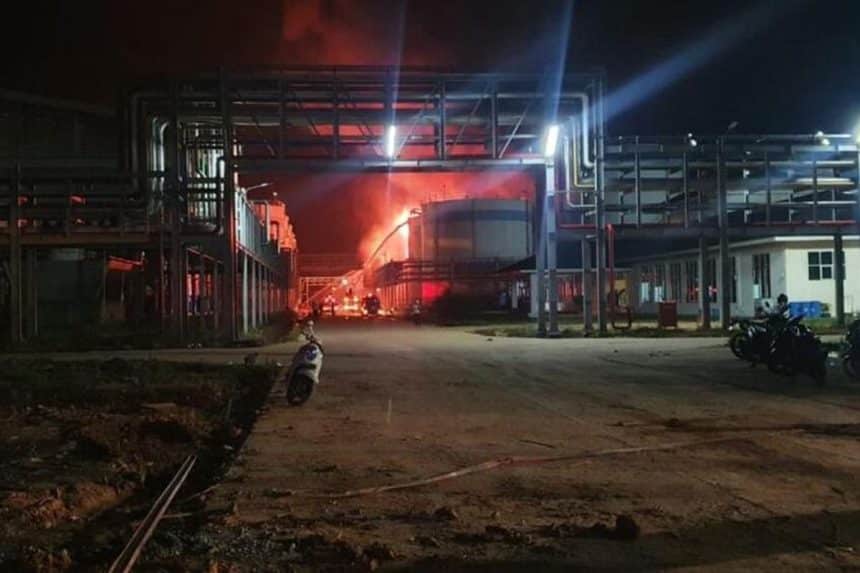
The explosion thatVibratingDumai City
It was 4:42 PM when a loud bang was heard from the biodiesel industrial area in Dumai, Riau. It was no ordinary sound—it was a massive explosion from one of PT Alam Hijau Lestari’s (AHL) B100 storage tanks.
In the control room, HSE Manager Manda Kusumawardhani had just finished a meeting with the production team when the tank temperature alarm sounded. Within seconds, CCTV showed thick, grayish smoke billowing from the roof of tank number 7.
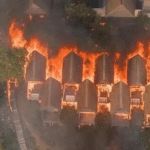
Then came a second explosion. The roof of the tank lifted like a lid. Hot biodiesel gushed out. The fire spread rapidly to the adjacent tank. Employees fled the area. Fire sirens blared in unison.
The explosion turned Dumai’s sky orange, and was one of the biggest industrial accidents in the region in the past five years.
Biodiesel—Environmentally Friendly, But Highly Risky
Biodiesel is known as a cleaner renewable energy.
However, ironically, the risks of the biodiesel industry are actually very large, especially in the areas of:
- storage tank,
- loading/unloading station,
- heating system,
- piping,
- boiler,
- and the blending area.
Different from ordinary diesel, biodiesel has the following characteristics:
- easily contaminated,
- sensitive to heat,
- easily oxidized,
- more prone to overheating,
- can produce internal gas.
If not designed to proper API and NFPA standards, biodiesel can be a chemical bomb.
Key Risk Analysis of the Biodiesel Industry
For companies like AHL and all Danantara companies operating in the renewable energy sector, the following is a critical risk mapping that must be understood:
- Risk of Tank Explosion
Reason:
- internal pressure increases,
- flammable gas is formed,
- uncontrolled heating process,
- level gauge is broken,
- The floating roof is not working perfectly.
- Tank Farm Fire
This is caused by:
- fire from the loading station,
- lightning strike,
- electrical short circuit,
- a burning biodiesel spill.
Tank farm is an area with a risk of domino effect:
One tank caught fire → fire spread → entire area was burnt.
- Boiler & Heater Failure
Biodiesel must be heated.
Risk:
- overheating,
- pipe leak,
- thermal shock,
- excess fluid expansion.
- Pollution & Spills
Spilling biodiesel into drains or rivers can cause:
- heavy pollution,
- large environmental fines,
- loss to society.
- Risk of Internal Gas Explosion
Fermentation or oxidation can produce flammable gases in the tank.
- Transportation & Loading Risks
The loading/unloading area is the point where sparks and fires most frequently occur.
- Risiko Instrumentation Failure
Includes:
- Level gauge congested,
- Pressure gauge is not accurate,
- The temperature sensor is damaged.
Sensor error is the most fatal cause of overheating.
Chapter 4: AHL Losses After Dumai Tank Explosion
Financial impacts faced by PT AHL:
- Total damage to tank 7: Rp 21 billion
- Damage to tanks 8 & 9: Rp. 18 billion
- Pipeline damage: Rp 4 billion
- Fire extinguishing & foam costs: Rp 3 billion
- 45 days of production downtime: Rp 12 billion
- Environmental damage: potential fine of Rp 7 billion
- Third party claims: Rp 6 billion
Total loss: ± Rp. 71 billion
Even for large companies, these numbers are devastating.
Insurance Protection Recommendations for the Biodiesel Industry
To protect the valuable assets and operations of the biodiesel industry, the following package is a must:
- Industrial All Risks (IAR) / Property All Risks (PAR)
Protect:
- the entire building,
- tank farm,
- heater/boiler,
- pipe,
- panel,
- equipment.
Mandatory extensions:
- fire & explosion,
- spontaneous combustion,
- tank collapse,
- lightning,
- water damage.
- Machinery Breakdown (MB)
For:
- boiler,
- boiler feed pump,
- heating system,
- blending system.
- Fire Loss of Profit / Business Interruption (BI)
The most important guarantee that saves cash flow during downtime.
- Public Liability Insurance
For claims by the public or third parties.
- Environmental Liability Insurance
Protects from:
- soil pollution,
- water pollution,
- government fines.
- Tank Insurance (Tank & Pipeline)
Tank farm structural damage guarantee.
- Marine Cargo & Inland Transit
Because the biodiesel industry is highly dependent on the transportation of raw materials & finished products.
Chapter 6: Why Quality Insurance is Important for the Biodiesel Industry
The biodiesel industry has significant risks but is often misunderstood by local insurers.
Therefore, the company must be placed with insurers & reinsurers who have the capacity and experience:
- tank farm risk assessment,
- foam-based fire extinguishing system,
- risk heating & boiler,
- risk of pollution,
- risk B100 storage.
Companies must use insurance that is supported by:
- Swiss Re
- Munich Re
- AIG/Lloyd’s
- Hannover Re
Thus, large claims can be paid in full.
Why Companies Should Not Manage Insurance Directly
A classic mistake biodiesel companies make is buying insurance directly without a broker.
The risks:
- Tank & Pipeline Explosion Not Covered
Direct policies often exclude:
- tank overpressure,
- tank rupture,
- heating failure.
- There is no special wording for Tank Farm
Without a broker, the police are not equipped with extras such as:
- Tank Collapse Clause
- Spontaneous Combustion Clause
- Fire-Pollution Endorsement
- Foam Suppression Failure Clause
- Large Claims Can Be Rejected
Insurers directly look for internal causes that are “not covered”.
- No Technical Risk Review
Brokers do:
- audit tank farm,
- venting system check,
- heating line inspection,
- SCADA & sensor evaluation.
Insurer direct does not provide this service.
L&G Insurance Broker—Biodiesel & Renewable Energy Industry Protection Experts
L&G has assisted many companies in:
- biodiesel industry,
- CPO refinery,
- oleochemicals,
- tank farm storage,
- renewable energy,
- chemical manufacturing.
L&G Advantages:
🔥1. The Most Complete Insurance Wording
Including:
- Tank Explosion
- Environmental Liability
- Spontaneous Combustion
- Heating Failure
⚙️2. Global Insurer & Reinsurer Network
For large protection worth hundreds of billions.
📊 3. Risk Engineering Survey
Includes:
- tank venting,
- fire loading,
- foam chamber system,
- pipeline inspection.
⚖️4. World Class Claims Expertise
Including:
- investigative assistance,
- loss calculation,
- loss adjuster coordination,
- negotiations until the claim is paid off.
🌱5. 30 Years of Experience in High-Risk Industries
Examples of Tank Explosions in the World
- ExplosionTankSpanish Biodiesel (2021). Overheating → losses > EUR 25 million.
- Texas Tank Farm Fire (2019). Several tanks were destroyed—USD 80 million in damage.
- Malaysia CPO Refinery Explosion (2020). Heater failure → 3 tanks on fire.
The pattern is the same: inadequate protection and no proper risk supervision.
Action Plan for the Biodiesel Industry & Tank Farm
- Annual risk audit for tank farm
Including vent, foam chamber, and heating.
- Use a fire foam system in accordance with NFPA 11
Biodiesel cannot be extinguished with water.
- Complete comprehensive insurance protection
IAR + MB + BI + Environmental Liability.
- Involve an expert insurance broker
For wording tank farms and large claims assistance.
- Place the policy with a global insurer/reinsurer
To ensure adequate payment capacity.
Conclusion—Green Energy Still Needs Steel Protection
The incident at PT Alam Hijau Lestari is a reminder that:
- biodiesel is a high-risk renewable energy,
- tank farms require rigorous engineering,
- large claims can reach hundreds of billions,
- and only properly designed insurance protection can save a company.
Here it is L&G Insurance Broker present as an expert partner who understands the risks of modern energy, including biodiesel and storage tanks.
—
DON’T WASTE YOUR TIME AND SECURE YOUR FINANCIAL AND BUSINESS WITH THE RIGHT INSURANCE.
HOTLINE L&G 24 JAM: 0811-8507-773 (CALL – WHATSAPP – SMS)
Website: lngrisk.co.id
Email: halo@lngrisk.co.id
—
Disclaimer
This article uses fictitious company names, people, and locations solely for risk management and insurance educational purposes. Any resemblance to real parties is not intended.intentional. Information is provided for general reference purposes only, not legal or contractual advice. Actual risk analysis should be conducted based on field conditions.