



(A Review from a Risk Management and Insurance Perspective by an Expert Insurance Broker)
Introduction
Waste has become one of the biggest environmental challenges in the modern world. In large cities, waste volumes increase with population growth and urbanization. Meanwhile, the need for electricity continues to grow to support economic activity. This is where the concept of Waste-to-Energy Power Plants (PLTSa) emerged — an innovation that combines waste management and renewable energy production.
However, despite its enormous economic potential, waste-to-energy projects also pose complex technical, environmental, and financial risks. From a risk management and insurance perspective, waste-to-energy projects fall into the category of high-risk infrastructure projects which require comprehensive protection from the planning stage to commercial operations.
1. Early History of PLTSa in the World
The waste-to-energy (WTE) concept first emerged in Europe in the late 19th century, when cities such as Nottingham (UK) and Hamburg (Germany) began using waste incineration to reduce waste volume and harness the heat for district heating.
In the 1950s–1970s, incineration technology developed rapidly in developed countries, particularly Denmark, Sweden, and Japan. These countries faced limited landfill space, so they sought more efficient and environmentally friendly solutions.
World Milestones of PLTSa:
| Year | Country | Key Innovations | Risk Notes |
|---|---|---|---|
| 1904 | English | Nottingham’s first incinerator | High fire risk, no emission controls |
| 1970 | Japan | Modern PLTSa with emission control system | Insurance claims due to air pollution are starting to emerge |
| 1980 | Denmark | District heating system from PLTSa | Risk of boiler explosion and corrosion |
| 1990 | German | Strict environmental standards (EU Directive) | Insurance companies are starting to require environmental risk audits. |
| 2000-an | Singapore | Tuas South Incineration Plant | PLTSa success model with complete insurance scheme |
2. Development of PLTSa Technology
PLTSa technology continues to evolve from a simple combustion system to a sophisticated energy system based on high efficiency and strict emission controls.
Key Technology:
- Incineration – Waste is burned at temperatures of 850–1000°C to produce heat that drives a power generating turbine.
- Gasification – Converting waste into synthetic gas (syngas) that can be burned to produce energy.
- Pyrolysis – Heating waste without oxygen to produce synthetic gas and oil.
- Refuse Derived Fuel (RDF) – Waste is processed into solid fuel with high calorific value.
Key Technical Risks:
- Failure of combustion and cooling system
- Explosion due to accumulation of flammable gas
- Corrosion on boiler and turbine
- Damage to the emission filtration system (baghouse filter)
- Air pollution and toxic ash leaks
From an engineering insurance perspective, each of these stages has different risks that require specific types of policies, such as:
- Construction All Risks (CAR) or Erection All Risks (EAR) during construction,
- Machinery Breakdown (MB) and Property All Risks (PAR) during operations, as well as
- Public & Environmental Liability Insurance for risks to third parties and environmental pollution.
3. Experience of Developed Countries in Managing PLTSa Risks
Japan – Highest Safety Standards
Japan has one of the largest waste-to-energy (WTP) networks in the world. Nearly all major cities, including Tokyo, Osaka, and Yokohama, have these facilities.
Japan emphasizes operational and environmental safety through annual risk audits and ISO 14001 certification. Insurance companies in Japan require a detailed risk assessment prior to policy issuance, including a physical inspection of the boiler and gas scrubber systems.
Singapore – Integrated Model of Insurance and Operations
Singapore has the Tuas South Incineration Plant, which generates over 2,800 MWh of electricity per day. The country uses an EPC (Equivalent to 1000 MWh) contract system.Engineering, Procurement, Construction) with mandatory insurance clause.
Every project must have:
- CAR/EAR Policy during construction
- Operational All Risks Policy during operation
- Third-Party Liability Insurance with high limits
- Environmental Impairment Liability (EIL) for pollution risks
This model has proven effective — the rate of large claims is very low due to the presence of loss prevention, which is good.
4. The journey of PLTSa in Indonesia
Initial Idea
The idea of building a waste-to-energy plant (PLTSa) in Indonesia emerged in 2005, but its implementation only became serious after the issuance of Presidential Regulation (Perpres) No. 35 of 2018 concerning the Acceleration of Waste-to-energy Plant (PLTSa) Development in 12 major cities, including Jakarta, Surabaya, and Bandung.
The Bantar Gebang and Surabaya PLTSa projects became national pioneers, followed by plans in Semarang, Denpasar, and Makassar.
Obstacles Faced:
- Uncertainty in technology and waste supply
- Social resistance (environmental and odor issues)
- Financing constraints and electricity tariff schemes (Feed-in Tariff)
- Lack of understanding of project risks by non-technical parties
From an insurance perspective, many waste-to-energy (WTE) projects in Indonesia have not been prepared with an insurance-minded approach from the outset. As a result, project risks are sometimes not fully identified in EPC contracts and financing documents.
5. Main Risks of PLTSa from a Risk Management and Insurance Perspective
- Physical Risks
- Fire due to failure of combustion temperature control
- Explosion from flammable gas or methane accumulation
- Damage to equipment such as boilers, turbines, conveyors, and emission systems
➡️ Relevant insurance:
CAR/EAR, Property All Risks, Machinery Breakdown
- Operational Risk
- Decreased efficiency due to variations in waste water content
- Disruption of electricity or fuel supply
- Automatic control system failure
➡️ Relevant insurance:
Business Interruption (BI) to cover revenue losses due to the cessation of operations.
- Environmental Risks
- Air emissions exceed the threshold
- Leakage of toxic ash or liquid waste
- Claims from local communities due to pollution
➡️ Relevant insurance:
Environmental Liability Insurance (EIL) dan Third-Party Liability Insurance (TPL)
- Project and Financial Risks
- Project delay (delay in start-up)
- Failure of contractor or subcontractor
- Delay in licensing
➡️ Relevant insurance:
Advance Loss of Profit (ALOP), Contractors’ Liability Insurance, dan Professional Indemnity Insurance
6. The Strategic Role of Insurance Brokers in the PLTSa Project
An expert insurance broker has a key role in assisting project owners, EPC contractors, and lenders in:
- Analyzing Project Risks
Do risk mapping comprehension — technical, financial, environmental, and social. - Developing a Comprehensive Insurance Program
Ensure all risks are covered in insurance metrics that comply with the contract and lender requirements. - Premium Negotiation and Special Clauses
Arrange endorsement And waiver of subrogation required for the project bankable. - Coordination with Insurers and Technical Surveyors
Ensure loss prevention and risk inspections are conducted periodically. - Claims Assistance
In the event of an accident, the broker ensures that claims are settled quickly, fairly, and according to the contract value.
In the context of PLTSa, brokers are not just policy intermediaries, but strategic partners in renewable energy project risk management.
7. Case Study: Fire at a European Waste-to-Energy Power Plant and Lessons for Indonesia
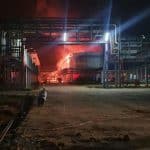
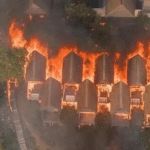
A waste-to-energy plant (PLTSa) in Germany once experienced a major fire in the exhaust gas filter room due to a failed heat sensor. Losses reached €18 million. However, thanks to a Property All Risks and Business Interruption policy, the project owner was able to restore the facility within six months.
Lessons for Indonesia:
- Risk audits should be conducted at least twice a year.
- Control and alarm systems must be insured as critical component
- Insurance value (sum insured) must match the actual replacement value
8. Challenges and Opportunities for PLTSa Insurance in Indonesia
Indonesia has the potential to use waste-to-energy plants (PLTSa) to process over 12,000 tons of waste per day in major cities. However, project implementation remains limited due to:
- Low insurance literacy among project managers
- There isn’t any yet standard insurance scheme nationally for WTE projects
- The capacity of local insurance companies to cover complex risks like this is still minimal.
But on the other hand, this also opens up huge opportunities for professional insurance brokers like L&G Insurance Broker to:
- Educating the market
- Compile tailor-made insurance solution
- Connecting the PLTSa project with capacity reinsurance international
Conclusion
Waste-to-energy (WTE) is more than just an energy technology project—it is a multidisciplinary project that encompasses environmental, social, financial, and legal aspects. World history shows that the success of WTE projects always depends on two key factors: strong risk management and appropriate insurance coverage.
For Indonesia, building a waste-to-energy power plant (PLTSa) also means building a new culture in managing the risks of green infrastructure projects.
The role of insurance brokers is becoming increasingly important in bridging the gap between the idealism of clean energy development and the reality of risks on the ground.
With a professional, transparent, and risk-based approach, the PLTSa project in Indonesia can be a sustainable energy solution as well as a modern waste management model that is safe, efficient, and environmentally friendly.protected.
L&G Insurance Broker is a leading insurance broker in Indonesia with extensive experience in energy and infrastructure projects, including waste-to-energy power plants (WTPs). We provide professional risk consulting, insurance placement, and claims assistance to protect investments from technical, environmental, and financial risks. With L&G, your WTP project will be safer, more efficient, and more sustainable.
💡 L&G – Your Trusted Partner in Energy Risk Solutions.
—
DON’T WASTE YOUR TIME AND SECURE YOUR FINANCIAL AND BUSINESS WITH THE RIGHT INSURANCE.
HOTLINE L&G 24 JAM: 0811-8507-773 (CALL – WHATSAPP – SMS)
Website: lngrisk.co.id
Email: halo@lngrisk.co.id
—