



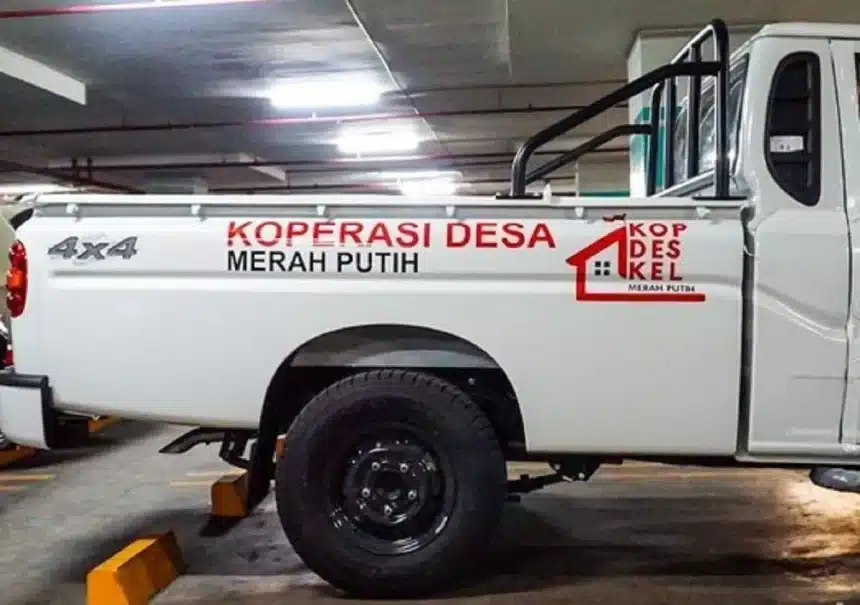
Operational planning around 105,000 national distribution truck vehicles to support the networkPT AgrinasIndonesian Food (Persero)and the Red and White Cooperative ecosystem is one of the largest logistics projects in Indonesian history.
This program is expected to strengthen national food distribution, reduce logistics costs, and increase supply chain efficiency from production areas to markets.
But behind this great opportunity there are very significant operational risks, especially regarding vehicle accidents.
If we assume the average value of the vehicle is aroundRp. 250 million per unit, then the total value of the fleet assets that will be in operation can reach more thanRp. 26 trillion.
On that scale, even a small accident can result in huge financial losses.
Therefore, this program needs to be equipped with risk management strategies and risk financing through insurance professionally designed.
An Unprecedented Fleet Scale in Indonesia
A fleet of 105,000 operational vehicles in one national distribution system is a very large scale.
In Indonesia, a fleet of this size is almost never managed by a single operational organization.
Some leasing companies do have large vehicle portfolios. However, in a leasing model, vehicles are typically owned by different individuals or companies, so operational risk isn’t centralized.
In contrast, in this program:
- vehicles used in one distribution system
- operations involving thousands of cooperatives
- drivers come from various regions
- road conditions vary greatly
All these factors increase the complexity of risk management significantly.
Types of Accidents That May Occur
In commercial vehicle fleet operations, accidents can be divided into three main categories.
minor accident
Minor accidents typically include:
- vehicle was grazed
- bumper damage
- broken lamp
- cracked glass
This damage does not stop the vehicle from operating, but still requires repair costs.
moderate accident
This category includes more serious damage such as:
- vehicle body damage
- suspension damage
- steering system damage
Vehicles usually require longer repair times before they can be returned to service.
Total Loss (Total Damage)
Total loss usually occurs if:
- damage exceeding 75% of the vehicle’s value
- vehicle on fire
- overturned vehicle
- vehicle lost due to theft
Losses in this category have the greatest financial impact.
Fleet Accident Frequency Estimates
In the commercial transportation industry, vehicle accident rates typically range from4% to 6% per year.
If we use conservative assumptions5% accidents per year, then from 105,000 vehicles it can happen approximately:
5,250 accidents every year
The distribution of accidents usually looks like this.
| Type of accident | Percentage | Number of occurrences |
| Light | 70% | 3.675 |
| Currently | 25% | 1.312 |
| Total Loss | 5% | 263 |
This means that most accidents are minor and medium damage.
Estimated Losses Due to Accidents
With a vehicle value of around IDR 250 million, the estimated loss can be calculated as follows.
Minor damage
Average cost of repair: Rp. 5 million
3,675 incidents × Rp. 5 million
≈ Rp. 18.3 billion
Moderate damage
Average cost of repair: Rp. 20 million
1,312 incidents × Rp. 20 million
≈ Rp26.2 billion
Total Loss
Loss per vehicle: Rp. 250 million
263 incidents × Rp. 250 million
≈ Rp. 65.7 billion
Total annual loss
If combined:
around Rp. 110 billion per year
This figure does not include:
- losses due to the cessation of vehicle operations
- legal costs due to accidents
- driver injury costs
- damage to cargo
Factors Affecting Accident Rates
Some of the main factors that can influence fleet accident rates include:
Operational experience
Currently, Agrinas does not have direct experience in managing a very large fleet of vehicles.
Lack of operational experience can increase risks in the early stages of a program.
Driver selection
Driver quality is an important factor.
Risks that may arise include:
- inexperienced driver
- driver fatigue
- traffic violation
Road conditions
Indonesia has very diverse road conditions.
Starting from:
- toll road
- national road
- village road
- plantation road
These differences in road conditions affect the level of accident risk.
Risk of fraud
In a system involving thousands of users, the potential for fraud also needs to be considered.
For example:
- fictitious accident claims
- crash report manipulation
- use of vehicles outside their intended use
Vehicle Repair Challenges
If an accident occurs, the vehicle must be repaired immediately so that it can be put back into service.
But some important questions need to be answered:
- Will Agrinas have its own network of workshops?
- Or use an external workshop?
- How does the repair cost control system work?
Without a clear system, repair costs can escalate uncontrollably.
Readiness of the Red and White Cooperative
The vehicles in this program will be used byRed and White Cooperative (KMP).
This raises an important question:
- Does the cooperative have the ability to manage the fleet?
- Is there a vehicle monitoring system available?
- who is responsible for minor damage?
If there is no clear management system, operational costs can increase significantly.
Vehicle Insurance as a Risk Management Solution
One of the main solutions in managing the risk of vehicle accidents is commercial vehicle insurance.
In practice there are two main options.
Comprehensive All Risk Insurance Alternatives
This insurance covers almost all types of vehicle damage.
Including:
- minor damage
- moderate damage
- total damage
If the premium rate is around 1.8% of the vehicle value, then the annual premium can reach:
around Rp. 468 billion
Advantages:
- comprehensive protection
- financial risks can be predicted
However, the premium is relatively high.
Total Loss Only (TLO) Insurance Alternative
In this scheme, insurance only covers major losses.
For example:
- lost vehicle
- damage more than 75%
Minor and moderate damage is the responsibility of the user.
If the premium rate is around 0,8%, then the annual premium is around: Rp208 billion
However, the cost of minor and medium repairs is around: Rp. 45 billion per year
Annual Cost Comparison
| Scheme | Award | Self-repair | Total cost |
| All Risk | Rp468 M | small | Rp468 M |
| GROUND | Rp208 M | Rp45 M | Rp253 M |
For large fleets, TLO is often considered more efficient because most accidents are minor damage.
Why Risk Management Is So Important
Without a good risk management system, this national fleet program could face various problems such as:
- uncontrolled operational costs
- vehicles often do not operate
- conflict between managers and users
- major financial losses
Therefore, risk management must be part of the planning from the start.
The Important Role of Insurance Brokers
Managing the risks of a fleet of this size requires specialized expertise.
Professional insurance brokers such as L&G Insurance Broker can help in various important aspects, including:
- conduct national fleet risk analysis
- designing an efficient insurance structure
- negotiate the best premium with the insurance company
- assist with the claims process
- provide risk control recommendations
With a professional approach, insurance programs can be designed to protect a company’s balance sheet while maintaining cost efficiency.
Conclusion
The operating program105,000 national distribution vehicles is a major step in strengthening Indonesia’s food logistics system.
But the sheer scale of the fleet also carries significant accident risks.
Conservative estimates suggest that losses from accidents could reach more than Rp. 100 billion every year.
Therefore, Agrinas management needs to ensure that the following aspects are well prepared:
- fleet management system
- driver selection and training
- cooperative operational control
- risk financing strategy through insurance
With the right risk management approach, this program can run more safely, efficiently, and sustainably.
—
DON’T WASTE YOUR TIME AND SECURE YOUR FINANCES AND BUSINESS WITH THE RIGHT INSURANCE.
HOTLINE L&G 24 JAM: 0811-8507-773 (PHONE – WHATSAPP – SMS)
Website: lngrisk.co.id
Email: halo@lngrisk.co.id
—