



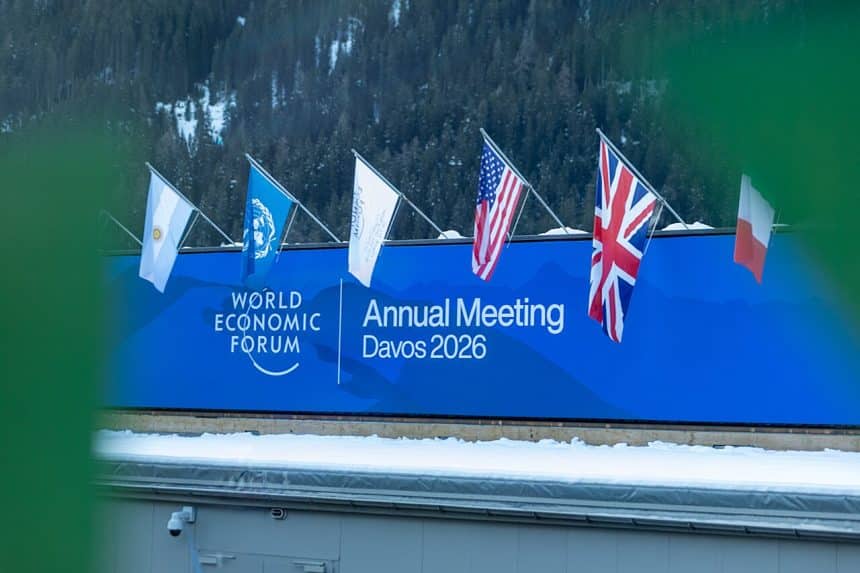
On 22 January 2026, at the World Economic Forum Annual Meeting in Davos, President Prabowo Subianto presented a muscular case for Indonesia’s next chapter: rapid industrialization, strategic downstreaming, energy transition, and food security—backed by a newly assertive sovereign investment vehicle, Danantara. His address was both a pitch to global capital and a sober checklist for companies considering expansion in Southeast Asia’s largest economy. This article analyzes the outcomes of Davos 2026 through the prism of that speech, explains the strategic role of Danantara, maps the principal risks investors must confront, and makes the case that risk management and insurance—when structured by an experienced broker—are strategic enablers of sustainable, bankable growth in Indonesia.
Indonesia’s macroeconomic vision: growth with industrial depth
President Prabowo’s Davos message emphasized scale and substance. Indonesia’s macroeconomic framing under his administration aims to move beyond commodity export dependence to a more resilient, higher-value economy. Key pillars mentioned or implied in his address and supporting materials include:
- Industrial downstreaming: upgrading raw-material exports into domestic processing and manufacturing (e.g., moving from exported ores to refined metals and fabricated components). Downstreaming raises local value-capture, creates jobs, and reduces import dependence for intermediate goods—critical for long-term economic resilience.
- Energy transition with pragmatic sequencing: accelerating renewables, waste-to-energy projects, and selective support for cleaner fossil-to-gas transitions to secure baseload power during the green transition. Prabowo and Danantara signalled that investment will prioritize renewables, digital infrastructure, and energy resilience.
- Food security & rural productivity: policies and programs to raise agricultural productivity, strengthen value chains, and protect national food supplies—part of a social contract to reduce poverty and foster inclusive growth.
- Geopolitical positioning: a foreign policy calibrated to be a reliable partner to major powers while emphasizing regional leadership in ASEAN and South-South cooperation—creating a predictable environment for trade and long-term capital flows.
Taken together, these policy priorities form a coherent strategy: build domestic industrial capabilities, fund them with both public and patient private capital, and use state tools to reduce initial project risks so private capital can scale. But ambition alone does not remove exposures; it changes their profile. That’s where credible institutions and risk transfer mechanisms matter.
Danantara: a new spine for investment credibility
One of the clearest outcomes at Davos was the spotlight on Danantara, Indonesia’s sovereign investment vehicle established in 2025. Danantara’s Davos presence signals a new investment architecture: state-backed, professional asset management deploying capital to catalyze strategic sectors—renewables, digital infrastructure, healthcare, and food systems—while partnering with global investors to mobilize additional funding.
Key facts and implications from Danantara’s Davos messaging:
- Scale and commitment: Danantara has signalled meaningful investment capacity—reports at Davos noted deployment plans for multibillion-dollar allocations in 2026, and a path to attract long-term co-investors. This scale strengthens project bankability by improving equity cushions and enabling blended finance structures.
- Governance & credibility: Danantara’s leadership emphasised professional management, transparency, and governance reforms to enhance investor trust—critical when sovereign participation otherwise raises concerns about political interference.
- Strategic signal: Sovereign funding for waste-to-energy, renewables, and infrastructure reduces perceived project risk and helps attract commercial debt and private capital if paired with solid risk allocation mechanisms. Danantara’s partnership role can unlock projects that would otherwise stall for lack of creditability.
In short, Danantara is a catalyst—but catalysts do not eliminate the spectrum of risks investors face. They change who bears which risk and under what terms. For private investors and contractors, understanding that allocation—and ensuring risks are covered, mitigated, or priced correctly—is essential.
The critical risk map for investors in Indonesia
Davos reaffirmed Indonesia’s upside. But investors must operate with a candid appreciation of the risk landscape. Below are the principal categories—each with practical implications for project design, financing, insurance, and ongoing governance.
1. Political & regulatory risk
Policy shifts, regulatory reinterpretations, changes in local content rules, or political contestation can alter project economics quickly. Even predictable, pro-investment governments can introduce new rules (tax, licensing, job localization) that raise costs or delay projects. Political risk insurance, careful covenant design in financing documents, and sovereign/lender engagement strategies are necessary to protect long-dated commitments.
Business impact: permit delays, renegotiation of terms, or expropriation-like outcomes that threaten debt service and returns.
2. Project & operational risk (EPC execution)
Indonesia’s infrastructure push means more EPC projects in remote locations—complex logistics, geotechnical surprises, subcontractor capacity constraints, and force majeure events can cause overruns. For large EPC contracts, builder’s risk (CAR/EAR), delay-in-startup (DSU), and performance bonds are essential instruments.
Business impact: cost overruns, delayed revenue streams, disputes, and claim complexity.
3. Financial & credit risk
Counterparty credit—whether from state utilities, local buyers, or contractors—can be uneven. Currency volatility and payment delays expose sponsors who rely on predictable cashflows. Structured credit enhancements, escrow mechanisms, and trade/receivables insurance reduce exposure.
Business impact: liquidity stress, covenant breaches, and higher funding costs.
4. Supply-chain & logistics risk
Indonesia’s archipelagic geography raises logistics risk: port congestion, shipping disruption, cargo damage, and inland transport bottlenecks. Marine cargo insurance, freight forwarder liability, and tailored transit solutions are necessary elements.
Business impact: compromised timelines, inventory loss, reputational damage.
5. ESG & climate risk
Physical climate risks—floods, landslides, drought—and ESG pressures (community relations, labor standards, biodiversity) are central. Projects lacking robust environmental and social frameworks face community opposition, litigation, and investor withdrawal. Insurers increasingly price ESG performance into coverage terms or require mitigation roadmaps.
Business impact: litigation, social unrest, stranded assets.
6. Cyber & digital risk
As Indonesia scales digital infrastructure and fintech, cyber threats escalate—data breaches, supply-chain cyber incidents, and operational hacks. Cyber insurance, incident response planning, and vendor diligence are now boardroom priorities.
Business impact: data loss, business interruption, regulatory fines.
Why risk management and insurance are strategic enablers—not mere compliance
Too often companies treat insurance as a checkbox required by lenders or local regulators. Davos 2026 and Indonesia’s ambitious agenda suggest a different view: insurance and risk management are enablers of growth. Here’s why:
- Makes projects bankable: Lenders and international partners require clear risk allocation. Well-structured insurance stacks (political risk, CAR, DSU, liability, marine, cyber) transform uncertain cash flows into predictable ones acceptable to banks and institutional investors. Danantara’s co-investment reduces equity gaps; insurance reduces tail risk that scares lenders.
- Enables pricing of risk: Proper risk assessment and transfer allow sponsors to price projects accurately—so they can bid competitively without underestimating downside exposures.
- Protects reputation and continuity: Insurers and risk managers can accelerate recovery after an event. Rapid claim handling keeps operations running and protects corporate reputation.
- Encourages higher standards: Insurers increasingly use underwriting as a lever—requiring improved HSE systems, supply-chain transparency, and cyber controls. This raises the overall resilience of projects.
- Catalyzes blended finance: When sovereign funds, development finance, and private capital combine, insurance reduces the financing friction between public objectives and private return expectations.
In short, insurance is not a business tax—it’s a financial instrument that, properly structured, unlocks capital, reduces the cost of capital, and protects long-term value.
The broker gap: why an experienced independent broker matters
Not all insurance programs are created equal. Large, complex projects require bespoke solutions: multiple insurers in a composite program, carefully negotiated policy wordings, regulatory compliance across jurisdictions, and proactive claims advocacy. That demands an experienced, independent broker—not a simple transactional intermediary.
What a seasoned broker delivers
- Tailored program design
Brokers map project cashflows, construction timetables, and contractual risk allocation to craft a coherent insurance stack (e.g., combined CAR/EAR, third-party liability, DSU, political risk, marine, cyber). This stack must align with lender requirements and local legal frameworks. - Market access and negotiation power
A broker with established insurer relationships obtains capacity, negotiates endorsements that close coverage gaps, and manages co-insurance placements across domestic and international carriers. This is vital in markets where onshore capacity is limited. - Wordings & legal precision
Claims succeed or fail on policy wordings. Effective brokers negotiate precise clauses—covering definitions of “accident” or “delay”, carve-outs for sanctions, and subcontractor extensions—so coverage responds as intended. - Claims management & recovery
In a loss, timely advocacy, evidence management and negotiation with insurers determine recovery speed and quantum. Experienced brokers run parallel technical assessments and push for fair settlements—preserving project viability and relationships. - Risk advisory beyond insurance
Good brokers advise on risk mitigation (contractual language, HSE protocols, cyber controls), insurance budgeting, and contingency planning—helping sponsors reduce premiums while improving resilience.
For projects in Indonesia—where regulatory and logistical complexity is high—the broker’s role is not optional; it is a strategic function embedded in project finance, contract strategy, and operational continuity.
Practical examples: how brokers convert Davos ambition into bankable programs
Consider three hypothetical, but realistic, scenarios that illustrate brokers’ value:
- Waste-to-energy plant backed by Danantara
Danantara provides anchor equity; the project is awarded to an EPC contractor. A broker designs a blended package: CAR/EAR for construction, operational property for post-commercial operations, marine cargo for imported components, and a DSU policy to protect early revenue loss due to commissioning delays. Political risk cover is negotiated to reassure international lenders. The broker secures coordinated deductibles across insurers so there are no surprise coverage gaps. - Offshore wind farm with international IPP
Local content requirements and complex supply chains increase project risk. The broker negotiates warranties and subcontractor liability extensions, ensures appropriate delay and hull/marine cover for installation vessels, and structures war/terrorism cover suitable for regional exposures—converting a technically complex project into a financeable asset. - Agribusiness downstreaming facility
Large logistic flows across islands require cargo, storage, and inland transit insurance. The broker bundles marine open policy solutions with warehouse legal liability and product recall protections—while advising on supplier contracts that allocate inventory risk properly.
These are not theoretical exercises. They are how capital moves from boardroom intent to on-the-ground delivery—and each step needs technical insurance and commercial negotiation expertise.
L&G Insurance Broker: how local expertise meets international standards
For investors, contractors, and lenders looking to act on the Davos 2026 momentum, partnering with a broker who understands Indonesia’s industries, legal context, and international insurance markets is critical. L&G Insurance Broker brings a combination of attributes investors require:
- Sector depth: proven experience across mining, construction/EPC, energy, marine cargo, and financial risks.
- Claims track record: hands-on claim advocacy that recovers value and accelerates continuity.
- Local regulatory fluency: knowledge of local licensing, insurer acceptance, and OJK/OJK-related processes ensures compliance and mitigates administrative delays.
- Global market access: relationships with international reinsurers and market leaders to source capacity for large placements.
- Advisory orientation: beyond placement, L&G provides risk engineering guidance, contract review, and program audits—helping clients reduce premiums and strengthen resilience.
If Danantara and government initiatives are the engine, brokers like L&G are the gearbox: they translate public ambition into private-sector certainty.
Action checklist for CEOs, CFOs, and project sponsors
If you are considering Indonesia after Davos 2026, start here:
- Map exposures early — political, construction, supply, ESG, cyber.
- Engage a broker during bid stages — not after award. Early wordings and placement planning are cheaper than retrofitting coverage.
- Demand integrated programs — single-source program design aligning CAR, DSU, political risk, and liability.
- Insist on tested claim protocols — review insurer timeframes, evidence requirements, and joint surveyor arrangements.
- Use blended finance wisely — sovereign or DFIC participation is powerful when combined with clear insurance stacks that protect debt service.
- Prioritise ESG & cyber controls — insurers price and condition coverage on governance; mitigation lowers cost and increases capacity.
- Plan for logistics contingencies — cargo/trade solutions are fundamental in an archipelago.
These are practical steps that convert strategic intent—like Prabowo’s Davos vision—into executable, financeable projects.
Conclusion — prepare smart, ensure smarter
Davos 2026 reaffirmed Indonesia’s standing as a growth frontier with scale and pragmatic state tools—most visibly through Danantara’s emergence as an institutional catalyst. That opportunity is real. But the path from vision to value requires structured risk transfer, disciplined risk management, and technical insurance placement. In this environment, insurance is not a cost center—it is a financing tool that enables bankability, protects returns, and accelerates recovery from inevitable setbacks.
If you are entering or expanding in Indonesia, don’t let ambition outrun your risk strategy. Partner with an insurance advisor who combines local market intelligence, sector expertise, and international placement strength.
L&G Insurance Broker — your strategic partner in Indonesia
L&G Insurance Broker helps investors, developers, EPC contractors, and financial institutions turn projects into bankable, insurable realities. From bespoke CAR and DSU programs to political risk, marine cargo, cyber, and ESG-linked coverage, L&G designs holistic insurance architectures and fights for your claims when it matters most.
Contact L&G now to:
- map your risk profile for Indonesia projects,
- design bankable insurance programs that meet lender and investor covenants, and
- secure market capacity with precise policy wordings and proactive claims readiness.
Davos laid out the promise. With the right risk partner, you can deliver the results.
—
DON’T WASTE YOUR TIME AND SECURE YOUR FINANCES AND BUSINESS WITH THE RIGHT INSURANCE.
HOTLINE L&G 24 JAM: 0811-8507-773 (PHONE – WHATSAPP – SMS)
Website: lngrisk.co.id
Email: halo@lngrisk.co.id
—