



Introduction
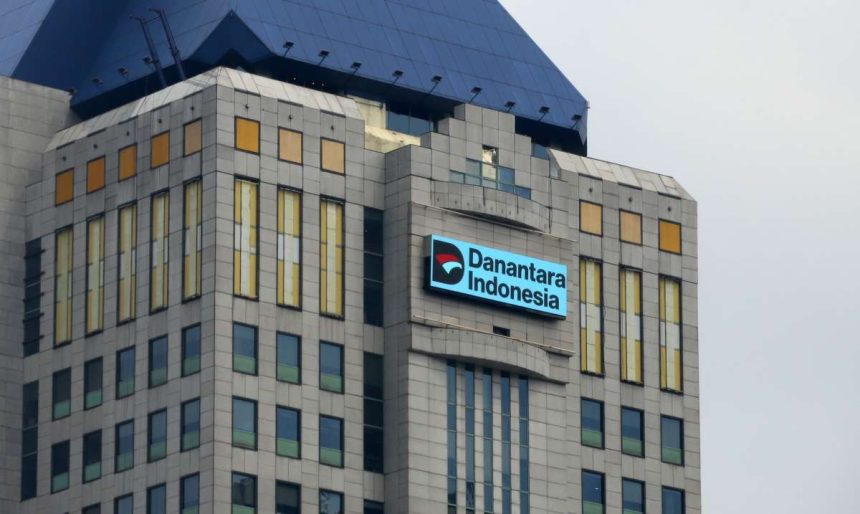
Danantara was officially launched on February 24, 2025, marking one year since its establishment, based on Law Number 1 of 2025. Danantara Indonesia has now become one of the most strategic topics in national economic discourse. Its presence marks a major shift in the way the state manages public assets and investments: from a sectoral and operational approach to integrated, long-term value-oriented state investment portfolio management.
However, behind this optimism, there is one fundamental question that is often overlooked in public discussion:
How prepared is Danantara to manage the risks of a very large investment portfolio with a systemic impact on state finances?
This article discusses why risk management and insurance are not merely administrative functions, but rather the main foundation for Danantara to truly become a driving force for the Indonesian economy going forward.
Danantara and the Paradigm Shift in State Asset Management
For years, the management of state-owned enterprises in Indonesia has tended to be fragmented. Each company manages its own risks and the insurance individually, often with different standards, a reactive approach, and a short-term focus.
Danantara is here to bring a new paradigm:
SOEs are no longer viewed as separate entities, but as a single national investment portfolio.
As a state investment holding, Danantara has a strategic mandate to:
- Maintaining and increasing the value of state assets
- Supporting national strategic projects
- Attracting long-term investment and financing, including from global investors
This mandate directly increases the complexity and scale of the risks that must be managed.
Danantara’s Risk Profile: Large, Complex, and Systemic
The risks faced by Danantara are fundamentally different from those faced by a single operating state-owned enterprise. Its exposures are cross-sectoral, interconnected, and potentially systemic.
Infrastructure Risk and Strategic Projects
Investments in toll roads, ports, airports and industrial areas carry risks:
- construction delays,
- contractor or technology failure,
- cost overruns,
- to large-scale contractual disputes.
Energy Risks and Energy Transition
The energy sector, including power generation and renewable energy, faces:
- risk technology,
- regulatory uncertainty,
- energy price volatility,
- and the potential for failure of very high-value assets.
Downstream and Heavy Industry Risks
Smelters, mineral industries and heavy manufacturing carry exposure to:
- fire and explosion,
- engine failure,
- supply chain disruptions,
- environmental and social risks.
Financial, Political, and Reputational Risks
As a representative of state interests, Danantara is also exposed to:
- risk of policy changes,
- political and regulatory risks,
- credit and liquidity risk,
- and national reputational risks.
Without a structured risk management approach, losses from these risks have the potential to become a burden on the state.
Why Insurance is a Strategic Issue
In the context of Danantara, insurance should not be treated as an administrative obligation or merely a financing requirement. It should be positioned as a strategic instrument for managing state investment.
National Capital Protection
Asset damage, project failure, or lawsuits are not just operational issues, but direct threats to the value of a country’s investments.
Financial Balance Stabilizer
A major loss without insurance coverage could:
- disrupt cash flow,
- lowering the rate of return on investment (IRR),
- and hamper the continuity of strategic projects.
Project Bankability Enhancer
A strong and bankable insurance structure is a primary requirement for:
- banking financing,
- international co-investment,
- and the participation of global financial institutions.
From Separate Policies to Portfolio-Based Insurance Framework
A common mistake in state-owned insurance management is a project-based approach and sectoral silos. These approaches are no longer adequate for Danantara’s scale and complexity.
What is needed is a portfolio-based insurance framework, namely:
- insurance is designed from a holding perspective,
- with consistent protection standards,
- and aligned with long-term investment strategies.
Holding Master Insurance Policy
Danantara ideally has:
- standard national wording,
- clear deductible philosophy,
- Minimum Insurance Requirement (MIR) for all subsidiaries.
This approach creates premium efficiency, certainty of protection, and bargaining power in the insurance and reinsurance markets.
Key Insurance Types in Danantara’s Portfolio
To support the full spectrum of investments, Danantara’s insurance framework needs to include:
Infrastructure and EPC
- Construction / Erection All Risks
- Third Party Liability
- Delay in Start Up
- Professional Indemnity
Energy and Utilities
- Property All Risks
- Machinery Breakdown
- Business Interruption
- Environmental Liability
Downstream and Industry
- Property and Machinery Insurance
- Product Liability
- Employers Liability
Financial and Strategic Investments
- Credit Insurance
- Political Risk Insurance
- Directors & Officers Liability
These insurances should be viewed as an integrated protection system, not as stand-alone policies.
Risk Retention, Transfer, and the Future of Captive Insurance
Not all risks need to be transferred to the insurance market. For an investment holding company like Danantara, the ideal strategy is risk layering:
- small risk of being held alone,
- medium risk is managed through deductibles,
- major risks are transferred to insurance,
- Catastrophic risks are protected through global reinsurance.
In the medium term, Danantara may even consider establishing captive insurance to manage recurring risks, improve cost efficiency, and strengthen claims control. This practice is common among sovereign funds and global investment holding companies.
The Role of an Insurance Broker: Risk Architect
On Danantara’s scale, the role of insurance brokers is crucial and strategic. The brokers needed are not simply policy sellers, but also:
- risk advisor,
- insurance program designer,
- global reinsurance market connector,
- and high value claims managers.
Brokers also serve as guardians of independence, especially amidst the consolidation and merger of state-owned insurance companies, to prevent conflicts of interest and maintain the quality of risk protection.
Impact on the National Insurance Industry
The implementation of the Insurance & Risk Framework by Danantara will have broad positive impacts:
- improving national underwriting standards,
- transfer of global reinsurance capacity and expertise,
- strengthening the local insurance and broker industry,
- and the creation of a healthier risk management ecosystem.
With this approach, Danantara has the potential to become a national benchmark in managing state investment risks.
Cover
Danantara has significant potential to become an engine of economic growth in Indonesia. However, this potential can only be realized if risk is managed disciplined, insurance is positioned as a strategic instrument, and governance is maintained with independence.
Without a robust risk management and insurance framework, Danantara risks becoming a large asset manager with equally large risk exposure. With the right framework, Danantara could emerge as a new icon for modern, credible, and sustainable state investment management globally.
—
DON’T WASTE YOUR TIME AND SECURE YOUR FINANCES AND BUSINESS WITH THE RIGHT INSURANCE.
HOTLINE L&G 24 JAM: 0811-8507-773 (PHONE – WHATSAPP – SMS)
Website: lngrisk.co.id
Email: halo@lngrisk.co.id
—