



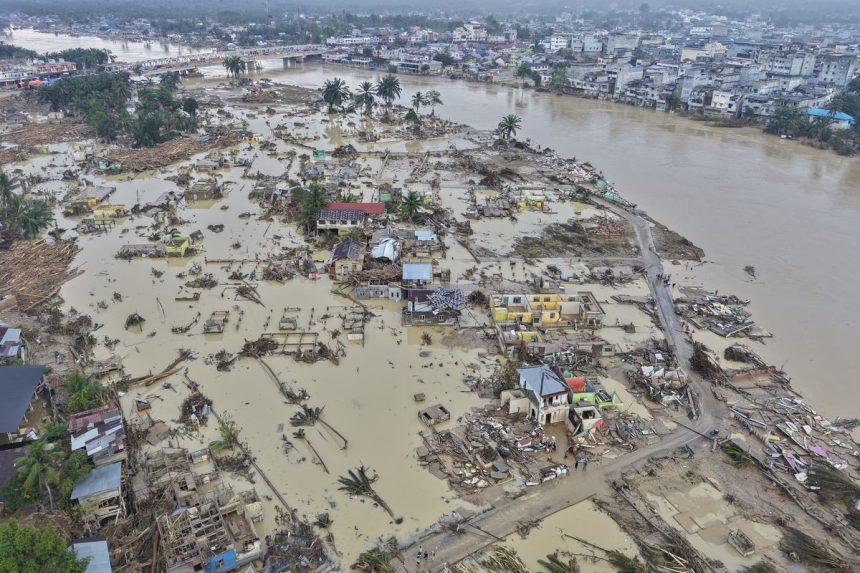
As we approach the end of 2025, the Indonesian insurance industry faces pressures coming from multiple directions simultaneously. From a surge in claims due to the massive flooding in Sumatra, to a slowdown in premiums in the marine cargo sector, to a slump in car sales that has had a direct impact on vehicle insurance—all of these dynamics reflect the increasing complexity of risks in the national financial and protection sectors. At the same time, the Financial Services Authority (OJK) is pushing for a major expansion into the MSME segment as a new market, while the Indonesia Deposit Insurance Corporation (LPS) is preparing a policy guarantee scheme to strengthen public trust. The following seven news stories summarize the pressures, opportunities, and structural changes shaping the future of the Indonesian insurance industry.
Car Sales Plummet! But Astra Insurance Keeps Moving Forward, Here’s Its Secret Strategy
Sluggish car sales throughout 2025 have raised concerns about downstream industries, including motor vehicle insurance, which has historically relied heavily on the automotive market. However, PT Asuransi Astra asserted that its performance remains solid thanks to its well-diversified business portfolio.
Astra Insurance’s Head of Communication and Customer Service Management, Laurentius Iwan Pranoto, explained that the vehicle insurance business closely follows the ups and downs of the automotive industry, especially since 70% of vehicle purchases are made on credit—which automatically requires insurance protection. However, when the automotive market weakens, Astra Insurance remains resilient thanks to the substantial contributions from its health and commercial insurance lines, which account for approximately 20% and 30–40% of the company’s portfolio, respectively.
Iwan emphasized that leasing growth also impacts vehicle premiums. If vehicle financing increases, the vehicle insurance line will also increase. Astra Insurance’s success, he said, lies in its strong business diversification.
Furthermore, a broad penetration strategy allows the company to avoid reliance on a single automotive segment. Astra Insurance partners with various vehicle communities, including electric and hybrid vehicles, from Hyundai to BYD, for both new and used vehicles.
This diversification and aggressive penetration is what keeps Astra Insurance growing even though the automotive market is sluggish.
61 Trillion Rupiah in State Assets Threatened! Ministry of Finance Prepares Massive Claims Due to Floods and Landslides
The Ministry of Finance is conducting a detailed assessment of state assets (BMN) damaged by floods and landslides in Aceh, North Sumatra, and West Sumatra. Deputy Minister of Finance Suahasil Nazara revealed that the Directorate General of State Assets (DJKN) is currently verifying the damage value to prepare a claim submission to the BMN Insurance Consortium.
DJKN data shows that by 2025, the total insured state assets will reach IDR 61 trillion, a drastic increase from IDR 10.73 trillion when the program first began in 2019. With premiums of around IDR 100 billion per year, state assets insurance is an important instrument for reducing the burden on the state budget during disasters.
Suahasil emphasized that all assets covered by the insurance scheme will be claimed according to the provisions. This process includes assessing the assets, the extent of damage, and the insured value. In addition to state budget funds for recovery, the government is also relying on insurance companies for claim payments.
He added that the existence of state-owned assets (BMN) insurance is strategic, given Indonesia’s location in the disaster-prone Ring of Fire. Asset protection is considered a form of “security” that the country must have to ensure that recovery costs do not consistently burden the budget.
Marine Cargo Premiums to Decline in Q3 2025! OJK Reveals Reasons, AAUI Reveals Major Opportunities by the End of 2025
The Financial Services Authority (OJK) reported that premium income from the marine cargo insurance line contracted slightly in the third quarter of 2025. Premiums reached IDR 5.33 trillion, down 0.74% year-on-year from IDR 5.37 trillion in the same period last year. Ogi Prastomiyono, Chief Executive of Insurance Supervision at the OJK, explained that the performance of this line is highly dependent on export-import activities and domestic freight transportation. The decline in these sectors directly impacted premium income.
Despite the slowdown, the Indonesian General Insurance Association (AAUI) believes there is still a significant opportunity to boost performance until the end of the year. AAUI Chairman Budi Herawan stated that increased exports of non-coal commodities such as crude palm oil (CPO), manufacturing, and fisheries could provide new sources of growth. Furthermore, the continued growth of trade between ASEAN countries opens up the potential for greater cargo transportation volumes.
Budi also highlighted the importance of digitalization, through e-policy and integration with logistics systems, to increase efficiency and attract more customers. He acknowledged that the decline in coal exports has also impacted marine cargo performance, given that this commodity is a major contributor to export freight transportation. Nevertheless, he is optimistic that the industry’s prospects remain open if companies are able to diversify and strengthen the cargo service ecosystem.
Sumatra Floods Trigger Claims Surge! OJK Issues 8 Emergency Orders for Insurance Companies
The surge in claims due to the floods and landslides that hit Aceh, North Sumatra, and West Sumatra prompted the Financial Services Authority (OJK) to issue eight important recommendations to insurance companies. Ogi Prastomiyono, Chief Executive of the OJK Insurance Supervisory Agency, emphasized that the first step is to activate a claims response team. Second, simplifying claim procedures and documentation is essential, as many policyholders struggle to prepare post-disaster documentation.
OJK also asked companies to calculate the exposure of affected areas, to carry out stress liquidity, and prepare short-term cash reserves. On the operational side, companies are asked to implement disaster recovery plans, including transferring services to branches if necessary. Strengthening public communications is also a priority to maintain public trust.
Cross-agency coordination with BNPB/BPBD is required to ensure that damage data is valid, while synergy with reinsurers is mandatory to ensure that the process…claim recovery running smoothly. Finally, the company must report all claim progress to the OJK.
AAUI said that currently the industry is still in the development stage.early assessment to map damage and coverage, particularly for property and motor vehicles. The National Disaster Management Agency (BNPB) reported 442 deaths and 402 missing, underscoring the magnitude of the disaster, which triggered a surge in claims in the insurance industry.
100 Million MSMEs Become the Insurance Industry’s New Target! Micro-Products Ready to Launch by the End of 2025
The Financial Services Authority (OJK) considers the Micro, Small, and Medium Enterprises (MSMEs) segment a new “gold mine” for the general insurance industry. Numbering over 100 million, MSMEs are the backbone of the Indonesian economy—yet the vast majority remain uninsured. Ogi Prastomiyono, Chief Executive of Insurance Supervision at the OJK, emphasized that this market has enormous potential, but it also carries risks, as many MSMEs are facing business pressures due to the economic climate.
To effectively tap this market, the OJK has asked insurance companies to design micro-products that truly meet the needs of MSMEs: premiums must be affordable, benefits relevant, and risk management must remain prudent to ensure the health of the insurance company is not compromised.
The Indonesian General Insurance Association (AAUI) enthusiastically welcomed this opportunity. AAUI Chairman Budi Herawan revealed that his organization is developing a microinsurance product specifically for MSMEs, focusing on protecting business assets. AAUI has even collaborated with the Indonesian Retail Entrepreneurs Association and hopes for further support from the Ministry of MSMEs.
The product design and compensation scheme are still being finalized, but Budi ensures the application process will be as simple as possible. These products are targeted launching from the end of December 2025, with a number of insurance companies already expressing interest in entering this micro segment which is considered very promising.
Many Claims Are Rejected! Here’s the Correct Way to File a Car Claim Due to Flooding
As the rainy season approaches, the risk of flooding increases again in various regions of Indonesia, requiring vehicle owners to be more vigilant. Flooding can damage the engine, ECU, electrical system, and even the car’s interior, with repair costs reaching tens of millions of rupiah. Garda Oto emphasizes that policyholders can only file a claim if they have extended flood coverage, as this coverage is not automatically included in the standard policy.
In its guide, Garda Oto reminds us that the most important action when a car is submerged is not to start the engine Many fatal damages occur when owners try to start their cars when the water is receding, potentially triggering water hammer. Garda Oto also advises vehicle owners to immediately document the condition of their vehicles with photos and videos as proof of claims.
Once safe, owners can contact Garda Akses 24/7 or the myGarda app for a towing service to a partner repair shop. Claims will be processed more quickly if documents such as ID cards, driver’s licenses, vehicle registration certificates, policy numbers, and a complete chronology are prepared in advance. Garda Oto emphasizes that claims can be rejected if drivers intentionally drive through floodwaters. By understanding the correct procedures and ensuring their policies cover flood coverage, vehicle owners can avoid significant losses when disaster strikes.
Source: https://autonesian.com/2025/11/mobil-terendam-banjir-begini-cara-aman-untuk-klaim-asuransi/
LPS Ready to Guarantee Insurance Policies! Customers Needn’t Fear Default Starting 2027
The Deposit Insurance Corporation (LPS) is preparing the Policy Guarantee Program (PPP), a major mandate of the 2023 P2SK Law that will provide concrete protection for policyholders in the event of insurance company bankruptcy or revocation of its license. Previously only a draft of the 2014 Insurance Law, the LPS has now been officially appointed as the organizer and is preparing the foundation for implementation, targeted for 2027–2028.
Policy underwriting is far more complex than bank deposit insurance. The LPS explained that the diversity of insurance products, sum assured, and unpaid claims make developing a database and underwriting mechanism a major challenge. The PPP scheme will only underwrite pure insurance products (not unit-linked) and prioritize policy transfer to a healthy insurance company, rather than a direct cash payment. This approach is considered systemically safer and can maintain the value of customer protection without moral hazard.
With a proposed coverage limit of up to IDR 500 million per policy, the PPP is expected to revitalize public confidence in the insurance industry, especially after 19 companies had their licenses revoked since 2016. The Indonesia Deposit Insurance Corporation (LPS) is currently preparing regulations, an information technology system, and human resources before the program officially launches. If successful, the PPP will be a key milestone in stabilizing Indonesia’s insurance sector.
This series of news stories demonstrates that the Indonesian insurance industry is in a critical phase: on the one hand, it is being hit by a surge in disaster claims, contraction in several key business lines, and pressure on public confidence. On the other hand, it presents significant opportunities through the expansion of microinsurance for MSMEs, portfolio diversification, service digitalization, and the introduction of policy guarantee programs by the Indonesia Deposit Insurance Corporation (LPS). Going forward, the industry’s sustainability will no longer be determined solely by premium growth, but also by robust risk management, adequate liquidity, quality claims services, and the company’s ability to understand changing market behavior. For the public and businesses, understanding policy content, coverage extensions, and the strength of the insurer will be the differentiating factors between perceived protection and protection that truly works during a crisis.
—
DON’T WASTE YOUR TIME AND SECURE YOUR FINANCIAL AND BUSINESS WITH THE RIGHT INSURANCE.
HOTLINE L&G 24 JAM: 0811-8507-773 (CALL – WHATSAPP – SMS)
Website: lngrisk.co.id
Email: halo@lngrisk.co.id
—