



A Risk Analysis and Insurance Advisory Guide
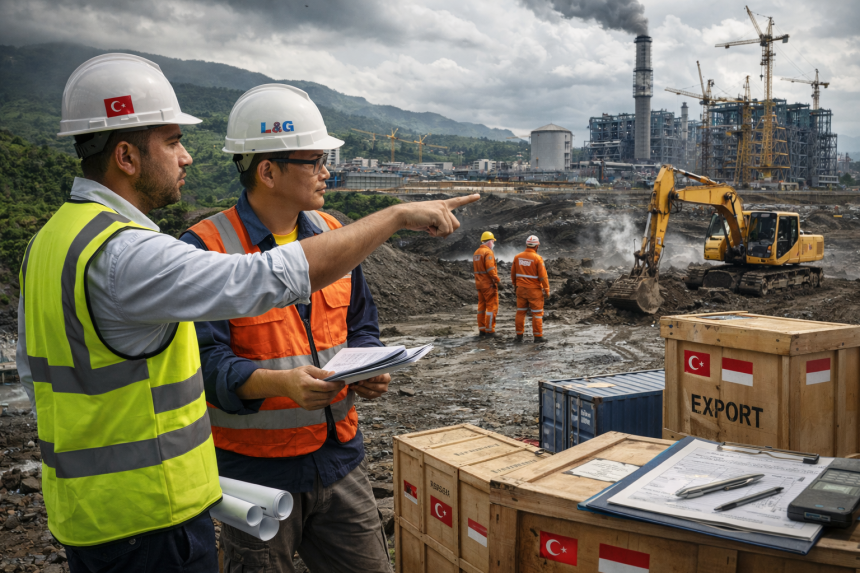
Indonesia has emerged as one of the most attractive markets in Asia for infrastructure development, energy projects, and industrial construction. Supported by government-led infrastructure programs, energy transition initiatives, and private sector investment, the country offers significant opportunities for Turkish EPC contractors, developers, and engineering firms.
However, project execution in Indonesia presents a distinct risk landscape. Natural catastrophe exposure, regulatory complexity, contractual risk allocation, and local operational challenges mean that insurance must be structured as part of a holistic risk management strategy, not arranged as a last-minute contractual requirement.
This article provides an advisory overview of project, construction, and energy risks for Turkish companies operating in Indonesia, highlighting key insurance considerations and the strategic role of an experienced insurance broker.
Why Indonesia Attracts Turkish Contractors and Energy Investors
In recent years, Turkish construction and energy companies have increasingly entered the Indonesian market. This is not without reason—Indonesia offers a combination of significant growth opportunities and growing infrastructure needs.
From the perspective of investors and contractors, Indonesia is not only a market but also a promising long-term play. Some of the key factors driving this interest include:
- Large-scale infrastructure expansion, starting from roads, ports, railways, to airports
- The ever-increasing demand for energy, including power generation projects and energy transition
- Relatively competitive labor and construction costs compared to many other countries
- Collaboration scheme opportunities, such as EPC, PPP, to joint ventures
- Strong diplomatic and trade relations between Indonesia and Türkiye
With this combination of factors, it is not surprising that several sectors are a major focus for Turkish investors and contractors, including:
- Power plants (gas, hydro, and renewable energy)
- Industrial and manufacturing facilities
- Port infrastructure and logistics
- Mining sector supporting infrastructure
However, with great opportunities, risks always come with it. Entering the Indonesian market without a thorough understanding of local project risks could significantly impact overall project performance.
Key Project Risks in Indonesia
Project success in Indonesia is not only determined by technical or financial capabilities, but also by the extent to which risks can be identified and managed from the outset.
Here are some of the main risks to be aware of:
1. Natural Catastrophe and Environmental Risk
As a country in the region Pacific Ring of Fire Indonesia has a high level of exposure to natural disasters, a crucial factor in construction and energy projects.
Some of the main risks include:
- Earthquake
- Volcanic activity
- Floods and landslides
- Extreme weather
The impact on the project can be very significant, such as:
- Physical damage to construction work and equipment
- Delay in project completion
- Extension of testing and commissioning period
Therefore, insurance programs cannot be designed using a “regional template.” They must be truly tailored to Indonesia’s unique and high-risk geographic conditions.
2. Regulatory and Permitting Risk
Besides natural factors, regulatory issues in Indonesia also pose challenges. Projects typically require multiple permitting processes involving multiple parties.
Some of the key aspects include:
- Central and regional government approval
- Environmental impact analysis (AMDAL)
- Domestic component level requirements (TKDN)
- Interpretation of regulations subject to change
If not managed properly, these risks can lead to:
- Project delay or termination
- Cost overruns
- Contractual penalty
While insurance cannot eliminate regulatory risk, under certain circumstances, it can help mitigate the financial impact of events covered by the policy.
3. Contractual and Commercial Risk
Many Turkish contractors operate in Indonesia under contract schemes such as EPC or EPCF. These schemes generally carry significant commercial pressure.
The characteristics of the contract include:
- Fixed-price obligations
- Liquidated damages (LDs)
- Tight resolution timeline
- Performance guarantees
If the contract is not analyzed in parallel with the insurance program, the risks that arise can be quite serious, such as:
- Contractual obligations not covered by insurance
- Deductible value is too high
- Policy exclusions that conflict with contract clauses
This is where the importance of synchronization between contracts and insurance structures from the start of the project lies.
4. Local Operational and Workforce Risk
In practice, projects in Indonesia almost always involve multiple local parties, creating complex operational dynamics.
Some of the elements involved:
- Local subcontractors
- Mitra joint venture
- Local workforce and management
Risks that often arise include:
- Inconsistent occupational safety standards
- Accident at the project site
- Communication and coordination challenges
These risks directly impact the need for protection such as:
- Third Party Liability
- Employer’s Liability
- Workers’ Compensation
Without proper management, these operational risks can escalate into major claims that impact the overall profitability of the project.
Essential Insurance Programs for Projects in Indonesia
Managing a project in Indonesia without the right insurance structure is like treading water on high-risk terrain without adequate protection. Project complexity, exposure to natural disasters, and contractual pressures make an insurance program more than just a formality—it’s a strategic part of the project’s success.
A well-designed insurance program not only protects assets, but also maintains the financial stability and sustainability of the project from start to finish.
In general, the following are the main components of a project insurance program in Indonesia:
1. Construction All Risks (CAR) / Erection All Risks (EAR)
This is the fundamental foundation of protecting construction and installation projects. Without this coverage, almost all of the project’s physical risks would be directly exposed.
Its main coverage includes:
- Physical loss or damage to construction work
- Materials and equipment used in the project
- Storage of goods, both on-site and off-site
However, simply having a CAR/EAR policy is not enough. The policy structure must be tailored to the project’s risk profile. Several important aspects to consider:
- Determination sum insured that truly reflects the value of the project
- Arrangement sub-limit for natural disaster risk
- Extended warranty for testing and commissioning
Mistakes in policy design at this stage often only become apparent when a claim occurs—and it’s usually too late.
2. Third Party Liability (TPL)
In addition to protecting the project itself, it’s also important to anticipate the impact on third parties. In many cases, it’s risks external to the project that trigger large claims.
TPL insurance provides protection against:
- Injury or death of a third party
- Damage to property around the project
This coverage is very crucial, especially for projects located in:
- Residential area
- Public infrastructure
- Active industrial area
Without adequate TPL protection, a single incident can escalate into a significant lawsuit.
3. Delay in Start-Up (DSU) / Advanced Loss of Profit (ALOP)
The risk of project delays not only impacts the timeline, but also directly affects cash flow and return on investment.
DSU or ALOP insurance is designed to protect:
- Loss of income due to project delays covered by the policy
- Additional costs, including longer financing terms
This type of protection is often a requirement of:
- Financing institutions (lenders)
- Project financiers
- Investor
In other words, DSU/ALOP is not just additional protection, but is often part of the financial structure of the project itself.
4. Professional Indemnity (PI)
As project complexity increases, design responsibility becomes a source of risk that cannot be ignored.
Professional Indemnity Insurance is relevant for:
- Design-and-build contractor
- Engineering consultant
- EPC contractor who has design responsibility
The risks incurred are usually related to:
- Design error
- Professional negligence
- Failure to meet technical specifications
Without this protection, a single design error could result in a large claim that is not covered by a standard construction policy.
5. Marine Cargo Insurance for Project Shipments
Many projects in Indonesia rely on imports of critical equipment and components. Risks arise not only at the project site but also during the shipping process.
Marine Cargo Insurance provides protection against:
- Imported machinery and equipment
- Critical components of the project
- Onward land delivery to the project location
Delays or damage to deliveries can directly impact the overall project schedule. Therefore, this protection is an integral part of project risk management.
Contractual Risk vs Insurance Risk: A Critical Distinction
One of the most common mistakes in construction and energy projects is an assumption that seems logical, but is dangerous:
“If the risk is stated in the contract, it is automatically covered by insurance.”
In practice, this assumption is often the starting point of major problems.
The reality:
- Not all obligations in a contract can be insured.
- Exclusions in the policy may override contractual obligations.
- Deductibles and sub-limits can leave significant exposure.
Some examples that often occur in the field include:
- Contractual penalties not covered under a CAR/EAR policy
- Project delays due to uninsured events
- Design defects excluded in standard policies
This is where the role of an insurance broker becomes crucial—not just as a policy provider, but as an advisor who identifies the gap between the contract and insurance coverage.before the project starts, not after the claim occurs.
Importance of Insurance Timing and Condition Precedent
Besides the policy structure, time factors and compliance with policy provisions are also aspects that are often overlooked, especially in Indonesia.
Many project insurance policies contain a clause condition precedent, which requires several things before protection can be fully effective, such as:
- Insurer approval before work begins
- Compliance with risk recommendations
- Completeness and accuracy of documentation
If these requirements are not met, the consequences can be very serious:
- The policy may be considered inactive (suspended)
- Claims may be rejected
- There is a coverage dispute between the insured and the insurer
Broker involvement from the start of a project helps ensure:
- Compliance with all policy conditions
- Synchronization between project schedule and insurance activation
- Complete and correct documentation from day one
In many cases, claims problems don’t occur because there isn’t a policy—but because the policy isn’t “effectively active” when needed.
Why Turkish Companies Should Work with a Local Indonesian Insurance Broker
Operating in Indonesia is not only about understanding the project, but also understanding local regulations—including those regarding insurance.
Some types of risks require the use of local insurance companies (admitted insurers). Turkish companies arranging insurance from abroad often face various obstacles, such as:
- Non-compliance with local regulations
- Difficulties in the claims process
- Communication barriers with insurers in Indonesia
This is where a local broker plays a crucial role. A broker who understands the Indonesian market can help by:
- Developing an insurance program that is compliant with regulations
- Coordinating insurers, reinsurers, and loss adjusters
- Accompanying the claims process directly in the field
Without strong local support, administrative risks can develop into real financial problems.
Why L&G Insurance Broker Is a Strategic Partner for Project Risks
In the context of high-risk projects, choosing a broker is not just about choosing an intermediary—it’s about choosing a strategic partner.
L&G Insurance Broker supports Turkish contractors and investors in Indonesia through an integrated approach, including:
- Review project risks before the contract is signed
- Designing an insurance program that aligns with the EPC contract
- Negotiating policy clauses, deductibles, and coverage extensions
- Claims assistance during the construction phase to commissioning
This approach focuses on three main things:
- Risk clarity
- Effectiveness of protection
- Optimizing recovery when a loss occurs
In other words, it’s not just about placing a policy—it’s about making sure it actually works when needed.
Practical Recommendations for Turkish Project Sponsors and Contractors
Before starting a project in Indonesia, there are several strategic steps that should be taken to minimize risks and potential losses.
These steps include:
- Do project risk assessment formally
- Reviewing EPC and joint venture contracts along with insurance structures
- Ensuring compliance with insurance regulations in Indonesia
- Develop CAR/EAR and DSU programs from the early stages of the project
- Engage a local insurance broker before mobilization begins
These steps may seem simple, but their impact is significant. With the right approach from the outset, companies can minimize potential project disruptions while optimally protecting their financial position.
Conclusion
Indonesia offers substantial opportunities for Turkish companies in construction and energy, but project success depends on disciplined risk management and properly structured insurance. Natural hazards, contractual exposure, and regulatory complexity demand a professional advisory approach.
Insurance, when guided by experienced broker support, becomes a stabilizing force that enables projects to proceed with confidence—even in challenging environments.
Call to Action for Turkish Project Developers and Contractors
Turkish companies planning or executing construction and energy projects in Indonesia are encouraged to review their project risk exposure and insurance structure early in the project lifecycle.
👉 L&G Insurance Broker provides confidential advisory support to help Turkish contractors and investors structure locally compliant, contract-aligned project insurance programs and manage claims effectively throughout the project duration.
Early engagement can prevent costly delays, disputes, and uninsured losses.
About the Author
The author is a senior insurance and risk management professional with over 30 years of experience advising international contractors, developers, and investors across Asia and emerging markets. As part of L&G Insurance Broker, the author specializes in project risk analysis, CAR/EAR insurance, DSU, and cross-border construction risk management for companies operating in Indonesia.