



The Indonesian insurance industry enters 2026 with increasingly complex dynamics and a surge of transformational momentum. Total assets have surpassed Rp1,200 trillion, and regulators are preparing a policy guarantee scheme that could potentially come into effect in 2027.
On the other hand, the industry faces global risk pressures, non-negotiable demands for sharia-compliant spin-offs, unit-linked product evaluations, and a major strategic shift from corporate dominance to retail expansion. This series of corporate policies and maneuvers demonstrates that the national insurance sector is moving toward a phase of consolidation, strengthening governance, and redefining its business model to maintain public trust.
No Longer Relying on Corporations! Retail Insurance Is Being Called the Industry’s New “Shield” Amidst Global Risks
The Indonesian insurance industry has undergone a major strategic shift over the past decade. While premium growth was previously driven primarily by the corporate segment and large-value projects, the focus has now shifted to a broader, more granular, and recurring retail market. This shift is considered more than just market expansion, but rather a strategy for building long-term business resilience.
With the national insurance penetration rate still hovering around 2–3 percent of GDP according to the Financial Services Authority, the retail market’s potential is considered enormous. Products such as personal accident insurance, travel insurance, micro-health insurance, and MSME loans provide a gateway to expanding the customer base. A volume-based model—with low premiums but a large number of policies—creates more stable risk diversification than relying on large corporate premiums.
Digital transformation and embedded insurance schemes also accelerate product distribution, reduce acquisition costs, and improve claims efficiency. However, challenges remain: unequal literacy, the need for simple product innovation, and expense ratio control.
Amid global economic volatility and increasing disaster risks, strengthening the retail portfolio is seen as a new foundation for industry resilience. Retail is no longer an add-on, but a key pillar of national insurance sustainability.
The 2026 Deadline Is Non-Negotiable! The Financial Services Authority (OJK) Emphasizes That the Sharia Insurance Spin-Off Is Mandatory, Not Just a Formality
The Financial Services Authority (OJK) emphasized that the mandatory separation or spin-off of insurance Sharia Business Units (UUS) is not merely an administrative requirement, but a strategic step to strengthen the foundation of the national Sharia insurance industry. The December 31, 2026, deadline is emphasized as absolute.
The Head of the Insurance and Support Services Supervision Department at the Financial Services Authority (OJK), Sumarjono, explained that this policy has four main objectives. First, to establish independent and competitive sharia entities, rather than simply “piggybacking” on conventional parent companies. Second, to improve operational efficiency by avoiding conflicts of interest between conventional business principles and sharia principles, which have traditionally slowed decision-making.
Third, encourage serious investment in technology and human resources. While operating as UUS, many companies still rely on the parent company’s infrastructure, including IT systems. With an independent entity, governance and accountability are expected to be clearer. Fourth, strengthen consumer protection through transparent management of participant funds and increase public trust.
The OJK emphasized that companies have two options: undertake a planned spin-off or face the consequences of a forced termination. This policy signals that the transformation of the Islamic insurance industry is now entering a more decisive and structural phase.
Source: https://wartaekonomi.co.id/read602281/ojk-bongkar-alasan-asuransi-syariah-harus-spin-off?page=1
Unit Links Resurrecting? AAJI Calls for Tax Incentives to Regain Attention for PAYDI!
Albertus Wiroyo, Chairman of the Board of Directors of the Indonesian Life Insurance Association (AAJI), believes that investment-linked insurance (PAYDI), or unit-linked insurance products, still have significant potential, both in Indonesia and globally. However, he acknowledged that the domestic market requires improvements to make these products more competitive, simpler, and more accessible to the public.
At the insurance industry forum, Albertus emphasized the importance of fiscal regulatory support in the form of personal tax incentives. He stated that tax relief would make returns more attractive to customers and increase the competitiveness of life insurance products, including PAYDI.
He also acknowledged that the industry has faced significant pressure in recent years due to high claims and company losses. This situation has forced several companies to raise premiums, which has then triggered customer complaints. In addition to inflation, issues of overcharging and overtreatment have also come under scrutiny and are regulated by the Financial Services Authority (OJK) policy.
Albertus added that unit-linked products are complex due to the inherent investment risk, while current customer trends tend to seek certainty. Therefore, AAJI, along with regulators, is still reviewing several improvements to achieve a balance between product flexibility and the public’s need for more certain protection.
Officially Separated from Parent Company! Tripa Syariah Ready for Independence: Here Are 5 Survival Strategies Post-Spinoff
PT Asuransi Tri Pakarta (Tripa) officially separated its Sharia Business Unit (UUS) into an independent entity named PT Asuransi Tri Pakarta Syariah. This step was taken after obtaining official permission from the Financial Services Authority (OJK) in late January 2026, following the submission of complete documents in October 2025.
Tripa Syariah’s President Director, Herry Triyatno, outlined five key post-spinoff strategies. First, maintaining financial fundamentals by ensuring healthy Risk-Based Capital (RBC) and liquidity in accordance with internal and regulatory requirements. Second, stabilizing the initial portfolio through a smooth business transfer process and retaining existing customers and key accounts.
The third strategy is to optimize shared services, especially in IT, claims, and finance, while preparing a roadmap for full independence by 2028. Fourth, focus on businesses that generate quick cash flow (quick turnover) and avoid long-term risks during the stabilization phase.
Finally, Tripa Syariah emphasized strengthening human resource management through competency mapping, a conglomeration blueprint, and improving talent quality. This spin-off is part of strengthening the structure of the Islamic insurance industry to become more independent, healthy, and competitive.
Source: https://infobanknews.com/5-strategi-penting-perusahaan-asuransi-syariah-pasca-spin-off/
Property Premiums Rise, But Climate Threats Lurk! Is Property Insurance Still Profitable in 2026?
Property insurance is projected to remain the backbone of the general insurance industry’s premiums in 2026. Insurance observer Dedi Kristianto believes this line will remain dominant due to the high value of corporate insurance coverage and the growing need for industry asset protection. Data from the Indonesian General Insurance Association (AAUI) shows that property premiums reached Rp32.86 trillion in 2025, growing 8.6% year-on-year. Paid claims rose 1.8% to Rp8.58 trillion, with a claims ratio of 26.1%.
While still promising, growth in 2026 is expected to be more moderate and selective. Rising reinsurance costs, catastrophic risks, and the impact of climate change are pressuring profitability. Rising claim frequency and value are driving companies to implement risk-based pricing and more disciplined underwriting.
On the other hand, there are still ample opportunities for expansion in the MSME and residential segments, where penetration rates are low. The challenges lie in price sensitivity and a lack of protection literacy. Simple products with affordable premiums and effective distribution through banks or property bundling are key.
According to Dedi, the future focus is not simply on pursuing premium volume, but on maintaining a profitable and sustainable portfolio. Companies that are disciplined in risk selection, claims governance, and reinsurance management are considered more stable than players who rely solely on price wars.
Insurance Assets Reach Rp1,200 Trillion! OJK Prepares Policy Guarantee Scheme, Will It Be Effective in 2027?
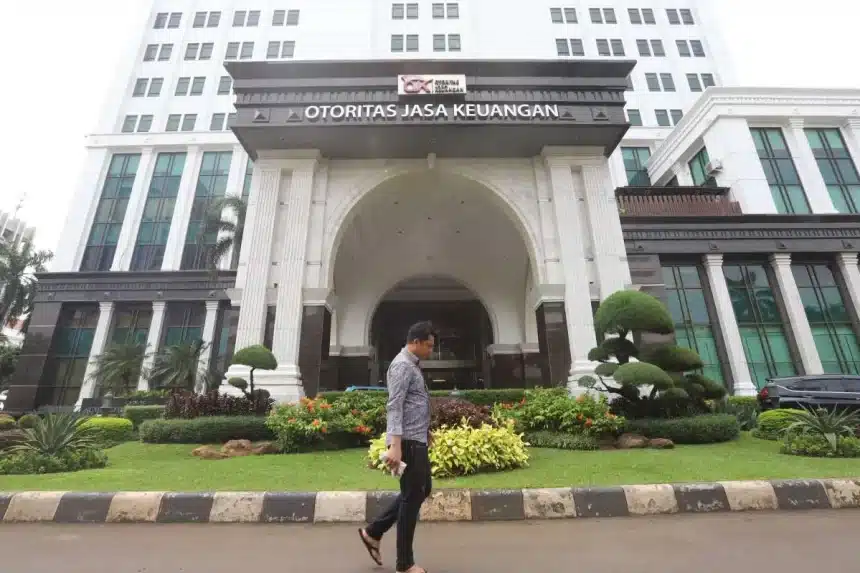
The Financial Services Authority (OJK) estimates that the total assets of the Indonesian insurance industry will reach Rp1,200 trillion by 2025, with stable growth of around 6 percent. Ogi Prastomiyono, Chief Executive of the Insurance, Guarantee, and Pension Fund Supervisory Agency, stated that this figure reflects a combination of commercial and social insurance performance that remains resilient amid global dynamics.
Despite this, commercial insurance premiums reached Rp331 trillion last year, down 1.46 percent. This decline was influenced by product distribution factors and global pressures impacting the life insurance industry. The Financial Services Authority (OJK) estimates that industry asset growth will remain in the range of 5–7 percent this year.
In terms of claims, the OJK assesses that conditions are starting to stabilize thanks to improvements in corporate governance and oversight. The regulator is also refining asset management regulations and tightening oversight of product design and distribution to strengthen consumer protection.
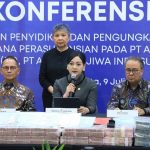
The highly anticipated OJK is currently discussing a policy guarantee program, as mandated by law. The program is targeted to be implemented no later than 2028, with the option of accelerating it to 2027 through discussions with the Deposit Insurance Corporation (LPS). This step is considered crucial for strengthening public trust and the stability of the national insurance industry.
Rogue Agents Could Have Their Licenses Revoked! The Financial Services Authority (OJK) Threatens to Revoke Agent Licenses If They Sell the Wrong Products
Ogi Prastomiyono, Chief Executive of the Insurance, Guarantee, and Pension Fund Supervisory Agency of the Financial Services Authority (OJK), emphasized the importance of a comprehensive understanding of insurance products, particularly Investment-Linked Insurance Products (PAYDI), or unit-linked products. He considered these products complex (sophisticated) because they contain investment elements that carry the risk of value fluctuations.
According to Ogi, the responsibility for education lies not only with insurance companies but also with marketing agents. Agents must understand product details, including the risk of investment depreciation, before explaining them to potential customers. The sales process must also be recorded for transparency and consumer protection.
Since June 2025, the Financial Services Authority (OJK) has required all insurance agents to be officially registered. If any mis-selling practices occur, the public can report them to the OJK. The penalties are severe: from registration cancellation to a ban on working as an insurance agent throughout Indonesia for serious violations.
In addition to agents, insurance companies are also under strict supervision. The Financial Services Authority (OJK) has confirmed that it will impose strict sanctions on companies that fail to comply with regulations. This measure is part of efforts to improve governance and strengthen consumer protection in the national insurance industry, particularly for high-risk unit-linked products.
From strengthening retail as the industry’s new “shield,” accelerating sharia spin-offs, to the discourse on policy guarantees, to stricter oversight of agents and unit-linked products, the 2026 policy direction appears increasingly firm: stability and consumer protection are top priorities.
However, despite the optimism for asset growth and expansion opportunities, challenges remain: profitability, climate risk, low literacy, and underwriting discipline. The year 2026 will be more than just premiums and assets, but also about who is most adaptive, transparent, and able to maintain a balance between growth and long-term risk management.