




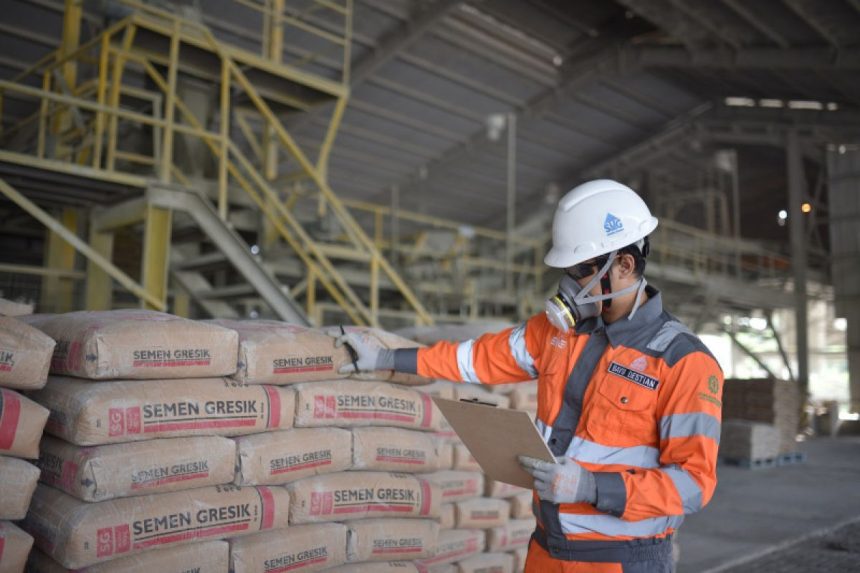
Cement warehouses and stocks are high-value assets in the construction and building materials distribution industry. Their value often reaches hundreds of millions to billions of rupiah in a single location. However, many business owners still feel “safe” simply because they have an insurance policy, without understanding whether that protection truly aligns with the actual risks they face.
In fact, many warehouse and cement stock losses remain unreimbursed upon claim, not because insurance is unavailable, but because coverage is incorrectly structured. This is where insurance brokers play a crucial role. Brokers not only help purchase policies, but also ensure all warehouse and cement stock risks are mapped, insured, and ready to be claimed when the risk actually occurs.
This article will discuss in depth why insurance brokers play an important role inwarehouse and cement stock protection, common mistakes companies often make, and how brokers help maintain real business continuity.
Contact L&G Insurance Broker for consultation regarding the protection of your Warehouse and Stock!
Website: lngrisk.co.id
Email: halo@lngrisk.co.id
Customer Service L&G: 08118507773
Why Do Cement Warehouses and Stocks Require a Special Approach?
1. Risk Characteristics of Cement Warehouses
Cement warehouses have different risk characteristics than general goods warehouses. Cement stocks are highly sensitive to water, humidity, and changes in environmental conditions. Risks such as fire, flooding, and gradual damage due to humidity can immediately and permanently degrade cement quality.
The problem is, not all of these risks are automatically covered by standard insurance policies. Without a thorough understanding, many cement warehouse owners feel protected, when in fact, there are significant gaps in their coverage.
2. Accumulated Cement Stock Value
Cement stocks are often stored in large quantities to ensure smooth distribution and construction projects. This accumulation significantly increases the value of warehouse stock, often without management realizing it.
When a risk occurs, the impact is not only physical damage, but also:
- Cash flow disruption
- Project delays
- Loss of trust of business partners
Without proper protection strategies, cement warehouses and stocks can become a source of major losses.
Common Mistakes Companies Make in Insuring Cement Warehouses and Stock
1. Buying a Policy Without Risk Analysis
Many companies purchase insurance simply to meet administrative obligations or contractual requirements. The primary focus is often on affordable premiums, rather than adequate coverage.
As a result, the purchased policy does not reflect the actual condition of the cement warehouse. Important risks are not covered, while infrequent risks are the focus of coverage.
2. Insuring a Warehouse Without Insurance Broker Assistance
Without an insurance broker, companies must navigate policy wording, exclusion clauses, and coverage limitations on their own. In practice, this is extremely risky, especially for warehouses and large-value cement stocks.
A small error in policy interpretation can result in a claim being rejected entirely.
3. Claim Denied Due to Weak Policy Structure
Cases of cement warehouse claim rejection often occur because:
- Underinsurance
- The risk of flooding or dampness is not extended
- Storage conditions are considered non-compliant
This problem could actually be prevented if protection was prepared from the start with the assistance of an insurance broker.
The Strategic Role of Insurance Brokers in Protecting Cement Warehouses and Stocks
1. Comprehensive Warehouse Risk Analysis
Insurance brokers begin the process by conducting a thorough risk analysis of the cement warehouse. This includes:
- Location and environment around the warehouse
- Building construction
- Ventilation and humidity control systems
- Cement stock storage method
This analysis is the basis for determining the most appropriate type of insurance and protection structure.
2. Developing a Targeted Insurance Structure
Based on risk analysis, insurance brokers help to develop a suitable combination of coverage, such as:
- Property All Risks Insurance (PAR)for buildings and stock
- Stock insurancecement to protect inventory value
- Business Interruption Insurance to maintain cash flow when operations are disrupted
Determination of the insured value is carried out objectively to prevent under insurance or over insurance.
3. Clause Negotiation and Risk Expansion
An insurance broker’s advantage lies in their ability to negotiate with insurance companies. Brokers ensure that important risks such as flooding, humidity, riots, and specific risks to cement warehouses are covered by the policy.
Without this negotiation, warehouse insurance coverage is often only basic and not robust enough when tested by claims.
Contact L&G Insurance Broker for consultation regarding the protection of your Warehouse and Stock!
Customer Service L&G: 08118507773 | Email: halo@lngrisk.co.id
Insurance Broker vs Insurance Agent – What’s the Difference?
Insurance Agent
Insurance agents typically represent a single insurance company. Their primary focus is selling the products available from that company. In many cases, agents lack the flexibility to customize policy structures beyond standard products.
Insurance Broker
Insurance brokers are independent and represent the interests of the insured, not the insurance company. Brokers have access to a wide range of insurers and can structure warehouse and cement stock protection more objectively and strategically.
For high-value assets such as warehouses and cement stocks, the role of an insurance broker provides significant advantages in risk and claims management.
The Role of Insurance Brokers When Cement Stock Loss Claims Occur
1. Assistance from the Start of the Claim
When a loss occurs, insurance brokers are directly involved in the claims process, from document collection and chronology to communication with the loss adjuster.
This assistance is essential to ensure claims are filed correctly from the outset.
2. Negotiate for Optimal Claim Payment
Insurance brokers understand policy details and have experience dealing with various claim scenarios. With this expertise, brokers can negotiate to ensure claims are not unfairly discounted or denied for technical reasons.
3. Maintain Business Cash Flow
Timely claims payments help businesses stay afloat despite losses. This is the true value of an insurance broker’s role as a business partner, not just an intermediary.
Case Study: Cement Warehouse with and without Broker
A cement distributor owned a warehouse with inventory worth billions of rupiah. In the first year, insurance was purchased directly without a broker. When a flood occurred, the claim was denied because flood risk was not covered by the policy.
In the following period, the company engaged the services of an insurance broker. The broker re-evaluated the risk, added flood coverage, and adjusted the coverage for cement stocks.
When a similar incident occurs again, claims are paid according to the value of the loss. This difference demonstrates the crucial role of insurance brokers in protecting cement warehouses and stocks.
When Does a Cement Warehouse Business Need to Use an Insurance Broker?
1. Stock Value Above Hundreds of Millions of Rupiah
The greater the value of cement stocks, the greater the potential for losses. Insurance brokers help ensure this significant risk doesn’t become a financial burden for the company.
2. High Risk Warehouse Locations
Warehouses in flood-prone areas, dense industrial areas, or near residential areas are at higher risk. Standard approaches are no longer sufficient.
3. Involved in Large-Scale Construction Projects
Delays in cement distribution due to damaged stock can directly impact major projects. Brokers help establish safeguards that safeguard reputation and contract continuity.
Insurance Brokers as Business Protection Partners
Warehouse and cement stock insurance isn’t just about purchasing a policy, but also about developing a truly effective protection strategy. Without the right approach, insurance can become an illusion of security.
Insurance brokers ensure warehouse and cement stock risks are properly mapped, coverage is tailored to actual conditions, and claims are paid when risks materialize. This is why brokerage is not an additional expense, but rather an investment in business protection.
L&G Insurance Broker is here as a risk management partner that helps your business protect its warehouse and cement stock comprehensively from planning, insurance placement, to claims assistance to keep your business safe, stable, and sustainable.
Contact L&G Insurance Broker for consultation regarding the protection of your Warehouse and Stock!
Website: lngrisk.co.id
Email: halo@lngrisk.co.id
Customer Service L&G: 08118507773