



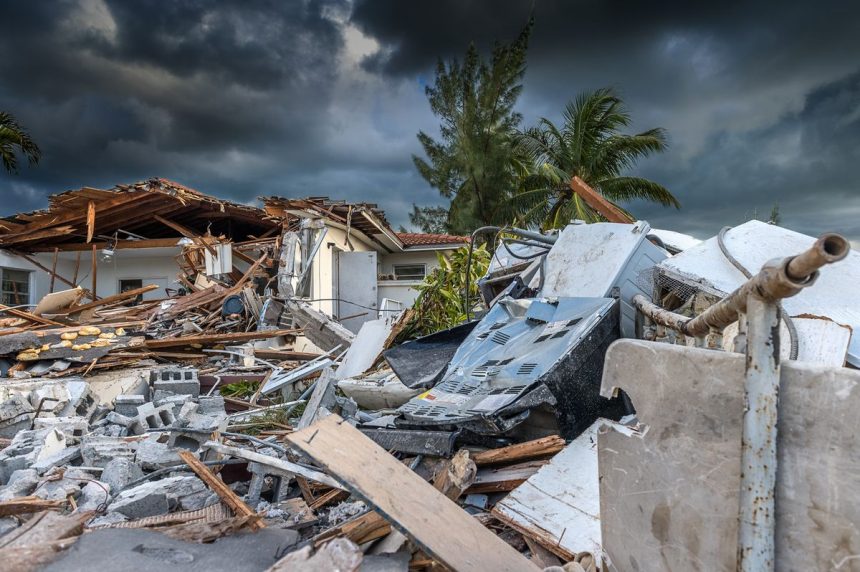
Amid escalating disaster risks, financial market volatility, and a growing public health burden, the Indonesian insurance industry is still grappling with a fundamental problem: low levels of protection. Data from the Financial Services Authority (OJK) shows a wide protection gap, even as disasters occur almost daily in the country, which lies along the Pacific Ring of Fire.
Ironically, public discussion often gets bogged down in technical polemics, ranging from policy underwriting, the role of reinsurance, to institutional consolidation, without addressing the root of the problem: the resilience of the insurance system itself. As risks become more complex and the system remains incomplete, a major question arises: to what extent is national insurance truly capable of protecting the public and maintaining economic stability?
Reinsurance Not Guaranteed by LPS: This New Controversy Could Shake Insurance Stability
The proposed policy guarantee scheme currently being prepared by the Deposit Insurance Corporation (LPS) has again sparked debate, particularly regarding the exclusion of the reinsurance industry from the program. This exclusion is considered to pose a potential risk to the stability of the national insurance system, particularly in the event of liquidity pressures or chain defaults.
Kocu Andre Hutagalung, President Director of PT Reasuransi MAIPARK Indonesia, emphasized that reinsurance is not, in principle, included in policy underwriting. He stated that policy underwriting aims to protect retail policyholders who are in a weaker position, while the relationship between insurance companies and reinsurers is business-to-business and based on commercial agreements between equal entities.
He also emphasized that international practice shows that reinsurance is generally not involved in such guarantee programs. However, discussions about reinsurance involvement often arise due to limited domestic reinsurance capacity and capital.
On the other hand, Budi Herawan, Chairman of the Indonesian General Insurance Association (AAUI), has a different view. He believes the absence of reinsurance in the guarantee scheme has the potential to prevent the program from addressing the root causes of insolvency in general insurance, which are often triggered by reinsurance failures.
These differing views indicate that the final design of policy underwriting remains a significant debate, with significant implications for the resilience and stability of the national insurance industry going forward.
The Jakarta Composite Index (JCI) plummeted, halting trading. Here’s what the Indonesian Financial Conduct Authority (AAUI) said about the impact on general insurance investments.
The plunge in the Jakarta Composite Index (JCI), which triggered a trading halt on Thursday (January 29, 2026), raised concerns about its impact on investment funds in the insurance industry. In response, the Indonesian General Insurance Association (AAUI) emphasized that general insurance companies’ exposure to stocks is relatively small and within safe limits.
AAUI Executive Director Cipto Hartono revealed that the current allocation of general insurance funds in stocks is less than 5 percent. This low allocation is due to the nature of the general insurance business, which requires high liquidity because claims must be paid quickly, even on a daily basis, as in marine insurance. Therefore, the majority of funds are placed in more stable and liquid instruments such as Government Securities (SBN) at around 40 percent and deposits at 15–20 percent.
Despite this, stocks are still seen as an attractive investment instrument.its placementThis is done very selectively and prudently, taking into account the risk of market fluctuations. Cipto emphasized that asset and liability management (ALM) is key to ensuring claims obligations can be met at all times.
With an average general insurance Risk-Based Capital (RBC) level of around 300 percent, the industry is considered very healthy and resilient to market volatility. This situation limits the impact of the JCI correction on the general insurance industry, although market volatility still warrants vigilance.
Hajj Insurance Ready for Total Change! Sharia Consortium Prepared to Expand Pilgrim Protection
The government and Sharia insurance industry players are continuing to refine the formation of a Hajj insurance consortium as an effort to strengthen protection for Indonesian Hajj pilgrims. This consortium is expected to cover not only life and health insurance but also other risks through general Sharia insurance, thus providing more comprehensive protection for pilgrims.
Jaenal Effendi, Director General of Hajj and Umrah Economic Ecosystem Development at the Ministry of Hajj and Umrah, stated that the government fully supports the formation of the consortium. Besides providing additional protection for pilgrims, its economic potential is considered enormous, given that Indonesia has the largest number of Hajj pilgrims in the world.
Rudy Kamdani, Chairman of the Indonesian Sharia Insurance Association (AASI), confirmed that coordination with the ministry and the Financial Services Authority (OJK) is ongoing. The main challenge currently is regulatory adjustments, given that Hajj insurance providers still have to go through a tender process. Nevertheless, AASI hopes all its members will join forces so the consortium can operate promptly in time for the 1447 H/2026 AD Hajj season.
Currently, the government has provided life and health insurance, the premiums of which are included in the BPIH. However, high healthcare costs and limited coverage after returning home emphasize the importance of synergizing with BPJS Kesehatan (Social Security Agency for Health) and additional private insurance options to ensure pilgrims’ ongoing protection from the Holy Land until their return home.
Sumatra Floods Trigger Nearly Rp1 Trillion in Insurance Claims! The Big Truth Behind the Still-Loose Coverage
The flash floods and landslides that struck three provinces in Sumatra have had a significant impact on the insurance sector. The Indonesian General Insurance Association (AAUI) recorded nearly Rp1 trillion in reported insurance claims as of January 2026. This figure came from various business lines, particularly motor vehicle insurance and property insurance, including residential homes, industrial and commercial buildings.
Despite the significant amount, AAUI emphasized that the total claims still have the potential to increase as the data collection and reporting process in the field is not yet fully completed. To accelerate economic recovery in affected areas, insurance companies are taking various steps, including appointing independent loss adjusters, accelerating damage surveys, and simplifying claims administration, particularly for MSMEs and retail businesses.
AAUI also urged insurance companies to handle disaster claims specifically and flexibly, using a case-by-case approach, as long as they comply with policy provisions. Meanwhile, the Financial Services Authority (OJK) is encouraging the activation of disaster response mechanisms by simplifying the claims process and strengthening customer service.
However, this disaster has once again highlighted the widening gap in insurance coverage among the public. The economic losses from disasters far exceed the insured assets. This situation serves as a crucial wake-up call for increased insurance literacy and inclusion, ensuring broader and more sustainable disaster risk protection in Indonesia.
Sumatra Floods Trigger Nearly Rp1 Trillion in Insurance Claims! The Big Truth Behind the Still-Loose Coverage
The flash floods and landslides that struck three provinces in Sumatra have had a significant impact on the insurance sector. The Indonesian General Insurance Association (AAUI) recorded nearly Rp1 trillion in reported insurance claims as of January 2026. This figure came from various business lines, particularly motor vehicle insurance and property insurance, including residential homes, industrial and commercial buildings.
Despite the significant amount, AAUI emphasized that the total claims still have the potential to increase as the data collection and reporting process in the field is not yet fully completed. To accelerate economic recovery in affected areas, insurance companies are taking various steps, including appointing independent loss adjusters, accelerating damage surveys, and simplifying claims administration, particularly for MSMEs and retail businesses.
AAUI also urged insurance companies to handle disaster claims specifically and flexibly, using a case-by-case approach, as long as they comply with policy provisions. Meanwhile, the Financial Services Authority (OJK) is encouraging the activation of disaster response mechanisms by simplifying the claims process and strengthening customer service.
However, this disaster has once again highlighted the widening gap in insurance coverage among the public. The economic losses from disasters far exceed the insured assets. This situation serves as a crucial wake-up call for increased insurance literacy and inclusion, ensuring broader and more sustainable disaster risk protection in Indonesia.
Vehicle Insurance Premiums Remain Under Pressure, OJK Reveals Opportunities for Recovery in 2026
Motor vehicle insurance performance throughout 2025 will remain under pressure, due to slowing vehicle sales and weakening purchasing power. The Financial Services Authority (OJK) recorded that motor vehicle insurance premium revenue reached only IDR 18.47 trillion by November 2025, a 4.03 percent year-on-year decline. This decline reflects the ongoing recovery in new vehicle purchases, which have historically been the primary driver of vehicle insurance premiums.
On the claims side, there was a relatively consistent decline. Claims were recorded at Rp7.19 trillion, down 3.22 percent year-on-year, indicating continued activity pressure on both premiums and claims. Meanwhile, motor vehicle reinsurance performance was relatively stable, with premiums at Rp0.33 trillion and claims at Rp0.17 trillion.
The Financial Services Authority (OJK) assesses that vehicle insurance performance is highly dependent on the recovery of the automotive and vehicle financing sectors, given that the majority of new vehicles financed by financial institutions require insurance. With the expectation of improving economic conditions and public purchasing power, the opportunity for recovery in 2026 is still open.
However, the OJK emphasized that this recovery must be accompanied by strengthening underwriting quality, more disciplined claims management, and prudent risk management. Overall, the insurance industry is projected to grow steadily, with a focus on business sustainability, consumer protection, and investment stability, which is currently dominated by Government Securities (SBN).
Source: https://aktual.com/premi-asuransi-kendaraan-turun-ojk-lihat-peluang-pulih-di-2026/
State-Owned Insurance Companies Downsized! From 15 to 3 Companies, What Really Happened?
The government, through the Daya Anagata Nusantara Investment Management Agency (Danantara Indonesia), is preparing to take a major step in the state-owned insurance industry. Danantara Chief Operating Officer, Dony Oskaria, is targeting the consolidation of 15 state-owned insurance companies into just three entities by 2026. The three companies are planned to represent life insurance, general insurance, and credit insurance, although credit insurance is still under review with the Financial Services Authority (OJK).
This step was taken in response to the complex issues facing state-owned insurance companies, particularly in terms of governance and risk management. Dony acknowledged that the issues faced extend beyond financial conditions to structural and operational aspects. To this end, Danantara is intensively coordinating with the Financial Services Authority (OJK) to map risks, growth potential, and the direction of improvements to the national insurance industry.
The consolidation process itself is nothing new. Since September 2025, Danantara has begun the clustering of state-owned insurance and reinsurance companies under the Indonesia Financial Group (IFG) umbrella. However, not all state-owned insurance companies are currently under this holding, so further restructuring opportunities remain open.
This policy is expected to create a stronger, healthier, and more competitive state-owned insurance industry, while simultaneously increasing public trust in national insurance protection.
Indonesia is the most disaster-prone country but has minimal insurance coverage. The Financial Services Authority (OJK) reveals the protection gap.
The Financial Services Authority (OJK) has highlighted the widening insurance protection gap for natural disaster risks in Indonesia. This is despite Indonesia’s geographical location on the Pacific Ring of Fire, tropical climate, and high rainfall, which contribute to the high frequency of natural disasters.
Munawar Kasan, Director of General Insurance and Reinsurance Supervision at the Financial Services Authority (OJK), revealed that according to data from the National Disaster Management Agency (BNPB), 3,233 natural disasters were recorded throughout 2025. These disasters included earthquakes, volcanic eruptions, floods, landslides, extreme weather, forest fires, tidal waves, and abrasion. This data confirms that disaster risk in Indonesia is no longer a potential threat, but a real threat that recurs annually.
Ironically, however, the level of insurance coverage for these risks remains low. Munawar explained that several contributing factors exist, ranging from low public awareness of disaster risks, limited understanding of insurance mechanisms as a risk transfer tool, to issues of affordability and trust in insurance providers.
Cultural factors also pose a challenge. Some people still view disasters as mere fate, thus disregarding the need for financial protection. The Financial Services Authority (OJK) believes this situation needs to be addressed immediately through increased insurance literacy and inclusion, so that the economic impact of disasters can be mitigated and post-disaster recovery more sustainable.
If not addressed promptly, the insurance industry has the potential to become a weak point in the national financial system, rather than the risk protector it was intended to be. Debates over policy guarantee schemes, reinsurance exclusions, and reliance on market mechanisms alone demonstrate the persistence of policy gaps that risk magnifying the impact of a crisis when pressures converge.
Without the courage of regulators and industry players to broaden coverage, increase transparency, and significantly strengthen risk governance, the protection gap will continue to widen. Ultimately, the consequences will be not only for policyholders but also for the stability of the financial system and public confidence in the insurance industry as a whole.
—
DON’T WASTE YOUR TIME AND SECURE YOUR FINANCES AND BUSINESS WITH THE RIGHT INSURANCE.
HOTLINE L&G 24 JAM: 0811-8507-773(PHONE – WHATSAPP – SMS)
Website: lngrisk.co.id
Email: halo@lngrisk.co.id
—