



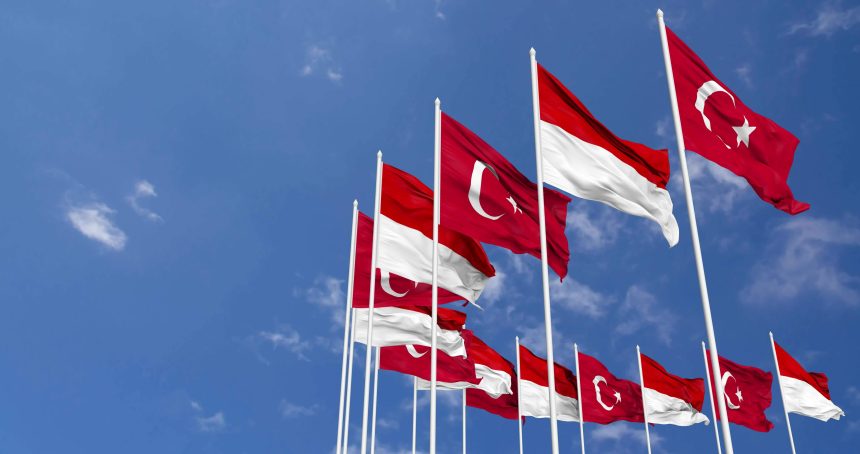
Economic relations between Indonesia and Turkey have evolved beyond diplomacy into a strategic business corridor encompassing trade, infrastructure, manufacturing, energy, defense, and investment projects. As both countries are members of the G20 and share ambitions to strengthen South–South cooperation, bilateral commercial activity is expected to continue growing.
However, cross-border opportunities between Indonesia and Turkey also bring complex and interconnected risks. Differences in legal systems, regulatory frameworks, logistics routes, currency exposure, and contractual practices mean that risk management and insurance cannot be treated as administrative formalities. They must be addressed strategically, from the earliest stages of negotiation.
This article offers an advisory perspective on risk analysis and insurance considerations for companies involved in Indonesia–Turkey trade and investment, and explains why collaborating with an experienced insurance broker is crucial for sustaining a successful cross-border business.
Background: Historical and Economic Relations Between Indonesia and Turkey
Indonesia and Turkey established diplomatic relations in 1950, building a foundation of political goodwill and cultural affinity. In recent decades, the relationship has expanded into economic and strategic cooperation, supported by:
- Shared G20 membership
- Bilateral trade agreements and high-level visits
- Collaboration in defense, aerospace, construction, and energy
- Growing interest in halal industry, manufacturing, and infrastructure
Turkey has positioned itself as a bridge between Europe, the Middle East, and Central Asia, while Indonesia serves as the largest economy in Southeast Asia and a gateway to ASEAN. This complementary positioning has encouraged:
- Indonesian exports of commodities, textiles, footwear, and consumer goods to Turkey
- Turkish participation in Indonesian EPC projects, power plants, infrastructure, and industrial facilities
- Joint ventures and project-based investments
Yet, as commercial activity increases, so does risk exposure, especially when contracts, logistics, and insurance arrangements are not aligned.
Why Risk Management Is Critical in Indonesia–Turkey Business
Cross-border transactions inherently involve multi-layered risk, but Indonesia–Turkey transactions present specific challenges that require proactive management:
- Different Legal and Regulatory Environments
- Indonesia enforces local insurance regulations, including requirements for admitted insurers
- Contract enforcement, claims procedures, and dispute resolution differ significantly
- Misalignment between governing law and insurance jurisdiction can create coverage gaps
- Currency and Financial Risk
- Exposure to IDR and TRY volatility
- Payment delays or defaults in trade transactions
- Financing structures that require insurance-backed risk mitigation
- Geographic and Logistics Distance
- Long marine routes through the Suez Canal and Mediterranean
- Transshipment risks
- Higher exposure to cargo damage, delay, and geopolitical disruptions
- Operational and Project Risk
- Natural catastrophe exposure in Indonesia (earthquake, flood, volcanic activity)
- Local subcontractor and workforce risks
- Regulatory approval and permitting delays
Without structured risk analysis, these issues often surface after a loss occurs, when insurance limitations become visible and costly.
Key Risk Categories in Indonesia–Turkey Transactions
A comprehensive risk assessment should address the following categories:
- Trade and Payment Risk
- Buyer insolvency or delayed payment
- Disputes over quality, delivery, or documentation
- Over-reliance on unsecured open account terms
- Marine Cargo and Logistics Risk
- Physical loss or damage during transit
- Improper packing or handling
- Misunderstanding of Incoterms and insurance responsibility
- Contractual and Legal Liability
- Third-party bodily injury or property damage
- Product liability claims
- Contractual indemnities exceeding insurance coverage
- Political and Regulatory Risk
- Sudden regulatory changes
- Import/export restrictions
- Licensing and local compliance requirements
- Project Execution Risk
- Construction delays
- Damage during erection or installation
- Delay in Start-Up (DSU) impacting cash flow
Each of these risks requires specific insurance solutions, structured in line with the business model and contract obligations.
Insurance as a Strategic Business Tool, Not a Compliance Exercise
Many companies still view insurance as:
- A contractual checkbox
- A cost center
- A document requested by counterparties or banks
In cross-border business, this mindset is risky.
Insurance should instead function as:
- A financial risk transfer mechanism
- A balance-sheet protection tool
- A contractual risk support system
Common mistakes include:
- Purchasing insurance without reviewing contracts
- Assuming counterparties’ insurance provides adequate protection
- Using generic policy wordings that do not reflect actual risk exposure
Strategic insurance planning starts with risk analysis, not policy selection.
The Role of an Insurance Broker in Cross-Border Risk Structuring
In Indonesia–Turkey transactions, the difference between using an insurance broker and buying insurance directly is not pricing—it is outcome.
An experienced insurance broker acts as:
- A risk translator between legal, commercial, and insurance language
- An advisor who aligns coverage with contracts and operations
- A negotiator with insurers and reinsurers
- A claims advocate when losses occur
Key broker contributions include:
- Identifying uninsured or underinsured risks
- Structuring local-compliant insurance programs
- Coordinating coverage across multiple jurisdictions
- Managing claims documentation and negotiation
Without this role, companies often discover coverage gaps only when claims arise.
Why Companies Operating Between Indonesia and Turkey Should Use an Insurance Broker Like L&G
For businesses engaging in Indonesia–Turkey trade or investment, local expertise is not optional—it is essential.
L&G Insurance Broker provides value through:
- Deep understanding of Indonesian insurance regulations
- Experience supporting international traders, contractors, and investors
- Ability to design insurance programs that align with:
- Trade contracts
- EPC agreements
- Financing and banking requirements
- Advisory-based approach focused on risk clarity, not product volume
In cross-border transactions, insurance success is measured not by having a policy, but by recovering losses effectively when incidents occur.
Practical Recommendations for Indonesia–Turkey Businesses
Before entering or expanding Indonesia–Turkey transactions, companies should:
- Conduct a structured risk analysis before contract signing
- Review insurance requirements alongside legal and commercial terms
- Avoid relying solely on counterparties’ insurance arrangements
- Ensure compliance with local insurance regulations
- Engage an experienced insurance broker early in the process
These steps significantly reduce the likelihood of uninsured losses and disputes.
Conclusion
Indonesia–Turkey economic cooperation offers significant opportunities, but also demands professional risk management discipline. In an environment shaped by distance, regulatory complexity, and operational uncertainty, insurance must be treated as a strategic advisory function, not a transactional purchase.
Companies that integrate risk analysis, insurance planning, and broker expertise into their decision-making process are better positioned to protect capital, preserve relationships, and sustain long-term growth.
Entering Indonesia? Secure your risks first.
Entering the Indonesian market offers significant opportunities for Turkish investors, EPC contractors, manufacturers, and traders. However, Indonesia’s regulatory framework, insurance requirements, natural hazard exposure, and local business practices require careful risk planning from the outset.
Before committing capital, signing EPC contracts, or mobilizing equipment and cargo, Turkish companies are strongly advised to work with a locally experienced Indonesian insurance broker who understands both international business standards and domestic compliance requirements.
L&G Insurance Broker supports Turkish companies in Indonesia by providing:
- Independent risk analysis tailored to Indonesian operating conditions
- Structuring of locally compliant insurance programs for projects, assets, cargo, and liabilities
- Alignment of insurance coverage with EPC contracts, joint venture agreements, and financing structures
- Ongoing claims advocacy and regulatory support within Indonesia
📌 Early engagement with a local insurance advisor can prevent coverage gaps, regulatory issues, and claim disputes that often arise when insurance is arranged remotely or too late.
👉 Turkish companies planning or expanding operations in Indonesia are invited to contact L&G Insurance Broker for a confidential advisory discussion on risk management and insurance strategy.
About the Author
The author is a senior insurance and risk management professional with over 30 years of experience advising multinational companies, contractors, traders, and investors operating across Asia and emerging markets. As part of L&G Insurance Broker, the author specializes in cross-border risk analysis, project insurance, marine cargo, liability, and financial risk solutions for international businesses operating in Indonesia.
—
DON’T WASTE YOUR TIME AND SECURE YOUR FINANCES AND BUSINESS WITH THE RIGHT INSURANCE.
HOTLINE L&G 24 JAM: 0811-8507-773 (PHONE – WHATSAPP – SMS)
Website: lngrisk.co.id
Email: halo@lngrisk.co.id
—