



Renewable Energy as a Pillar of the Future
The Indonesian government has affirmed its commitment to a clean energy transition as part of global efforts to reduce carbon emissions.
Through the National Energy General Plan (RUEN) and the 2060 Net Zero Emission (NZE) target, Indonesia is focusing on increasing the share of renewable energy, especially solar, wind, hydro, and biomass energy.
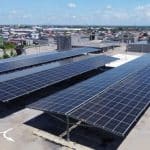
In this context, Solar Power Plants (PLTS) are the prima donna.
With an average solar radiation potential of 4.8 kWh/m² per day and extensive land availability, Indonesia has a technical capacity of more than 200 GW of solar energy.
However, to achieve this target, it is not enough to just build energy infrastructure.
We also need a strong supporting ecosystem, including:
- conducive regulations,
- financial and banking support,
- and risk protection through insurance.
This is where the role of PT Liberty and General Insurance Broker (L&G) becomes crucial — as a liaison between the energy industry, financial institutions, and insurance companies to build a sustainable protection system.
Why a Renewable Energy Insurance Ecosystem is Necessary
The renewable energy industry faces different risks than conventional industries.
These risks are not only technical, but also financial, legal, and social.
| Types of Risk | Impact | Sample case |
|---|---|---|
| Engineering | Installation damage, loss of production | Solar panels broken due to storm |
| Financial | Project default, funding stopped | The project is not bankable |
| Regulation | Changes in government policy | Net-metering scheme changes |
| Environment | Disturbances to land, floods, landslides | Floating solar power plant damaged due to high water |
| Operational | Human error, vandalism, or theft | Inverter missing from project site |
Without a strong risk management system, investors will be hesitant to invest capital.
Therefore, the existence of comprehensive insurance is an important requirement for the financial feasibility (bankability) of renewable energy projects.
The Strategic Role of Insurance in the Energy Transition
Insurance plays an important role in three main stages of renewable energy project development:
- Design and Construction Phase (EPC Phase)
Projects in this phase are high risk as they involve major engineering and contractor work.
Type of protection needed:
- Contractor’s All Risks (CAR) – protects the project from fire, disaster, construction errors.
- Third Party Liability (TPL) – covers losses to third parties during work.
- Marine Cargo Insurance – for shipping panels and inverters from overseas.
- Operational and Maintenance Phase (O&M Phase)
Once the system is operational, the risks shift to operational and financial.
Relevant protection:
- Property All Risks (PAR)
- Machinery Breakdown (MB)
- Business Interruption (BI)
- Public Liability Insurance
- Financing and Investment Phase (Financial Phase)
Banks and financial institutions usually require insurance before disbursing investment funds.
With insurance, investment risks can be partially transferred to the insurance company, making the project bankable.
The Key Role of Insurance Brokers in the Renewable Energy Ecosystem
Insurance brokers such as PT Liberty and General Insurance Broker (L&G) have a strategic role in building bridges between industry players and insurance companies.
Their job is not just to sell policies, but to build an integrated risk protection system.
- Risk Consultation and Insurance Program Design
L&G conducts a comprehensive risk assessment for every solar power or renewable energy project, including:
- Analysis of location and weather conditions,
- Financing and contract structure,
- Potential technical and environmental hazards.
From these results, L&G designed a combination of policies that are efficient and effective.
- Insurance Negotiation and Placement
L&G has an extensive network with national and international insurance companies.
This allows for negotiation of rates, extended coverage, and the best policy conditions for the client.
- Claim Advocacy
In practice, the claims process is often the biggest challenge.
As a broker, L&G acts as a client advocate, ensuring claims are paid fairly and promptly with complete documentation.
Real Case Example:
A 1 MW solar power plant project in Batam experienced inverter damage due to lightning.
With L&G’s assistance, the Rp 1.3 billion claim was approved in just 45 days — thanks to comprehensive technical documentation and effective communication between the loss adjuster and the project owner.
- Education and Training (Risk Awareness Program)
L&G actively provides training to project owners, EPC contractors and O&M teams on:
- Risk management,
- Loss prevention (loss prevention),
- And understanding of insurance policies.
This educational program increases risk awareness while reducing the frequency of claims.
- Digital Innovation: LIGASYS Risk & Claim Platform
Through an internal digital system calledSICK, clients can:
- Monitor policy and claim status in real-time,
- Download insurance documents,
- Submit a claim online.
LIGASYS improves transparency, speed and efficiency energy project insurance management.
Challenges in Developing a Renewable Energy Insurance Ecosystem in Indonesia
Despite the huge potential, there are a number of challenges that need to be overcome:
- Lack of Understanding of Renewable Energy Risks
Many project developers still consider insurance as a formality, not a risk management necessity. - Lack of Historical Loss Data
Without sufficient loss data, it is difficult for insurance companies to determine optimal premiums and coverage. - Limited Local Underwriting Capacity
Major risks such as solar power plants on a scale of >10 MW often require support reinsurance from abroad. - Non-Compliance of Contract and Insurance Standards
EPC or O&M contracts are often not synchronized with insurance clauses. - Lack of Collaboration between Stakeholders
Regulators, developers, banks, and insurance often work separately, even though they should form an integrated ecosystem.
Strategy for Building a Renewable Energy Insurance Ecosystem
To strengthen the role of insurance in the energy transition, several strategic steps need to be taken:
- Risk and Policy Standardization
Create national standards for insurance for renewable energy projects (such as solar power plants, hydropower plants, and wind turbines) to make it easier for developers, banks, and insurers to assess risks.
- Multi-Party Collaboration
Encourage cooperation between:
- Government (ESDM, OJK),
- Energy and insurance association,
- Brokers like L&G,
- And financial institutions.
This collaboration is important to build more efficient financing and risk underwriting mechanisms.
- Energy Risk Education and Certification
Improving human resource capacity in the insurance and energy sectors to understand the characteristics of renewable energy projects.
- Use of Digital Technology
Integration of weather data, IoT sensors, and monitoring systems can help prevent claims and accurately assess risks.
- Incentives for Insured Projects
The government could provide tax incentives or better credit risk assessments for energy projects that have comprehensive insurance protection.
Examples of Successful Countries: India and Germany
Several countries have demonstrated that a robust energy insurance ecosystem can accelerate the energy transition.
- India has a Renewable Energy Insurance Pool program involving 15 insurance companies to support solar and wind power projects.
- Germany implemented a mandatory insurance system for renewable energy installations, which reduced the project failure rate by 30%.
Indonesia could emulate a similar approach by adapting to the local context and with support from experienced brokers such as L&G Insurance Broker.
L&G’s Future Role in Indonesia’s Energy Transition
As a national insurance broker specializing in engineering, energy, and infrastructure, PT Liberty and General Insurance Broker (L&G) is committed to being a pioneer in:
- Insurance for large-scale solar power plants and rooftop solar power plants
- Wind Power Plant and Hydro Power Plant Projects
- Biomass and Bioenergy Insurance
- Smart Grid Infrastructure Insurance
Through a holistic approach—from risk identification and protection design to premium negotiation and digital claims management—L&G is helping Indonesia move towards a greener, more efficient, and more sustainable energy future.
Conclusion: Insurance Is the Foundation of Security in the Energy Transition
The energy transition is not just about changing electricity sources, but also about building investment security, operational sustainability, and protecting national assets.
Without a robust insurance system, renewable energy projects are vulnerable to financial and operational failure.
Therefore, building a renewable energy insurance ecosystem is a strategic step towards Indonesia’s energy security.
And PT Liberty and General Insurance Broker (L&G) is ready to be at the forefront —
to be a trusted partner for developers, investors, and governments in ensuring that every kilowatt of clean energy is protected from risk.
—
DON’T WASTE YOUR TIME AND SECURE YOUR FINANCIAL AND BUSINESS WITH THE RIGHT INSURANCE.
HOTLINE L&G 24 JAM: 0811-8507-773 (CALL – WHATSAPP – SMS)
Website: lngrisk.co.id
Email: halo@lngrisk.co.id
—