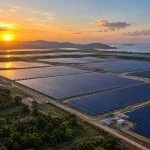




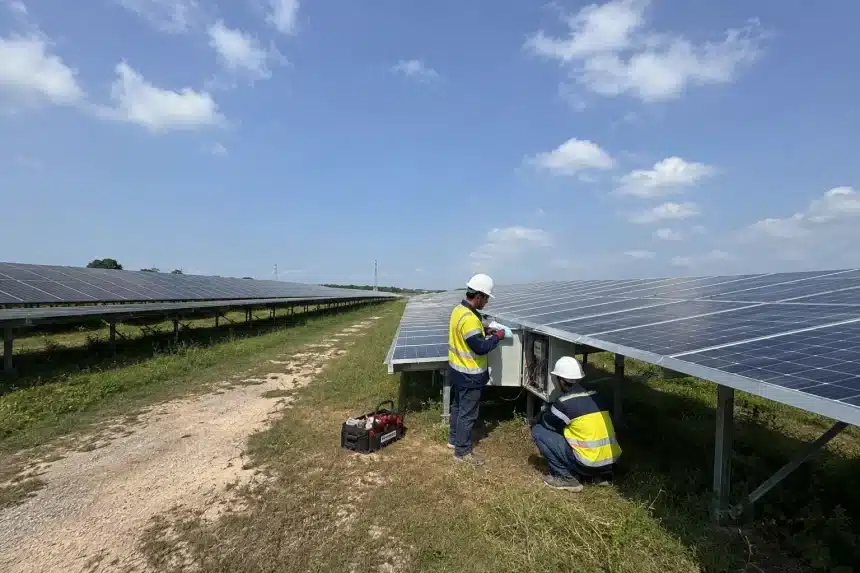
The growth of solar power plants (PLTS) in Indonesia has shown an increasingly positive trend in recent years. The declining price of solar panel technology, growing awareness of clean energy, and the push for the energy transition have prompted many companies to invest in solar power systems, both on a rooftop and utility scale.
However, like other industrial assets, solar power is not a risk-free investment.
Many project owners focus on technical aspects such as system capacity, panel efficiency, and projected energy production. However, risk protection is often only considered when damage or operational disruptions impact the company’s finances.
In practice, the success of solar power plant investments is not only determined by the technology used, but also by the project owner’s ability to manage risks throughout the asset’s life cycle.
Risks That Remain After Solar Power Plants Operate
Many people assume that the greatest risks of solar power plants occur during construction. However, once the system starts generating electricity, various new risks emerge during the operational phase.
Some of the most frequently encountered risks include:
Equipment Damage
Key components such as inverters, transformers, solar panels, protection systems, and monitoring devices can experience problems due to wear and tear, voltage surges, humidity, and other environmental factors.
Damage to the inverter can even significantly halt energy production because this device functions as the power conversion center in a solar power system.
Natural Risks and Extreme Weather
Indonesia has a relatively high level of exposure to disaster risk.
Solar power plants can be affected by:
- lightning strike,
- flood,
- strong winds,
- earthquake,
- extreme rain,
- and corrosion due to the marine environment.
Physical damage resulting from such events often requires large replacement costs.
Risk of Theft and Vandalism
Project locations that are far from activity centers or in open areas can increase the risk of losing panels, cables, or other electrical components.
Cable theft cases at energy facilities are still one of the challenges found in many developing countries.
Risk of Loss of Income
In addition to physical losses, operational disruptions can also result in the loss of revenue that would otherwise be generated from energy production.
In commercial and industrial projects, losing production for a few weeks can have a greater financial impact than the cost of repairing the asset itself.
Legal Liability Risk
Solar power plants also have the potential to cause losses to third parties.
For example, a fire caused by an electrical fault that spreads to other buildings, or injuries suffered by contractors and visitors in the installation area.
These risks show that solar power plant management is not only related to technical aspects, but also requires an adequate financial protection strategy.
Why is Risk Transfer Through Insurance Important?
Within the discipline of risk management, there are four main approaches:
- avoid risks,
- reduce risk,
- accept the risk,
- transfer risk.
For risks that have the potential to cause large losses, risk transfer through insurance is one of the most commonly used mechanisms.
Insurance allows companies to transfer some of the financial impact of an incident to the insurance company according to the applicable policy provisions.
For solar power plant owners, having insurance helps maintain financial stability when events occur that cannot be completely prevented.
Types of Insurance Commonly Used in Solar Power Plants
Property All Risks (PAR)
Property All Risks is one of the most widely used policies to protect the physical assets of solar power plants.
This policy generally provides protection against various risks such as:
- fire,
- lightning,
- explosion,
- flood,
- earthquake,
- as well as other physical risks that are not specifically excluded in the policy.
Machinery Breakdown Insurance
Although solar power plants do not have as many mechanical components as conventional power plants, electrical equipment such as inverters still have the risk of internal damage.
Machinery Breakdown Insurance is designed to provide protection against sudden damage to the equipment.
Business Interruption Insurance
One protection that is increasingly relevant for energy projects is Business Interruption Insurance.
This policy provides compensation for loss of profits or income resulting from operational disruptions following the occurrence of damage covered by the policy.
Public Liability Insurance
This protection helps companies face potential lawsuits from third parties who suffer losses due to solar power plant activities or facilities.
Employer Liability atau Workmen Compensation
This insurance provides protection against the risk of work accidents involving workers during operational and maintenance activities.
The Relationship between Maintenance Programs and Insurance
In the insurance industry, the quality of risk management is an important factor in underwriting assessment.
Companies that have:
- periodic maintenance program,
- good documentation,
- digital monitoring system,
- clear safety procedures,
are generally seen as having a lower level of risk than companies that do not have an adequate risk management system.
Therefore, insurance and maintenance are not mutually exclusive. They complement each other in ensuring the operational continuity of an energy asset.
Challenges in Solar Power Plant Risk Management
Although the solar energy sector is growing rapidly, there are still several challenges in developing an optimal insurance program.
Some of these include:
- lack of historical loss data,
- variations in design and technology used,
- project locations that have different risk characteristics,
- changes in asset value due to technological developments,
- as well as the need for coordination between project owners, contractors, lenders, and insurance companies.
Therefore, the process of identifying risks and preparing insurance programs should be carried out thoroughly so that the protection obtained truly matches the project’s needs.
L&G Insurance Broker and Risk Management in the Energy Sector
L&G Insurance Broker has experience helping companies understand and manage the various risks that arise in the energy, infrastructure, construction and industrial sectors.
The experience covers a wide range of project types such as:
- power plants,
- renewable energy,
- EPC (Engineering, Procurement & Construction),
- infrastructure,
- manufacturing,
- mining,
- logistics,
- as well as various other industrial projects.
L&G helps clients do:
- risk identification and mapping,
- review of the adequacy of insurance coverage,
- preparation of an insurance program that is appropriate to the project risk profile,
- negotiations with insurance and reinsurance companies,
- and assistance when a claim occurs.
This approach helps companies obtain protection that is more suited to their operational needs and risk exposure.
Conclusion
As investment in solar energy increases, the need for more mature risk management will also increase.
Insurance is not a substitute for maintenance or risk management. However, it is an important part of a financial protection strategy that helps maintain the sustainability of investments in the event of unexpected events.
For solar power plant owners, understanding the relationship between operational risk and insurance coverage is a crucial step in ensuring that their clean energy investments provide long-term, sustainable benefits.