



About the Author
Written by Mhd. Taufik Arifin, ANZIIF (Snr. Assoc), an independent expert in risk management and insurance with over 40 years of experience in the energy, mining, logistics, and oil and gas sectors. His expertise includes risk management, designing effective insurance placement structures, and complex claims settlement, particularly for high-risk projects. The author is known as an independent advisor bridging the interests of asset owners, investors, banks, and the insurance industry.
Key Takeaways:
- PLTMH (Mini Hydro Power Plant) is an important part of Indonesia’s energy transition, but carries high risks because it operates in areas prone to flooding, landslides, and extreme hydrological dynamics.
- Flash floods and climate change have been shown to increase damage to micro hydropower plants, as occurred in Sumatra in 2025, thus demonstrating the importance of location-based risk assessment and the latest data.
- Many micro-hydro power plants (MHP) projects in Indonesia still face underinsurance issues, gaps in policy clauses, and the absence of Business Interruption cover, which increases the financial impact when losses occur.
- The risks of micro-hydro power plants are not only related to physical damage to assets, but also impact cash flow, credit obligations, and investor confidence, thus affecting project feasibility (bankability).
- Micro hydropower insurance is only effective if supported by strong risk management, including technical mitigation, credible underwriting documentation, and appropriate policy structure.
- The role of insurance brokers is crucial in designing insurable and bankable micro hydropower insurance programs, as well as bridging the interests of developers, lenders, and underwriters.
- The success of green energy projects such as micro-hydro power plants is now determined by disaster resilience, the quality of risk management, and the ability to proactively manage climate change risks.
- To ensure the sustainability of the PLTMH project, risk management must be carried out from the planning stage and make insurance a core strategy, not just a formality.
Green Energy Isn’t Always Risk-Free
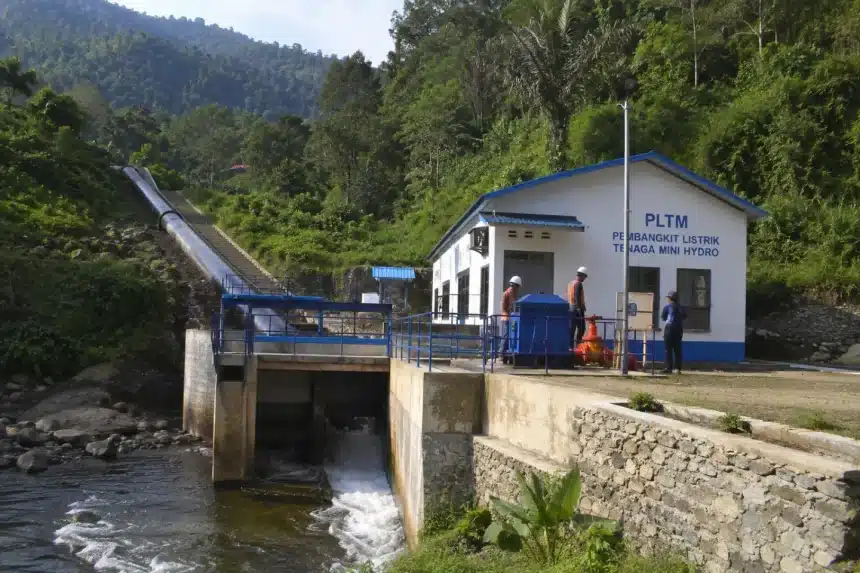
In recent years, mini-hydro power plants (PLTMH) have become a symbol of optimism for Indonesia’s energy transition. Amid the government’s push to reduce reliance on fossil fuels, micro-hydro power plants are seen as an ideal solution: clean, sustainable, and capable of reaching remote areas.
However, the reality on the ground shows one important fact that is often overlooked:
Green energy does not mean risk-free.
The end of November 2025 was a bittersweet reminder for the national micro-hydro power plant industry. Flash floods that struck several areas in Sumatra caused damage to dozens of micro-hydro power plants, ranging from partial to total loss. Some projects were paralyzed for months, while others faced uncertainty about recovery.
This incident is not simply a natural disaster. It is a structural warning that the risk management approach to micro-hydro power plants in Indonesia must change.
Micro Hydro Power Plants and Indonesia’s Major Energy Transition Agenda
The Indonesian government has positioned renewable energy as a key pillar of long-term development. Micro-hydro power plants (MHPs) hold a strategic position because:
- Suitable for mountainous and rural areas
- Relatively quick to build compared to large hydropower plants
- Supporting electrification of remote areas
- Environmentally friendly and sustainable
However, the geographical advantage of PLTMH is also the source of its greatest risk.
Micro hydropower plants are almost always built in:
- Upstream
- Narrow valley
- hillside
- Areas with limited access
- Areas prone to flooding and landslides
This means that PLTMH lives side by side with the extreme dynamics of nature.
Field Reality: Why Are the Risks of Micro Hydro Power Plants So High?
In contrast to fossil-based power plants which are relatively protected in terms of location, micro-hydro power plants are highly dependent on the surrounding natural conditions.
Main Risks of Micro Hydro Power Plants
- Flash flood
- Landslides and ground movements
- Extreme sedimentation
- Damage to intake and water lines
- Penstock shift or breakage
- Damage to powerhouses and electromechanical equipment
Flash floods carry not only water but also large rocks, logs, mud, and heavy sediment. Within hours, micro-hydro power plant infrastructure built over years can suffer fatal damage.
Real Evidence: Expensive Lessons from Sumatra
The flash floods in Sumatra in late 2025 opened the eyes of many. Dozens of micro-hydro power plants were affected, some with losses reaching tens to hundreds of billions of rupiah.
What’s more worrying:
- Not all damage is properly insured
- Some claims face clause constraints
- There are projects without Business Interruption protection
- There are PLTMH that are not insured at all
The impact is systemic: cash flow stops, investors delay expansion, banks tighten financing, and the insurance industry becomes more selective.
Climate Change: A Risk That Can No Longer Be Ignored
Climate change exacerbates the challenges facing micro-hydro power plants. Historical hydrological data that has served as the basis for design is often no longer relevant.
Extreme rainfall, changing seasonal patterns, deforestation, and changes in land use in upstream areas have made risks that were once considered rare into recurring events.
Financial Impact: From Physical Damage to Business Crisis
Damage to a micro-hydro power plant almost always triggers a domino effect:
- Major repair costs (40–70% of asset value)
- Loss of electricity revenue
- Credit obligation pressure
- Declining investor confidence
Without proper risk management, micro-hydro power plants have the potential to transform from green projects into problematic assets.
Micro Hydropower Insurance: Between Hope and Reality
The classic question arises:
“Why is PLTMH insurance getting more expensive and difficult?”
The answer is emphatic:
Insurance doesn’t reject risk. Insurance rejects uncertainty.
Without proper risk assessment, mitigation, and documentation, the risks of micro-hydro power plants are difficult for the insurance market to accept.
The Strategic Role of Insurance Brokers in the Micro Hydroelectric Power Plant Ecosystem
Insurance brokers act as risk protection architects, not just seekers of cheap premiums.
Professional brokers like L&G Insurance Broker:
- Mapping site-specific risks of PLTMH
- Compiling credible underwriting information
- Bridging engineers, banks, and underwriters
- Designing a realistic insurance program
- Monitoring the claims process during a crisis
Without a broker who understands the characteristics of micro-hydro power plants, insurance protection risks becoming a useless formality.
Towards a More Resilient and Bankable Micro Hydroelectric Power Plant
The success of PLTMH in the future will not be measured solely by MW capacity, but by:
- Disaster resilience
- Quality of risk management
- The right insurance structure
- Investor and lender confidence
An insurable micro hydro power plant is a bankable micro hydro power plant.
Conclusion: Green Energy Needs Real Protection
The energy transition is a long journey, and microhydro power plants are a crucial part of that journey. However, without a serious approach to risk, green energy can turn into a major liability.
It’s time for all stakeholders:
- Managing risk from an early stage
- Make insurance a strategy, not a formality
- Engaging brokers as partners, not vendors
Because Indonesia’s green energy future will only be sustainable if the risks are properly managed and protected.
Contact L&G Now
The risk of flooding and landslides at micro-hydro power plants is no longer a possibility—it’s a reality that must be strategically managed. Delaying risk management means risking assets, cash flow, and investor confidence.
If you are a micro-hydro power plant owner, investor, contractor, lender, or renewable energy developer, now is the time to ensure your project is fully protected and bankable.
Contact L&G now for:
- Location-based PLTMH risk assessment
- Establishing an insurable & bankable insurance structure
- Negotiation of flood and landslide clauses
- Professional claims assistance
Don’t let your green energy turn into a gray risk.
Protect your micro hydropower assets—starting today.