



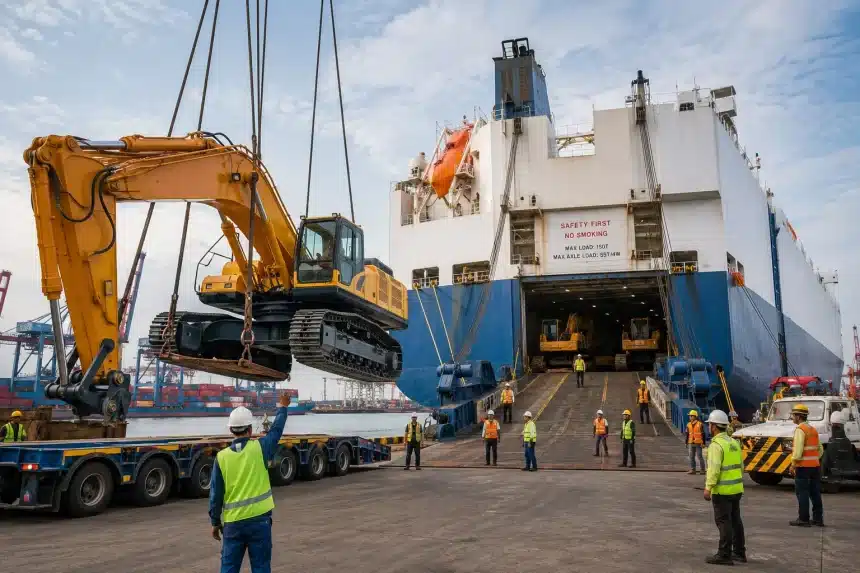
In the eyes of many logistics players, the existence of Marine Cargo Insurance is often considered the last layer of protection when goods are damaged or lost during shipping.
When a cargo is damaged, the owner of the goods files a claim with the insurance company, the claim is paid, and the problem is considered resolved.
But in practice, this is not always the case.
Behind many high-value cargo claims, there is one mechanism that is often poorly understood by logistics industry players, namely subrogation.
For freight forwarding companies, trucking companies, warehouse operators, and other logistics service providers, subrogation can be a source of lawsuits that arise long after the claims process has been completed.
This phenomenon is increasingly seen with increasing trade volumes, the growth of e-commerce, and the increase in shipments of high-value goods such as industrial machinery, project cargo, and heavy equipment.
What is Subrogation in Insurance?
Simply put, subrogation is the right of the insurance company to take over the rights of the insured in suing the party considered responsible for a loss.
For example, a manufacturing company sends production machines worth billions of rupiah.
The goods are insured with Marine Cargo Insurance.
On the way there was an accident which caused the engine to suffer serious damage.
The insurance company then pays the claim to the owner of the goods according to the terms of the policy.
From the owner’s perspective, the problem may have been solved.
But from the insurance company’s point of view, the following question arises:
Who actually caused the loss?
If negligence is found on the part of a particular party, the insurance company can attempt to recover some or all of the claim payments that have been issued through the subrogation process.
Is Your Logistics Company Potentially Facing Subrogation Risk?
Many freight forwarders only realize the gap in protection after receiving claims worth hundreds of millions to billions of rupiah.
If your company handles heavy equipment shipping, project cargo, import-export, or high-value goods distribution, understanding liability exposure is just as important as protecting the goods being shipped.
To get an idea of the risks your company may face, contact our team of logistics and liability insurance specialists at:
📧 Email: halo@lngrisk.co.id
📱 WhatsApp: 0811-8507-773
Why Are Freight Forwarders Often Targeted?
In the modern logistics chain, freight forwarders play a very important role.
They arrange transportation, choose the mode of transportation, manage documents, coordinate with various vendors, and ensure that goods arrive on schedule.
Because they are at the center of the logistics process coordination, freight forwarders are often the first party to be checked when cargo loss occurs.
Even when the damage is caused by another party, the freight forwarder can still be involved in the investigation or lawsuit process.
This especially happens when there is suspicion of:
- mishandling of goods,
- vendor selection error,
- negligence of supervision,
- documentation errors,
- or violation of operational procedures.
Why Is This Risk Increasing?
Changes in the logistics industry have increased exposure to legal liability.
Some contributing factors include:
1. Increasing Value of Goods
Nowadays shipping does not only cover ordinary consumer goods.
Many logistics companies handle:
- heavy equipment,
- industrial machinery,
- power generation components,
- mining equipment,
- project cargo,
- to energy equipment.
The value of one shipment can reach billions or even tens of billions of rupiah.
2. Increasingly Complex Supply Chain
A single shipment can involve multiple parties at once.
Starting from shippers, freight forwarders, trucking companies, port operators, warehouse operators, to international carriers.
The more parties involved, the more complex the process of determining responsibility when a loss occurs.
3. Customers are increasingly demanding
Many logistics contracts today contain stricter service level agreements than they did a few years ago.
Delays in delivery, document errors, or damaged goods can trigger claims that never existed before.
When Damaged Goods Turn into a Legal Problem
Many companies understand the risks of physical damage to goods.
However, not everyone understands that damaged goods often develop into legal disputes.
Losses that initially took the form of cargo damage can change to:
- claim for damages,
- contract disputes,
- legal defense costs,
- loss of income,
- to disruption of business relationships.
Therefore, modern logistics companies no longer only think about how to avoid damage to goods.
They also begin to pay attention to how to manage the legal responsibilities that may arise after an incident occurs.
Why is Understanding Risk Important?
In many cases, the greatest losses do not come from the accident itself.
The biggest losses actually arise when companies do not understand the exposure they face.
Ignorance of the concept of subrogation often causes companies to assume that all risks are over when cargo is insured.
In reality, protection of goods and protection against legal liability are two different things.
Understanding these differences becomes increasingly important as the complexity of Indonesia’s logistics industry increases.
Lessons for the Logistics Industry
The development of the logistics sector brings many growth opportunities.
But at the same time, the risks that must be managed are also getting bigger.
For freight forwarding, trucking, warehouse, and other logistics service providers, understanding claims and subrogation mechanisms is no longer just additional knowledge.
This has become part of risk management that every industry player needs to understand.
Because in the modern world of logistics, an incident doesn’t always end when a claim is paid.
Often, that’s when the next chapter begins.
Does Your Company’s Insurance Program Cover Liability Risks?
Many logistics companies have Marine Cargo Insurance to protect the goods they ship, but they may not have adequate protection against legal liability that may arise after an incident occurs.
If your company operates in the field of:
- Freight Forwarding
- Logistics and Distribution
- Heavy Equipment Delivery
- Project Cargo
- Warehouse Operation
- Export and Import
Therefore, reviewing liability exposure can be an important step to avoid unexpected losses in the future.
L&G Insurance Broker helping logistics companies understand operational risks, liability exposure, insurance limit requirements, and assistance when claims occur.
📧 Email: halo@lngrisk.co.id
📱Whatsapp: 0811-8507-773