



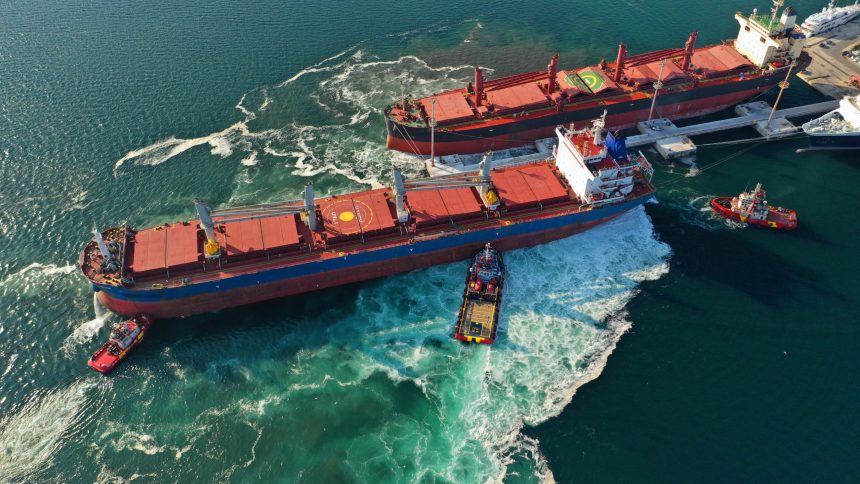
For decades, the shipping industry understood ship risks through relatively easily identifiable threats.
Storms, grounding, collisions, fires, explosions and engine failures are some of the major risks that concern ship owners and operators.
To face these risks, Marine Hull Insurance became one of the main protection instruments in the maritime industry.
However, developments in the global shipping industry show that the character of ship risks has undergone major changes.
Today, modern ships face not only physical risks from the marine environment, but also risks stemming from technology, digital systems, regulatory changes, environmental demands, and geopolitical uncertainty.
These changes pose a new challenge for the insurance industry to continuously adapt products, underwriting approaches, and risk management strategies.
Modern Ships Bring Modern Risks
Digital transformation has changed the way ships operate.
Electronic navigation systems, GPS, Electronic Chart Display and Information System (ECDIS), satellite communications, and engine monitoring systems are now an important part of modern ship operations.
This technology provides many benefits.
Efficiency increases, shipping safety improves, and decision-making processes can be carried out more quickly.
However, reliance on technology also creates new types of risks.
A ship may be in good physical condition, but experience operational problems due to electronic system failure or technological disruption.
These changes show that the concept of risk in the maritime industry has evolved.
Physical damage is no longer the only indicator of potential loss.
Cyber Threats Are Becoming a Concern for the Shipping Industry
One of the new risks that is gaining increasing attention is cyber threats.
The shipping industry is increasingly connected with digital systems, both for navigation, communication, administration, and operations management.
However, this connectivity also opens up opportunities for cyber attacks.
Disruptions to the ship’s navigation system can affect the journey.
Attacks on communications systems could hamper coordination with ports.
While ransomware can cause administrative and operational disruptions.
Interestingly, the incident did not necessarily cause physical damage to the ship.
However, the impact can still result in large economic losses, such as:
- late delivery,
- additional operational costs,
- lost port schedule,
- contract penalties,
- disruption of business relations.
This is one example of how modern risks are increasingly difficult to separate between physical and non-physical aspects.
Climate Change Drives Ship Risk Evaluation
Besides technology, environmental factors are also a major concern for the maritime industry.
Changing global weather patterns are causing shipping companies to face increasingly complex operational conditions.
High waves, extreme storms, changes in ocean currents, and unpredictable weather conditions can affect shipping safety.
For insurance companies, these changes are an important factor in conducting risk evaluations.
Ship characteristics, operating areas, shipping routes, and loss history are becoming increasingly important in the underwriting process.
The old approach of looking only at the value of the vessel and its type of operation is no longer sufficient to describe the overall risk profile.
Environmental Risks and Legal Liability Are Growing
The shipping industry is also facing increasing demands regarding environmental protection.
Incidents such as fuel spills or marine pollution can have consequences far greater than the cost of repairing the ship.
In addition to physical damage, companies may face:
- cleaning costs,
- environmental restoration obligations,
- third party claims,
- regulatory sanctions,
- Reputational impact.
With increasingly stringent international environmental regulations, the aspect of legal responsibility has become an important part of maritime risk management.
Operational Disruptions Are a Business Risk That Must Be Considered
Global pandemics, geopolitical conflicts, port congestion, and changing trade policies have shown that global supply chains are highly vulnerable to disruption.
For ship operators, voyage delays are not just an operational issue.
The impact could spread to customers and industrial sectors that depend on maritime transportation services.
A ship arriving late can cause:
- production delays,
- distribution disruption,
- increased logistics costs,
- potential contract disputes.
Under these conditions, the ship may not suffer any damage.
However, the company still faces financial pressure.
Challenges for the Insurance Industry: From Asset Protection to Risk Management
The changing nature of risk means the insurance industry needs to look at Marine Hull Insurance more broadly.
Ship protection is no longer just about covering repair costs after damage occurs.
The industry needs a more comprehensive approach through:
- operational understanding of the ship,
- technology risk evaluation,
- shipping area analysis,
- understanding business contracts,
- integration with liability protection.
The role of insurance brokers is also changing.
Brokers no longer simply serve as a liaison between the insured and the insurance company, but increasingly act as risk advisors who help companies understand their protection needs.
L&G Insurance Broker: Looking at Marine Hull Insurance from a Risk Perspective
According to L&G Insurance Broker, developments in the maritime industry indicate that shipowners and operators need to conduct regular evaluations of their protection programs.
Marine Hull Insurance remains the primary foundation of ship protection, but its effectiveness depends heavily on the fit between the actual risk and the policy structure.
Evaluation of the insured value, policy clauses, changes in ship operations, and new risk developments are important parts of ensuring that protection remains relevant.
This approach is increasingly needed in the modern maritime industry, where risks are evolving faster than ever before.
The Future of Marine Hull Insurance: Adapting to a Changing Maritime World
The shipping industry will continue to experience change.
Digitalization, environmental regulations, climate change, and global trade dynamics will shape new risks in the future.
Therefore, Marine Hull Insurance can no longer be viewed solely as an asset protection product.
It should be part of the company’s risk management strategy.
For ship owners, operators, offshore companies, and other maritime industry players, understanding changing risks is a critical step in maintaining business continuity.
Because in the modern shipping industry, the most prepared ships are not only those with the best technology, but also those supported by the right risk strategy.
This article is compiled based on an industry perspective by LigaAsuransi.com with insightful contributions from L&G Insurance Broker as a practitioner in the field of commercial insurance brokerage and maritime risk.
Read Also
If your company is evaluating the need for Marine Hull Insurance or want to understand how to create a protection program that suits the characteristics of the fleet, the editorsLigaAssurancerecommend consulting with an insurance broker who has experience in the maritime sector.
One reference that can be considered isL&G Insurance Broker, who has experience in risk management in the shipping, logistics, energy, mining and infrastructure project sectors.
📖 Visit: https://lngrisk.co.id
📧 Email: halo@lngrisk.co.id
📱 WhatsApp: 0811-8507-773