



In recent years, the logistics industry has undergone significant changes. The growth of digital commerce, increased import-export activity, infrastructure development, and the distribution of high-value goods have all made supply chains increasingly complex.
Amidst these developments, the role of freight forwarders has also changed.
While freight forwarders were once seen primarily as managers of the shipping process, they now play a crucial role in the success of a supply chain. They coordinate with goods owners, transportation companies, port operators, warehouses, shipping companies, and even the final recipient.
However, the bigger the role played, the greater the risk exposure that must be faced.
It is not surprising that in recent years there have been an increasing number of cases of compensation claims involving freight forwarding companies.
Does Your Company Have Large Liability Exposure?
Many freight forwarding companies only realize the magnitude of the risks after facing claims from the goods owner or insurance company.
If your company handles project cargo, heavy equipment, import-export goods, or high-value shipments, understanding your liability exposure from the outset can help avoid unexpected losses.
Read also:What Is Freight Forwarder Liability Insurance?
When One Small Disruption Causes Big Losses
In the modern world of logistics, delivery failure does not always mean lost goods.
Sometimes problems start from things that seem simple:
- late delivery,
- document error,
- damage during loading,
- cargo handling errors,
- wrong destination address,
- or failure of coordination between parties.
But the impact can be huge.
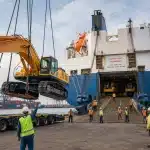
Imagine a construction project awaiting the arrival of key components from overseas. If shipping is disrupted, the project could be delayed. The costs incurred include not only the value of damaged or delayed goods but also the project’s operational costs, which are affected.
In such conditions, parties involved in the delivery chain are often held accountable, including freight forwarders.
Why Are Freight Forwarders Often the Blamed?
In many cases, the owner of the goods does not have a direct relationship with all parties involved in the logistics process.
What they usually know is the freight forwarding company that accepts the job.
As a result, when problems occur, the first concern is often the freight forwarder.
Whether the cause of the loss is the transporter, heavy equipment operator, warehouse, or other third party, the freight forwarder still has the potential to face lawsuits because it is considered responsible for coordinating the entire process.
This is what makes the risk of liability in the logistics industry increasingly a concern.
Increasing Cargo Value
One of the main factors in increasing the value of the claim is the increase in the value of the goods shipped.
Currently many freight forwarders handle:
- heavy equipment,
- project cargo,
- industrial machinery,
- transformer,
- power generation components,
- mining products,
- high-value electronics,
- to large-scale construction materials.
The value of a single shipment can reach billions of rupiah.
When damage, loss, or mishandling occurs, the value of the loss that occurs is certainly much greater than conventional shipping.
The Most Common Risks in the Freight Forwarding Industry
Based on various cases that occur in the logistics industry, there are several types of risks that most often trigger disputes or lawsuits.
Cargo Damage
Damage can occur during loading, unloading, transportation, or temporary storage.
Lost Items
Either partial or complete loss of cargo can lead to disputes between the goods owner and the logistics service provider.
Wrong Delivery
Address or recipient errors are still one of the most common causes of claims.
Delayed Delivery
In some industrial sectors, delays can cause losses far greater than the value of the goods themselves.
Administrative and Document Errors
Errors in export-import documents or shipping documents can result in additional costs, fines, and even distribution delays.
Liability to Third Parties
Logistics activities can also cause losses to other parties, either in the form of property damage or injuries that occur during operations.
Customers are increasingly understanding their rights
Another change that has contributed to the increase in demand is the increasing awareness of customers regarding their rights.
Currently, companies have a better understanding of the contents of contracts, the obligations of logistics service providers, and the legal steps they can take when they experience losses.
As a result, problem solving is no longer always done informally as it was a few decades ago.
When losses are deemed significant, claims and lawsuits become more common.
The Digital Age Increases Reputational Risks
In addition to financial risks, logistics companies now also face much greater reputational risks.
A single shipping incident can quickly spread through social media and digital platforms.
Customer complaints that were previously only known to a few parties can now be seen by thousands or even millions of people in a short time.
Therefore, many logistics companies are starting to view risk management as an important part of their business strategy, not just an operational obligation.
How Does the Industry Manage These Risks?
To reduce financial and operational impacts, freight forwarding companies generally implement various risk management approaches.
Starting from:
- improving operational standards,
- personnel training,
- vendor and subcontractor evaluation,
- strengthening employment contracts,
- use of tracking technology,
- to risk transfer through liability insurance programs.
The approach used will of course vary depending on the size of the company, the type of cargo handled, and its operational area.
Clearly, the more complex the logistics activities undertaken, the more important it is for companies to understand their liability exposure.
Cover
The modern logistics industry offers enormous growth opportunities. However, behind these opportunities lie increasingly complex responsibilities.
The increasing value of cargo, the complexity of supply chains, higher customer demands, and reputational risks in the digital era require freight forwarding companies to be more serious about managing their risks.
For logistics industry players, understanding potential liabilities is no longer just a compliance requirement, but part of efforts to maintain long-term business continuity.
Editor’s Note
Each freight forwarding company has different risk characteristics. To understand the various liability protection solutions available in the Indonesian insurance market, readers can consult with an insurance broker experienced in the logistics and supply chain sector.
Want to Know How Big Your Company’s Liability Risk Is?
Many freight forwarding companies have adequate cargo protection, but do not necessarily understand the liability risks that can arise from their operational activities.
If you handle heavy equipment shipping, project cargo, import-export, national distribution, or integrated logistics services, conducting regular risk evaluations is an important step.
The L&G Insurance Broker team can assist with initial discussions regarding liability exposure in freight forwarding and logistics operations.
📱 WhatsApp: 0811-8507-773