



Accidents and fires remain one of the biggest risks facing various business sectors in Indonesia. In the past week, several major incidents have occurred, ranging from a train accident that killed a truck driver, to the splitting of YouTuber Andra ST’s McLaren supercar in two, to fires in factories, warehouses, and ships, and workplace accidents resulting in fatalities. Besides causing significant material losses, each incident also provides important lessons about risk management, operational safety, and the importance of insurance protection.
Here is a summary of the 7 most recent accident incidents, along with risk analysis and recommendations for insurance types that can help minimize the impact of losses.
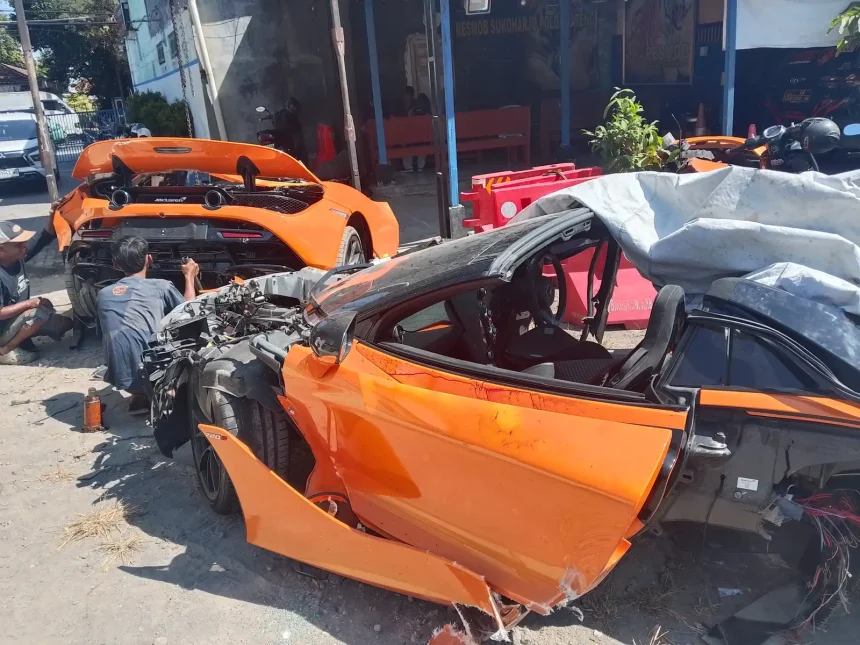
YouTuber Andra ST Experiences Horrific Accident! McLaren Supercar Splits in Two After Hitting a Power Pole, Here’s How It Happened
A single-car accident involving a McLaren supercar occurred on the Sukoharjo-Solo Highway in Sukoharjo Regency, Central Java, early Wednesday (July 8, 2026). The car carrying content creator Andra ST was severely damaged.the bodyThe car split in two after hitting a fence, a telephone pole, an electric pole, and a road divider. According to police, the vehicle was allegedly traveling at high speed before the driver lost concentration and control. Andra ST explained that the rear tires lost traction, causing the car to skid. Although the accident was classified as very serious, all passengers survived and suffered only minor injuries. Police confirmed the incident was a single-vehicle accident.
Risk Accident Review
This incident demonstrates that high-performance vehicles have different handling characteristics than conventional vehicles, especially at high speeds. Loss of rear wheel traction can cause oversteer and loss of control within seconds, particularly when combined with excessive speed, tire condition, or lack of driver anticipation.
Collisions with fences, utility poles, and road infrastructure also have the potential to cause significant damage to third parties. This incident underscores the importance of defensive driving, obeying speed limits, regular tire inspections, and understanding the characteristics of high-performance vehicles to reduce the risk of serious accidents.
Types of Insurance Needed
- Motor Vehicle Insurance (Comprehensive / All Risk Insurance)
Provides protection against vehicle damage due to accidents, collisions, rollovers, or other physical damage. - Third Party Liability (TPL) Insurance
Bear legal responsibility for damage to third party property, such as fences, electricity poles, telecommunication poles, or other public facilities. - Personal Accident Insurance
Provides compensation if the driver or passenger suffers injury, permanent disability, or death due to an accident. - Public Liability Insurance
Provides protection against legal claims if an accident causes harm to the public or other road users. - Excess Third Party Liability (ETPL) (high value vehicles only)
Provides additional protection if the value of a claim against a third party exceeds the standard TPL coverage limit, which is relevant for accidents with the potential for major losses to public facilities or other property.
The barrier gate was allegedly closed late! The Logawa train collided with an expedition truck in Nganjuk, killing one person and delaying several trains.
A tragic accident occurred at the JPL 103 level crossing in Banaran Kulon Village, Nganjuk Regency, East Java, on Thursday (July 9, 2026). The Logawa train on the Purwokerto-Ketapang route hit an expedition truck that was crossing the tracks, and debris from the truck also hit a motorcycle at the location. The initial suspicion is that the crossing gate was closed too late, allowing the truck to continue moving as the train approached. As a result of the incident, the truck driver died, while a motorcyclist suffered serious injuries. In addition to causing a traffic jam of up to four kilometers, the accident also disrupted several train journeys in the Daop 7 Madiun area. Police are still investigating the exact cause of the incident.
Risk Accident Review
Accidents at level crossings are a transportation risk with a high fatality rate because they involve collisions between road vehicles and trains, which have very high mass and speed. The alleged delay in closing the barrier demonstrates the importance of reliable crossing safety systems, operational coordination, and compliance by all road users with warning signs and signals.
This incident not only resulted in fatalities and vehicle damage, but also disrupted public transportation operations, logistics distribution, and community activities. Implementing risk management, inspecting crossing facilities, and providing road safety education are crucial steps to minimize the potential for similar accidents.
Types of Insurance Needed
- Commercial Vehicle Insurance
Provides protection for expedition trucks from the risk of accidents, collisions and physical damage during operations. - Motor Vehicle Insurance (Comprehensive / All Risk)
Protects private vehicles or motorbikes from losses due to traffic accidents. - Third Party Liability (TPL) Insurance
Bear legal responsibility for losses suffered by third parties due to accidents. - Goods in Transit / Marine Cargo Insurance (Inland Transit)
Guarantees that the cargo in the truck is protected from the risk of damage or loss during the transportation process. - Personal Accident Insurance
Provides compensation if the driver or passenger suffers injury, permanent disability, or death due to an accident. - Employer’s Liability / Workmen Compensation Insurance
Provides protection to companies against the risk of work accidents experienced by drivers or employees while carrying out their duties. - Business Interruption Insurance
Cover potential financial losses due to disruption of business operations and distribution following an accident.
Plastic Processing Factory in Tangerang Engulfed in Fire! Explosion Sparks Panic, Losses EstimatedRp2 Billion
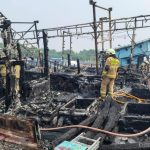
A massive fire engulfed a plastic processing factory on Jalan Raya Kalibaru, Pakuhaji District, Tangerang Regency, Banten, early Thursday morning (July 9, 2026). The flames spread rapidly due to the large amount of flammable plastic material, destroying almost the entire building. Several employees who were working managed to escape, while local residents panicked after hearing several explosions from inside the factory. Thirteen fire trucks were deployed to control the fire. There were no fatalities, but material losses are estimated at Rp2 billion. The cause of the fire is still under investigation by the police.
Risk Accident Review
Fires in the plastics processing industry pose a high risk because raw materials and plastic products are flammable and produce heat and dense smoke that can accelerate the spread of fire. The sound of an explosion indicates the potential involvement of production machinery, gas pressure, or supporting chemicals, which can increase the severity of the incident. In addition to damaging buildings and production assets, fires also have the potential to disrupt operations and supply chains, as well as cause significant financial losses. This incident underscores the importance of a fire protection system, electrical and machine inspections, preventive maintenance, an emergency response plan, and integrated business continuity planning.
Types of Insurance Needed
- Industrial All Risk Insurance (IAR)
Provides protection for factory buildings, warehouses, production facilities, and company assets from the risk of fire, explosion, and various other operational risks. - Stock Insurance
Guaranteeing plastic raw materials, goods in process, finished products, and other supplies from the risk of fire or other damage. - Machinery Breakdown Insurance
Protect production machines and operational equipment from damage due to mechanical, electrical, or machine failure. - Business Interruption Insurance
Covering lost profits and fixed operational costs due to the cessation of production activities following a fire. - Public Liability Insurance
Provides protection against lawsuits from third parties if a fire causes damage to the community or property around the location. - Electronic Equipment Insurance (EEI)
Guaranteeing control panels, automation systems, computers and electronic devices that support factory operations from the risk of damage due to fire or electrical disturbances.
Powerbank Warehouse in BSD City Burns to Death! Flames Spread to Three Warehouses, Black Smoke Billows
A massive fire broke out in the Taman Tekno BSD Warehouse area, Setu District, South Tangerang City, on Wednesday (7/7/2026). The fire is believed to have started in a power bank storage warehouse before spreading to two other warehouses nearby. The blaze destroyed three warehouses containing various goods, including office stationery. Thick, black smoke billowed into the sky, drawing the attention of local residents. Joint firefighters from the South Tangerang City Government and BSD City management immediately extinguished the fire with the support of water tankers. The cause of the fire is still under investigation by authorities.
News source: https://kabar6.com/gudang-powerbank-di-taman-tekno-bsd-kebakaran/
Risk Accident Review
Fires in warehouses have the potential for significant losses because they typically store large quantities of high-value goods and are located close to other buildings. Power bank storage warehouses pose an additional risk due to the presence of lithium batteries, which can potentially ignite.thermal runaway, a condition where a battery overheats, triggering a fire that is difficult to control. The spread of the fire to other warehouses demonstrates the importance of building compartmentalization systems, early detection, and adequate fire protection. This incident underscores the need for electrical installation inspections, battery storage management in accordance with safety standards, emergency response plans, and business continuity planning to minimize operational impacts.
Types of Insurance Needed
- Property All Risk Insurance (PAR)
Provides protection for warehouse buildings from the risk of fire, explosion, lightning and various other property risks. - Stock Insurance
Guaranteeing supplies of power banks, lithium batteries, office stationery, and warehouse inventory from the risk of fire or other damage. - Electronic Equipment Insurance (EEI)
Protect electronic devices, inventory systems, computers, servers, and warehouse operational support equipment from the risk of damage. - Business Interruption Insurance
Covers loss of income and fixed operating costs due to disruption of business activities after a fire. - Public Liability Insurance
Provides protection against lawsuits from third parties if a fire causes damage to other warehouses or property around the site. - Industrial All Risk Insurance (IAR) (if the warehouse is part of an integrated industrial or distribution facility)
Provides comprehensive protection for operational assets, storage facilities, and various risks that can disrupt business activities.
A Pinisi Ship Worth Rp10 Billion Catches Fire in Bulukumba! The Fire Started in the Steering Wheel.
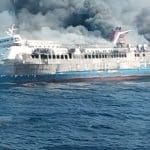
KLM Mutiara Pinisi ShipPrasanaThe Nusantara experienced a fire while in the waters off Tanah Lemo Beach, Bontobahari District, Bulukumba Regency, South Sulawesi, on Monday morning (July 6, 2026). Preliminary suspicions are that the fire first appeared in the bridge or wheelhouse area before spreading to most of the ship’s hull. All crew members attempted to extinguish the flames, but the fire continued to grow, forcing them to flee to land. There were no fatalities in the incident. The ship was then evacuated to shore, while the cause of the fire is still being investigated. Material losses are estimated at around IDR 10 billion.
Risk Accident Review
Fires on ships are a maritime risk with the potential for significant losses due to the involvement of high-value assets, electrical systems, fuel, and confined spaces that can accelerate the spread of fire. The suspected origin of the fire in the wheelhouse indicates the need for regular inspections of the ship’s electrical installations, navigation panels, and electronic equipment. In addition to causing physical damage to the ship, such incidents can also halt operations, disrupt shipping activities, and pose a risk of environmental pollution if a fuel leak occurs. This incident underscores the importance of preventive maintenance, fire detection systems, emergency response procedures, and safety training for all crew members.
Types of Insurance Needed
- Marine Hull & Machinery Insurance
Provides protection for ships from the risk of fire, sinking, collision, grounding and other physical damage during operations. - Protection & Indemnity (P&I) Insurance
Bear legal responsibility towards third parties, crew, rescue costs, and potential pollution of the marine environment. - Crew Personal Accident Insurance
Provides compensation to crew members if they suffer injury, permanent disability, or death due to a work accident at sea. - Machinery Breakdown Insurance
Protecting the main engine, generator, navigation system, and mechanical and electrical equipment of the ship from the risk of operational damage. - Marine Cargo Insurance (when the ship is carrying cargo)
Guarantees cargo from the risk of damage or loss due to fire or other shipping risks. - Business Interruption Insurance
Cover potential loss of income and fixed operational costs due to disruption of business activities while the vessel is unable to operate after the incident.
A Pompong boat was hit by a ship at Siak Port, killing three people, including a customs officer.
A sea accident occurred at Tanjung Buton Port, Siak Regency, Riau, when the motor ship (pompong) KM Gading 2 was used for activitiesdraft surveyOn Tuesday (July 7, 2026), the ship carrying seven people was allegedly swept away by the current and collided with a docked ship, then sank. As a result of the incident, three people were found dead, including a Pekanbaru Customs officer and a surveyor. Three other passengers survived, while the search for one person is still ongoing. A joint search and rescue team conducted an evacuation operation andresearchin order to reveal the exact cause of the accident.
News source: https://www.detik.com/sumut/berita/d-8540314/6-kapal-nelayan-hangus-terbakar-di-belawan-tak-ada-korban-jiwa
Risk Accident Review
This incident demonstrates the high operational risk in the activity.draft surveyIn port areas with heavy ship traffic, strong currents, and limited maneuverability, ocean currents, navigation coordination, the condition of supporting vessels, and safety procedures are crucial factors to consider to prevent accidents. The sinking of a small vessel due to a collision with a larger vessel can result in loss of life, operational losses, and disruption to port activities. This incident underscores the importance of implementing safety protocols.marine safety management, use of personal protective equipment such aslife jacket, effective communication between ships, and readiness of emergency response procedures in every maritime activity.
Types of Insurance Needed
- Marine Hull & Machinery Insurance
Provides protection for motor boats (pompong) from the risk of collision, sinking, fire and other physical damage. - Protection & Indemnity (P&I) Insurance
Bear legal responsibility for crew, passengers, third parties, rescue costs, and potential environmental pollution. - Crew Personal Accident Insurance
Provides compensation to crew and personnel on duty if they suffer injury, permanent disability, or death due to accidents at sea. - Employer’s Liability / Workmen Compensation Insurance
Protecting companies from compensation obligations for work accidents experienced by employees, surveyors, or officers while carrying out operational duties. - Public Liability Insurance
Provides protection against lawsuits from third parties if an incident causes loss to another party or port facilities. - Marine Cargo Insurance (if there is cargo or goods being surveyed)
Guaranteeing goods or cargo from the risk of damage or loss during the transportation process and survey activities at the port.
A freight elevator suddenly fell at a Roxy Mas shophouse. A worker was crushed to death while lifting a speaker.
A worker with the initialsYPS(41) died after experiencing a work accident in a shophouse in the Roxy Mas area, Gambir, Central Jakarta, on Monday (6/7/2026). The incident occurred when the victim was moving a speaker device from the fourth floor to the first floor using a goods elevator. Because the elevator could only reach the third floor, the victim first carried the goods via the stairs. Shortly after arriving on the third floor, a loud crash was heard. Co-workers who checked the location found the victim trapped in the elevator between the second and third floors. The evacuation process took about 30 minutes, while the exact cause of the accident is still being investigated by the police.
Risk Accident Review
Workplace accidents involving freight elevators demonstrate the high risk of material handling activities in warehouses and multi-story buildings. Suspected elevator malfunctions highlight the importance of regular inspections, lifting equipment certification, preventive maintenance, and adherence to safety procedures. Using freight elevators without adequate safety measures increases the risk of being trapped, crushed, or falling from a height. In addition to causing fatalities, such incidents can trigger operational shutdowns, regulatory investigations, and even lawsuits. This incident underscores the importance of implementing an Occupational Safety and Health Management System (SMK3), worker training, and monitoring the use of lifting equipment.
Types of Insurance Needed
- Workmen Compensation Insurance / Employer’s Liability Insurance
Provides protection to companies for compensation obligations to workers who are injured or die due to work accidents. - Personal Accident Insurance
Provides compensation to workers or heirs in the event of injury, permanent disability, or death due to an accident. - Machinery Breakdown Insurance
Covers damage to freight lifts and mechanical equipment due to operational, mechanical or electrical failures. - Property All Risk Insurance (PAR)
Protect buildings, warehouses and operational facilities from various risks of physical damage that can disrupt business activities. - Public Liability Insurance
Provides protection against lawsuits from third parties if an accident causes loss or injury to visitors, tenants, or other parties in the building area. - Business Interruption Insurance
Covers loss of income and fixed operating costs if business activities are temporarily suspended due to accidents or damage to operational facilities.
–
The various incidents above demonstrate that risks can occur at any time, whether on highways, industrial areas, warehouses, ports, or the workplace. The resulting losses include not only asset damage but also human safety, disruption to business operations, legal claims, and even loss of revenue.
Therefore, every individual and business owner needs to implement sound risk management, supported by an insurance program tailored to their business’s characteristics. Proper protection not only aids the recovery process after an incident but also ensures long-term business continuity.
L&G Insurance Brokerready to assist companies and individuals in identifying risks, providing risk management consultations, and designing the right insurance protection program according to your business needs.
📞 Contact L&G Insurance Broker to get the best protection solutions and professional consultation.
Whatsapp 0811-8507-773 | Email halo@lngrisk.co.id
L&G Insurance Broker – Your Trusted Partner in Risk Management and Insurance Solutions.