



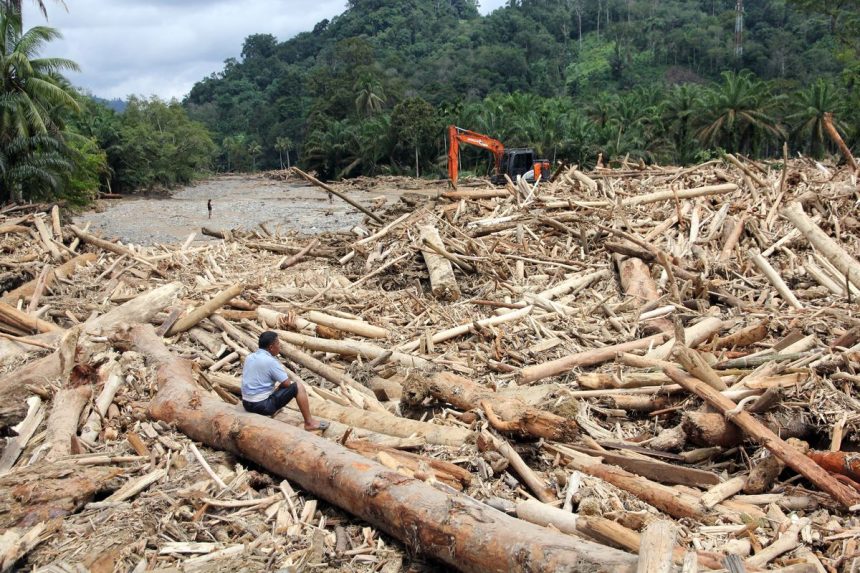
Dear readers and L&G Friends, on behalf of ourselves and the entire L&G family, we extend our deepest condolences to all the victims affected by the floods and landslides in Sumatra. We pray that the souls of those who died will be accepted by Allah SWT. May those who are injured and disabled be granted a speedy recovery. And to the families who have lost loved ones, may Allah replace them with strength, fortitude, and new hope, and reunite those who are still missing.
As individuals and companies involved in risk management and insurance, allow us to share our perspectives and insights that may be helpful in navigating this situation. To provide a more comprehensive and structured discussion, we have presented them in five articles. We hope this series provides insight and is part of our collective effort to recover.
When the Sky Sends a Sign
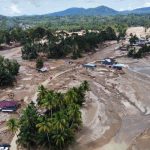
The first rain fell as a simple drizzle. In the valleys and hills of Sumatra’s west coast, residents were accustomed to the sound of raindrops hitting tin roofs, the scent of wet earth seeping into their homes, and the rising river currents. But in late November 2025, the downpour turned into a relentless roar. Within hours, the dark sky settled like a thick black sheet, obscuring the entire horizon. Rivers overflowed, carrying tree trunks dragged down from upstream, and from the hills came a long, rumbling sound—a sign of the ground beginning to move.
Within hours, villages were submerged. Highways were cut off. Bridges collapsed. Flash floods and landslides struck dozens of districts in Aceh, North Sumatra, and West Sumatra. Thousands were displaced. Hundreds lost their families. It all seemed to happen too fast, too massive, too devastating to be explained by “ordinary rain.”
Many people ask:“How could this disaster be so big? What exactly happened?”
To understand this tragedy, we must look further up—to the atmosphere, to the oceans, to global climate change, which is no longer just a theory, but a reality haunting many countries.
Meteorological Triggers: When Sky and Sea Collaborate to Create Disaster
- Extreme Rainfall and Atmospheric Anomalies
One of the main causes of the 2025 Sumatra floods and landslides was extreme rainfall that fell in a very short duration. The Meteorology, Climatology, and Geophysics Agency (BMKG) recorded that rainfall volume in the last few days of November reached a record high in the last 20 years.
This phenomenon does not occur in isolation. Several meteorological factors are at work:
- Madden–Julian Oscillation (MJO)
The MJO is a giant atmospheric oscillation that carries rain clouds across the Indian Ocean towards the Pacific. When the MJO is active in Indonesia, rainfall increases dramatically. In late November 2025, the MJO was directly over Sumatra, significantly increasing rainfall intensity.
- Warmer-than-Normal Sea Surface Temperatures
Global warming causes ocean temperatures to rise. The warmer the ocean, the more water vapor evaporates into the atmosphere. This water vapor then becomes the fuel for large rain clouds and storms.
In 2025, the sea temperature anomaly in the eastern Indian Ocean was above +1.5°C — enough to strengthen an extreme rainfall system.
- Convergence of Storms and Monsoons
Westerly and easterly winds converge around Sumatra, creating an “air collision path” that triggers the formation of thick, layered cumulonimbus clouds. These clouds bring hours of continuous rain.
The result: the water volume that should have fallen in a month, fell in just 48 hours.
- Natural Symptoms That Appear Before Disasters
A number of natural phenomena actually appeared several days earlier:
- The air pressure dropped sharply.
- Air humidity reaches >90%.
- Small rivers show a sudden increase in discharge.
- Dark clouds hung low all day.
At the time, people may not have realized that these symptoms were signs of a developing major weather system.
Global Warming: The Giant Machine Behind Extreme Weather
- How Does Global Warming Change Rain Patterns?
Extreme weather phenomena like those in Sumatra are inextricably linked to climate change. Scientists explain that every 1°C increase in temperature causes the atmosphere to hold 7% more water vapor. This means that when rain falls, it will fall much more rapidly.theircompared to the past.
Global warming triggers:
- Storms are more frequent and stronger
- Extreme rainfall is occurring more frequently
- Shifting rainy and dry seasons
- Very high atmospheric instability
What happened in Sumatra is a classic illustration of a warming world: sudden, extreme rainfall that exceeds nature’s capacity to accommodate it.
Similar Patterns in Asia: Sumatra Not an Isolated Case
At about the same time, a number of other countries in Asia experienced extreme meteorological conditions.
- Sri Lanka
The country was hit by massive flooding that submerged parts of Colombo. Thousands of residents were displaced, and transportation infrastructure was completely paralyzed.
- Thailand
Chumphon and Ranong provinces were hit by heavy rains that triggered widespread flooding, blocking main roads and damaging homes.
- Pacific Region
Island nations such as Fiji and Kiribati experienced coastal flooding due to high waves and extreme rainfall.
- Other regions in Indonesia
Both Java and Kalimantan experienced extreme weather, indicating that the 2025 atmospheric pattern was highly unstable—and Sumatra was directly in the path of the storm system.
Global Phenomenon: Natural Disasters That Reverberated Around the World
What happened in Sumatra cannot be viewed in isolation. Over the past 10 years, the world has experienced a number of extreme weather-related disasters that follow a similar pattern.
- Europe — Germany & Belgium Floods (2021)
More than 200 people died when unprecedented amounts of rain fell. Ancient cities that had stood for centuries were instantly destroyed.
- China — Zhengzhou Flood (2021)
In three days, a year’s worth of rain fell on the city. Subways were submerged, vehicles were swept away, and more than 300 people died.
- United States — Hurricanes Harvey & Ida
Hurricane Harvey set a record as one of the rainiest storms in US history. Thousands of homes were flooded.
- Australia — Sydney Floods 2022
PhenomenonThe Girlwhich is reinforced by global warming causing repeated flooding in a matter of months.
Same pattern: extreme rainfall + global warming + unstable atmospheric system = major disaster.
Disasters Beyond Human Control: Nature Reminds Us of Our Fragility
The 2025 Sumatra floods and landslides were disasters triggered primarily by natural factors. No human could prevent clouds from gathering, water vapor from evaporating, or atmospheric currents from colliding. No technology could stop the storm.
But what we can do is:
- understand the mechanism,
- preparing myself,
- mitigate the impact,
- managing risks,
- and protect yourself through financial protection systems such as insurance.
Because this disaster is an event that is completely beyond human control, but its impact can be minimized if we understand where the threat comes from.
Looking to the Sky, Preparing Yourself on Earth
When heavy rain turns into a disaster, we realize how small we are in the face of nature’s power. But we shouldn’t give up. We can organize our space, protect the environment, and most importantly—build systems capable of protecting lives and property when nature strikes.
In the future, extreme weather phenomena will become more frequent. Global warming will not stop overnight. And Sumatra 2025 is a stark reminder that we must be prepared scientifically, physically, socially, and financially.
In the next article, we will discuss how human factors and environmental degradation exacerbated the impact of this disaster — turning extreme rainfall into a national tragedy.
—
DON’T WASTE YOUR TIME AND SECURE YOUR FINANCIAL AND BUSINESS WITH THE RIGHT INSURANCE.
HOTLINE L&G 24 JAM: 0811-8507-773(CALL – WHATSAPP – SMS)
Website: lngrisk.co.id
Email: halo@lngrisk.co.id
—