



In the eyes of many, the logistics business is synonymous with the activity of delivering goods from one location to another. As long as the goods reach their destination, the job is considered complete.
However, behind these seemingly simple activities, there are increasingly complex and increasingly valuable risks.
A single traffic accident can turn into a legal dispute, a claim for compensation, or even a conflict between the goods owner, logistics company, insurance company, and various other parties.
This phenomenon is becoming more frequent as shipping volumes in Indonesia increase.
The growth of e-commerce, the expansion of the manufacturing sector, infrastructure development, and the distribution of heavy equipment and project cargo have driven rapid growth in national logistics activities. However, at the same time, exposure to risk has also increased.
When Routine Delivery Turns Into Crisis
Recently, a case occurred that attracted the attention of logistics and insurance practitioners.
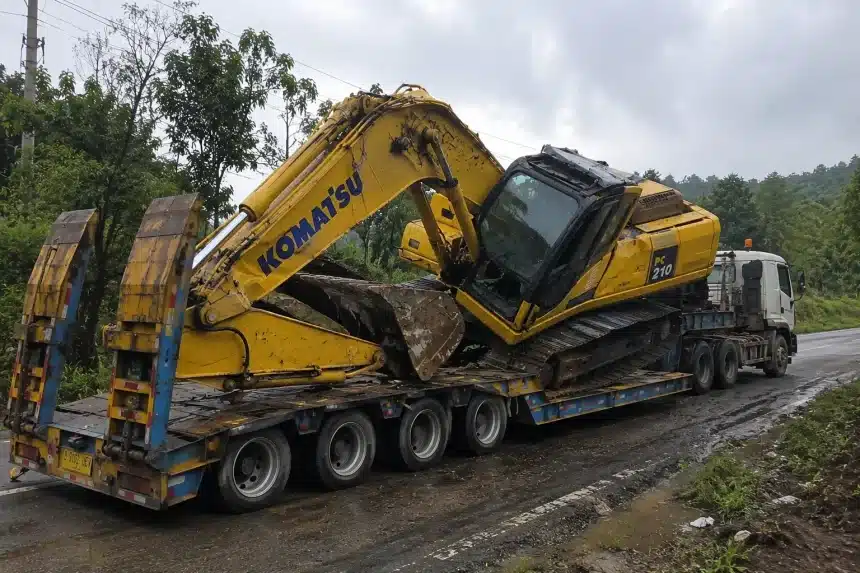
A goods transport vehicle had an accident and fell into the river while carrying out routine distribution activities.
As a result of the incident, the cargo was seriously damaged and the owner of the goods filed a claim for compensation with the logistics company that handled the delivery.
Cases like this are actually not rare.
What is interesting is how a seemingly ordinary operational activity can develop into a significant financial problem.
In many cases, the initial focus is usually on the damage to the goods.
However, the bigger impact often arises later, namely when questions arise regarding legal responsibility for the losses incurred.
Modern Logistics Risks Are No Longer Just Lost Goods
Decades ago, the main risks in the logistics industry were often associated with loss of goods or physical damage during transit.
Nowadays the situation is different.
Logistics companies face a much wider range of exposures, including:
- claims due to damage to goods;
- partial loss of load;
- delivery error;
- distribution delays;
- damage during loading and unloading;
- documentation errors;
- losses in warehousing facilities;
- up to lawsuits from third parties.
The more complex the supply chain being managed, the greater the potential for legal liability to arise.
Moreover, today’s customers are increasingly aware of their rights and have much higher service expectations than ever before.
Logistics Industry Growth Increases Liability Exposure
Indonesia is one of the largest logistics markets in Southeast Asia.
Increased domestic trade activity, marketplace development, and industrial sector growth have driven an increase in the volume of goods distribution every year.
From a risk management perspective, such growth brings unavoidable consequences.
More vehicles in operation means:
- the more trips are made;
- the more goods are moved;
- the greater the likelihood of an accident occurring;
- the higher the potential for human error;
- and the greater the value of the accumulated risks faced by the company.
That is why many insurance practitioners consider that liability risk is now one of the biggest challenges in the modern logistics industry.
Why Is Legal Liability an Important Issue?
In business practice, an accident does not always automatically mean that the logistics company is at fault.
But when goods are under their control, companies are often the first to be held accountable.
This is where the liability aspect becomes very important.
The debate over who is responsible can involve various parties, such as:
- owner of goods;
- logistics companies;
- operator trucking;
- warehousing company;
- cargo insurance company;
- to other third parties.
The value of the claims that arise is also not always limited to the price of the damaged goods.
In some cases, claims can escalate into additional costs related to project delays, operational disruptions, or even legal disputes.
Freight Forwarder Liability Gains More Attention
In many countries with developed logistics industries, liability protection for freight forwarders has become an important part of risk management.
Indonesia also shows a similar trend.
More and more logistics companies are beginning to evaluate the need for protection against legal liability risks arising from their operational activities.
This is inseparable from the increasing value of goods transported, the complexity of business contracts, and increasingly high customer demands.
For companies that handle:
- heavy equipment;
- industrial machinery;
- project cargo;
- imported and exported goods;
- as well as national distribution,
potential liability exposure can reach very significant values.
Why Do Many Companies Only Realize the Risk After a Claim Has Occurred?
One of the biggest challenges in risk management is its intangible nature.
As long as operations are running smoothly, many companies feel that the risks are not too great.
However, this perception often changes when the first claim occurs.
In many cases, new companies realize that:
- vehicle insurance does not always protect legal liability;
- cargo policies do not always protect the interests of freight forwarders;
- and not all losses can be transferred to other parties.
As a result, incidents that were initially considered to be ordinary operational accidents can turn into quite severe financial pressures.
Lessons for the Indonesian Logistics Industry
The case of a cargo vehicle entering a river provides an important lesson for the logistics industry.
The greatest risk often lies not in the accident itself, but in the consequences that arise afterward.
Amidst the increasingly rapid growth of the logistics industry, companies need to view risk management as part of their business strategy, not just an administrative obligation.
Companies that understand their operational exposure tend to be better prepared to face various possibilities that may occur in the field.
Cover
The transformation of Indonesia’s logistics industry brings many opportunities, but also presents new and increasingly complex challenges.
Increasing delivery volumes, higher value of goods, and increasing customer demands make the liability aspect an issue that deserves greater attention.
Cases of shipping accidents resulting in claims for compensation show that logistics risks are no longer just about damaged or lost goods.
These risks now also include reputation, business relationships, operational continuity, and the company’s ability to face increasingly complex legal claims.
Want to understand more about logistics risks, Freight Forwarder Liability, Marine Cargo Insurance, and various other risk management solutions?
Follow the latest articles on LigaAsuransi.com and learn how risk developments and insurance trends affect the world of logistics, trade, construction, and industry in Indonesia.
Need a consultation regarding a logistics insurance program or Freight Forwarder Liability Insurance?
L&G Insurance Broker’s professional team can help review your company’s risks and protection needs.