



Dear readers and L&G Friends, after in the first article we understood how natural factors and extreme weather triggered the floods and landslides in Sumatra, in this second article we will look at another side that is no less important:human role. In reality, in many areas, extreme rainfall is merely a trigger. The extent of the impact is greatly influenced by what we do to the environment, forests, rivers, and our own living spaces. This article invites us to examine more clearly how ecological damage and poor spatial management turn natural disasters into human tragedies.
Rain Is Not the Only Cause
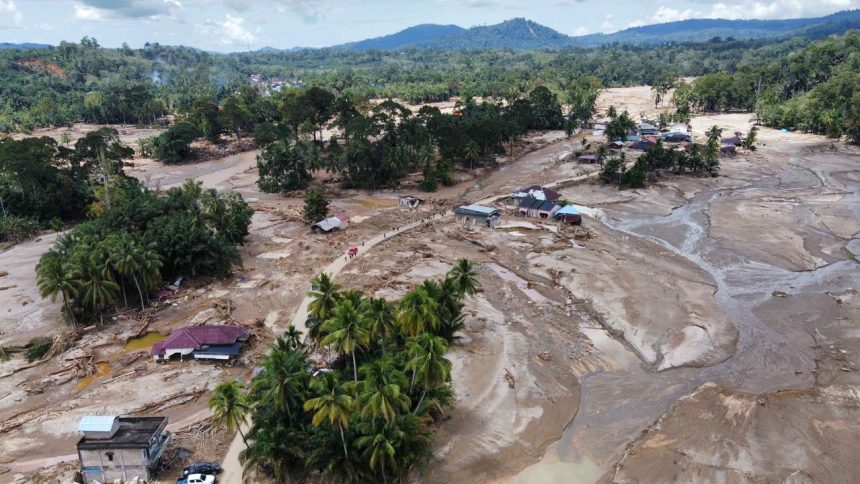
Heavy rain has indeed fallen nonstop for hours in many parts of Sumatra. However, a deeper look reveals that the flash floods and landslides were not simply the result of nature. Many residents reported that the waters came faster than usual, carrying thick mud, large tree trunks, and even rocks from upstream. This is a clear sign that something is amiss in the forests and watersheds.
This disaster conveys an important message: when nature is tested, a damaged environment exacerbates the situation. And it is at this point that humans play a significant role, both directly and indirectly.
Deforestation: When Slope Guardians Disappear
- Loss of Trees, Loss of Natural Buffers
Forests are natural guardians. Tree roots hold the soil in place to prevent landslides, absorb rainwater, and slow the flow of water into rivers. However, in many areas of Sumatra, forest cover has shrunk significantly.
Data Global Forest Watchshows that Sumatra has lost more than 2.3 million hectares of forest in the last two decades. As a result:
- Rainwater falls directly to the ground without any resistance.
- Saturated soil collapses faster and more easily.
- Rivers receive much larger volumes of water in a shorter time.
When extreme rain falls, areas that were previously safe now turn into vulnerable zones.
- Monoculture Plantations: Not a Substitute for Forests
Some upstream areas have been converted into monoculture plantations — primarily oil palm.
The problem:
- Oil palm trees have fibrous roots that are not strong enough to hold the soil structure.
- Palm oil plantations tend to reflect rainwater more quickly into rivers.
- Biodiversity decreases, soil quality decreases.
The result: landslides are more likely to occur.
Land Use Change: Plantations, Mining, and Unplanned Settlements
- Mining Activities in Upstream
Open-pit mining creates large slopes that are prone to landslides. When heavy rain falls:
- Loose mining materials are easily carried away by water.
- Drains around mines are often clogged with sediment.
- The river receives large amounts of runoff mixed with mud.
Some mining sites that were not properly reclaimed becameecological time bomb.
- Plantations on the Riverbank
Land conversion near rivers reduces the river’s ability to “breathe” when discharge increases. The loss of natural vegetation along riverbanks accelerates erosion.
- Settlements that Grow Without Spatial Planning
Many houses and stalls are built on riverbanks, hillside, or steep slopes. When disaster strikes, these areas are the first to suffer.
Poor Water Governance: When Rivers Can No Longer Carry Water
- High River Sedimentation
Sumatra’s major rivers are now receiving more sediment due to erosion and land clearing. As a result:
- River capacity is decreasing.
- The riverbed is rising.
- The water quickly overflowed even though the rain had not yet reached its peak.
- Inadequate Urban Drainage
In urban areas:
- The drains are clogged with rubbish.
- The channel capacity does not match the city’s growth.
- The ground surface is covered with concrete so that water does not seep in.
The water finally returned to the settlement.
- Lack of water absorption space
Trees are cut down, swamps are drained, rice fields are converted, and people no longer havebuffer zonenatural to collect rainwater.
Hydrology Expert Analysis: Our Catchment Area Is “Sick”
Hydrologists and environmental experts say Sumatra is in a vulnerable condition due to damage to water catchment areas (catchment area degradation).
They explained:
- When the upstream is damaged, water flows faster (peak flow).
- The time between rain and flooding is getting shorter.
- The river did not have time to accommodate the increase in discharge.
- Landslides occur even without extreme rainfall.
In simple language:
“The river is angry because the forest that calmed it is gone.”
Global Pattern: Indonesia Is Not Alone
Human-caused disasters aren’t limited to Sumatra. Here are some global examples:
- Philippines
Forest damage due to illegal logging causes many areas to experience major flooding every rainy season.
- Nepal
Deforestation is destroying the stability of the Himalayan soil, and landslides are a regular threat.
- Brazil (Recife, 2022)
Massive flooding occurs due to extreme rain + deforestation of the Amazon.
- India (Kerala, 2018)
Strong monsoon storms cause much greater disasters due to environmental damage.
The same pattern is seen:
Extreme rain → damaged forests → major floods → increasing casualties.
When Natural and Human Factors Meet: The Perfect Combination for a Major Disaster
The impact of the 2025 Sumatra floods and landslides will be very severe because:
- The highest extreme rainfall in 20 years
- Forest damage in the upstream
- Mining and plantations that open up large areas of land
- Shallow rivers due to sedimentation
- Settlements grow without strong spatial planning
- Lack of mitigation and early warning
Nature started it — humans made it worse.
Important Lessons for the Future
This disaster teaches us that:
- Nature cannot be controlled, but its impact can be managed.
- A healthy environment is nature’s best protection.
- Proper spatial planning saves lives and property.
- Risk management should be a culture, not a reaction after a disaster.
As a party operating in the world of risk and insurance, we clearly see that disaster mitigation cannot rely solely on tools or technology. It must begin with how we treat the earth.
Restoring the Lost Balance
The 2025 Sumatran floods and landslides were a painful event, but also an eye-opener. Nature sent a strong message that environmental damage not only destroys forests but also damages human life. We can’t stop the rain, but we can stop the other causes that exacerbate its impact.
In the next article, we will discuss in detail the damage, loss, and value of the losses that occurred — so that we understand how high the price must be paid when the balance of nature is disturbed.
—
DON’T WASTE YOUR TIME AND SECURE YOUR FINANCIAL AND BUSINESS WITH THE RIGHT INSURANCE.
HOTLINE L&G 24 JAM: 0811-8507-773(CALL – WHATSAPP – SMS)
Website: lngrisk.co.id
Email: halo@lngrisk.co.id
—