



Protecting Capital, Operations, and Long-Term Growth Before Problems Arise
Why Risk Identification Matters for Korean Investors Overseas
For Korean companies expanding overseas, especially into Southeast Asia, success is no longer determined solely by production capacity, labor efficiency, or logistics advantages. The real determinant of long-term sustainability lies in how well risks are identified, understood, and managed from the very beginning.
Batam has become one of Indonesia’s most attractive industrial destinations for Korean investors. Its Free Trade Zone (FTZ) status, proximity to Singapore, competitive labor costs, and growing industrial ecosystem make it a natural choice for manufacturing plants, assembly facilities, logistics hubs, and regional headquarters.
However, many foreign investments face unexpected disruptions, losses, or delays, not because the business model is wrong, but because key risks were not identified early enough.
Risk identification is not about being pessimistic.
It is about protecting capital, ensuring continuity, and safeguarding shareholder value.
Why Risk Identification Comes First in Overseas Investment
Korean companies are known for strong operational discipline, quality control, and long-term planning. Yet when operating in a foreign jurisdiction like Indonesia, the risk environment changes significantly.
Risk identification must come before:
- Construction starts
- Machinery is installed
- Production begins
- Insurance policies are purchased
Without proper risk identification:
- Insurance coverage becomes incomplete or ineffective
- Claims may be rejected due to policy gaps
- Losses become operational disruptions rather than manageable events
In Indonesia, risks are not always visible on paper. Many risks emerge from:
- Regulatory interpretation differences
- Local construction practices
- Climate and environmental factors
- Supply chain dependencies
- Workforce dynamics
Identifying these risks early allows investors to control, transfer, or mitigate them strategically.
Key Risks Faced by Korean Companies Operating in Batam
- Legal and Regulatory Risk
Indonesia’s regulatory framework can be complex for foreign investors, particularly at the operational level.
Common regulatory risks include:
- Delays in operational permits
- Differences between central and local regulations
- Compliance gaps related to fire safety, environmental permits, and labor rules
- Misinterpretation of FTZ benefits and limitations
Failure to identify regulatory risks early may result in:
- Temporary shutdowns
- Administrative penalties
- Delays in insurance claims approval
- Construction and Installation Risk
Many Korean investments in Batam involve:
- New factory construction
- Plant expansion
- Machinery installation
- Production line relocation
Key construction-related risks include:
- Fire during construction
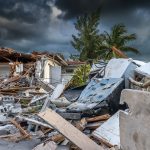
- Structural failure
- Damage to imported machinery
- Contractor workmanship issues
- Project delays due to weather or logistics
These risks are often underestimated, especially when construction insurance is treated as a formality rather than a risk transfer tool.
- Fire and Explosion Risk
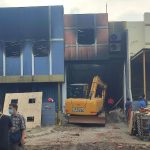
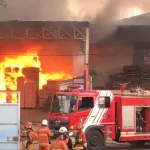
Fire remains the largest loss exposure for industrial facilities in Indonesia.
Risk factors in Batam include:
- High electrical load
- Compressed production schedules
- Imported machinery with local electrical modifications
- Inadequate fire separation
- Insufficient fire suppression systems
A single fire incident can result in:
- Total asset loss
- Long production stoppage
- Contractual penalties
- Reputational damage with global customers
Without proper risk identification, insurance policies may not fully reflect the real exposure.
- Machinery Breakdown and Operational Risk
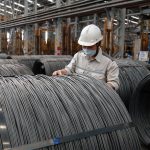
Modern Korean manufacturing plants rely heavily on:
- High-precision machinery
- Automated production lines
- Integrated control systems
Machinery risks include:
- Sudden mechanical failure
- Electrical breakdown
- Control system malfunction
- Maintenance-related errors
If machinery risks are not properly identified:
- Business interruption losses may not be covered
- Spare part delays can extend downtime
- Claims may be partially paid or rejected
- Supply Chain and Logistics Risk
Batam’s logistics advantage also introduces unique risks:
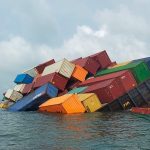
- Marine cargo damage during import/export
- Port congestion
- Damage during loading and unloading
- Dependency on specific shipping routes
Many companies assume marine cargo insurance is “standard,” but policy conditions often do not match actual shipping practices.
- Workforce and Liability Risk
Operational risks also come from human factors:
- Workplace accidents
- Third-party injury
- Damage to neighboring facilities
- Labor disputes
Liability risks are often underestimated, yet claims can escalate quickly, especially when injuries involve subcontractors or visitors.
Risk Identification Across the Investment Lifecycle
Effective risk identification is not a one-time exercise. It must align with each project phase.
Pre-Investment and Feasibility Stage
At this stage, risk identification focuses on:
- Location risk
- Regulatory exposure
- Natural hazard exposure
- Infrastructure reliability
Early risk mapping helps investors decide:
- Whether the site is suitable
- What controls are required
- How insurance should be structured
Construction and Installation Stage
This is the highest risk phase financially.
Key risk identification areas:
- Fire exposure during hot works
- Imported machinery transit risk
- Contractor responsibility gaps
- Testing and commissioning risks
Construction risks should be clearly separated from operational risks in insurance planning.
Operational and Expansion Stage
Once production begins, risks shift toward:
- Asset protection
- Business interruption
- Liability exposure
- Supply chain continuity
Risk identification must be updated regularly, especially when:
- Production capacity increases
- New machinery is added
- Processes change
Common Risk Blind Spots for Foreign Investors
Despite strong internal controls, foreign investors often overlook:
- Underinsurance due to incorrect asset valuation
- Policy exclusions hidden in technical wording
- Deductibles that are impractical during loss events
- Mismatch between global standards and local policies
These blind spots usually surface only after a loss occurs—when it is already too late.
How Professional Risk Identification Prevents Losses
Professional risk identification transforms uncertainty into structured insight through:
- Risk registers tailored to industrial operations
- Clear risk ownership within management
- Classification of risks: retain, control, or transfer
- Alignment between operational risks and insurance coverage
This approach allows management to:
- Make informed decisions
- Protect cash flow
- Maintain production continuity
The Role of Insurance Brokers in Risk Identification
Insurance brokers are not merely policy sellers.
For foreign investors, they act as risk translators.
A professional insurance broker:
- Understands engineering and industrial risks
- Translates operational exposure into insurable terms
- Aligns local insurance policies with global HQ expectations
- Represents the client—not the insurer—during claims
This role is critical in Indonesia, where insurance policy wording, claims practices, and regulatory interpretation require local expertise.
Why Korean Companies in Batam Work with L&G Insurance Broker
L&G Insurance Broker works closely with foreign investors, EPC contractors, and industrial operators across Indonesia.
Our approach to risk identification includes:
- On-site risk surveys
- Engineering-based risk analysis
- Insurance gap analysis
- Practical recommendations—not theoretical reports
We understand:
- The expectations of Korean headquarters
- The realities of Indonesian operations
- The importance of claims certainty
Our role is to ensure that when an incident happens, insurance works as expected—not as assumed.
Conclusion: Risk Identified Is Risk Controlled
Batam offers tremendous opportunities for Korean investors—but opportunities come with exposure.
Risk identification is not an obstacle to growth.
It is a foundation for sustainable, resilient, and profitable operations.
By identifying risks early:
- Capital is protected
- Operations remain stable
- Insurance becomes a strategic asset—not a cost
If your company is:
- Planning to invest in Batam
- Constructing or expanding a factory
- Operating an existing plant
Now is the right time to review your risks.
Contact L&G Insurance Broker for a professional risk identification and insurance review tailored specifically for Korean investors and industrial operations in Indonesia.
Protect your investment—before risk becomes loss.
—
DON’T WASTE YOUR TIME AND SECURE YOUR FINANCES AND BUSINESS WITH THE RIGHT INSURANCE.
HOTLINE L&G 24 JAM: 0811-8507-773 (PHONE – WHATSAPP – SMS)
Website: lngrisk.co.id
Email: halo@lngrisk.co.id
—