



Indonesia’s insurance industry and financial markets are at a crucial juncture. Regulators are being urged to expedite legal certainty in resolving troubled insurance companies to protect policyholders.
On the other hand, the wave of consolidation of state-owned insurance companies, special oversight of dozens of financial institutions, and plans to relax investment limits for pension funds and insurance companies in the stock market mark a phase of major restructuring. These dynamics demonstrate that the insurance sector is no longer simply a protection business, but rather a strategic part of the national financial system’s stability architecture.
Insurance Resolutions Shouldn’t Be Delayed! UI Law Experts Urge LPS-OJK to Set a Firm Deadline
Dian Puji Nugraha Simatupang, Head of the Public Finance and Taxation Law Study Program at the University of Indonesia’s Faculty of Law, urged the Deposit Insurance Corporation (LPS) and the Financial Services Authority (OJK) to immediately formulate clear and measurable regulations regarding the resolution of troubled insurance companies. In a Public Hearing (RDPU) with Commission XI of the Indonesian House of Representatives (DPR RI), he emphasized that timeliness is the most crucial aspect of the resolution process.
According to Dian, without a firm timeline, the resolution process could drag on and harm policyholders who have paid premiums for years. He explained that under the proposed scheme, the Financial Services Authority (OJK) would first report the insurance company under its supervision to the LPS. The LPS would then conduct a thorough audit to assess the feasibility of the resolution, including the company’s reputation, potential fraud, and the adequacy of assets to protect policyholders’ rights.
Furthermore, risk calculations and estimated resolution durations are considered crucial to provide legal certainty. Dian emphasized the need for strong coordination between the LPS (LPS) and the OJK (Financial Services Authority) to ensure a swift and efficient process. He also believes the P2SK Law must explicitly mandate the development of technical regulations for resolution, ensuring each stage has a clear legal basis and does not create new uncertainty in the insurance industry.
Amidst State-Owned Enterprise Divestment and Consolidation Issues, Tugure’s Boss Speaks Out: Is the Reinsurance Market Ready for Change?
Amid plans to divest its insurance subsidiary, PT Pertamina (Persero), and discussions about consolidation into the Indonesia Financial Group (IFG) holding company, PT Tugu Reasuransi Indonesia (Tugure) has ensured that its business operations will continue as normal. Tugure’s President Director, Teguh Budiman, emphasized that the company remains focused on maintaining business fundamentals, risk management, and sustainable profitability in accordance with regulations.
While respecting every strategic move by shareholders, Tugure emphasized that business sustainability and underwriting independence are top priorities. Currently, Tugure is owned by Tugu Pratama Interindo (50.74%) and Asriland (49.26%). If the consolidation of state-owned reinsurance companies is realized, the impact is expected to extend beyond shareholder changes and could also restructure the national reinsurance market.
According to Teguh, these changes could impact various strategic aspects, such as underwriting, retrocession, pricing power, and business partner positioning. However, consolidation also opens up opportunities for synergy through optimizing domestic capacity, integrating reinsurance programs, and strengthening risk analytics through the network effect of SOEs.
Amid these dynamics, Tugure emphasized his commitment to maintaining market confidence by strengthening capital (RBC), underwriting discipline, and proactive communication with domestic and international partners. Financial transparency is considered key to reducing uncertainty and maintaining the stability of the national reinsurance market.
15 Becomes 3! Danantara Ready to Give Birth to a ‘New Giant’ of State-Owned Insurance Companies
The Daya Anagata Nusantara Investment Management Agency (BPI Danantara) is targeting a major overhaul of the state-owned insurance sector by reducing the number of companies from 15 to just three. These three entities are planned to represent life insurance, general insurance, and credit insurance. This move is seen as part of the government’s broader strategy to strengthen the structure and competitiveness of state-owned enterprises.
Insurance observer Irvan Rahardjo views the consolidation as an appropriate and strategic step. He believes the policy aims to improve the performance of the majority of companies, which have been suboptimal, while also meeting the Financial Services Authority (OJK) minimum equity requirements, which will take effect in 2026 and 2028. Consolidation is also believed to strengthen capital, improve operational efficiency, and expand risk coverage capacity.
If implemented, this measure has the potential to significantly transform the national insurance industry landscape, even creating a new, more competitive and financially sound “giant.” From the business perspective, PT Asuransi Jasa Indonesia (Jasindo) expressed its support for this policy. Management believes that consolidation can strengthen synergies between entities, increase capital capacity, and provide more optimal services to the public and state institutions.
With this consolidation, the government hopes that the state-owned enterprise insurance ecosystem will become more solid and capable of driving sustainable national economic growth.
Premiums Have Plummeted, Will 2026 Be a Turning Point for Life Insurance? Here’s What It Means!
The life insurance industry is projected to enter a more stable recovery phase in 2026 after experiencing pressure throughout 2025. According to data from the Financial Services Authority (OJK), life insurance premiums were recorded at IDR 180.98 trillion in 2025, a 3.81% year-on-year (YoY) contraction. This decline reflects the industry’s adjustment to changing customer needs and economic dynamics.
Insurance observer Irvan Rahardjo believes 2025 will be a natural period of consolidation for businesses. Entering 2026, premium growth is expected to return to positive levels, albeit within a stable to moderate range. The industry’s primary strategy will rely on massive digitalization and product innovation, particularly in health and traditional insurance products.
Healthcare products are predicted to remain a growth driver as public awareness of post-pandemic protection increases. Meanwhile, traditional products are seeing a resurgence in demand due to their guaranteed benefits amidst financial market volatility. In addition to product innovation, expansion into developing cities and strengthening micro-products are considered potential drivers of insurance inclusion.
On the technology side, the use of insurtech will become increasingly dominant to improve distribution efficiency and customer experience. Despite improving prospects, strengthening capital fundamentals remains key to maintaining industry sustainability and policyholder confidence amidst increasingly fierce competition.
Source: https://keuangan.kontan.co.id/news/premi-asuransi-jiwa-diproyeksikan-tumbuh-stabil-pada-2026
As Dentistry Costs Rise, Dental Insurance Market Predicted to Reach US$529 Billion!
The global dental insurance market is projected to grow rapidly over the next eight years. A Market Data Forecast report cited by Insurance Asia states that the industry has the potential to record a compound annual growth rate (CAGR) of 9.5% from 2025 to 2033. The market value is projected to increase from US$233.8 billion in 2024 to US$256.0 billion in 2025, and to US$529.2 billion by 2033.
This surge is driven by the rising cost of dental care, such as fillings, crowns, and even root canals, which are relatively expensive, especially in countries where dental health services are not covered by general insurance. This situation has prompted people to seek financial protection to reduce the burden of out-of-pocket expenses.
Besides cost, awareness of the importance of oral health is also a key driver. Public education campaigns increasingly emphasize the link between oral health and overall health. World Health Organization (WHO) data indicates that nearly 3.5 billion people worldwide suffer from oral disease, making this issue a global concern.
The increasing risk of untreated dental problems has led people to choose insurance that covers preventive care, such as regular cleanings and checkups. This trend strengthens the dental insurance industry’s prospects as a promising segment in the global insurance sector.
Industry Alarm! 13 Financial Institutions Under Special OJK Supervision, What’s Going On?
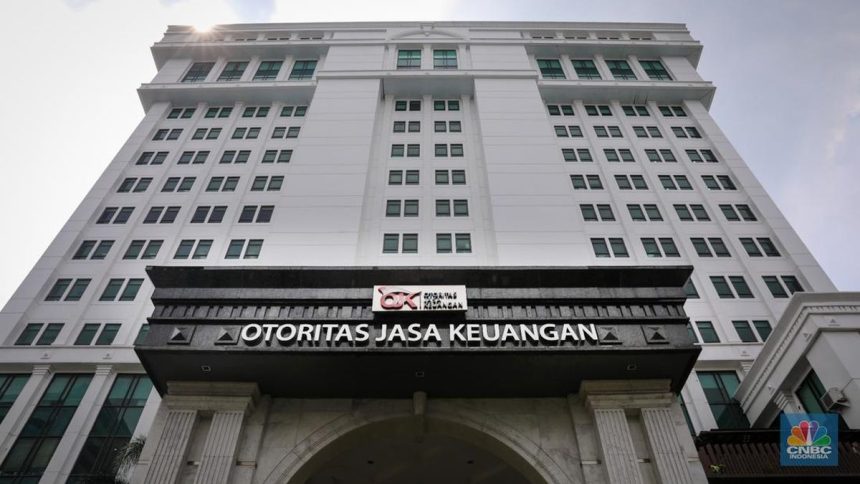
The Financial Services Authority (OJK) is tightening its oversight of the insurance and pension fund industries experiencing financial pressure. By the end of December 2025, six insurance and reinsurance companies and seven pension funds had been placed under a special oversight scheme.
Ogi Prastomiyono, Chief Executive of the Insurance, Guarantee, and Pension Fund Supervisory Agency (OJK), explained that this step is part of a strategy to address financial services institutions facing financial problems. Within this supervisory framework, the OJK is implementing various restructuring programs to encourage improvements in the company’s financial condition while ensuring the protection of policyholder interests.
Not only insurance companies, but seven pension funds are also under strict oversight to strengthen their capital and governance. This special oversight reflects the regulator’s firm stance on maintaining the stability of the financial services sector amidst economic dynamics.
This preventive measure is considered crucial to prevent systemic risk and maintain public trust in the financial industry. With more intensive oversight, the OJK hopes the recovery process will be measured, transparent, and focused on protecting the public, both policyholders and pension fund participants.
Pension Funds and Insurance Allowed to Participate in 20% of Stocks, IDX Ensures No Hidden Risks!
The Indonesia Stock Exchange (IDX) has confirmed there are no concerns about plans to increase investments by pension funds (dapen) and insurance companies in the domestic stock market. Acting IDX President Director Jeffrey Hendrik assured that all institutional investments remain within regulatory limits with clear boundaries.
Jeffrey also denied the potential for a crowding effect if domestic institutions increase their stock exposure. He explained that daily stock market transactions, which exceed IDR 30 trillion, are still dominated by retail investors at 52%, followed by foreign investors at 30%, and domestic institutions at around 20%. This means there’s still ample room for institutional participation to grow without disrupting market balance.
Regarding potential conflicts of interest, particularly in shares of state-owned enterprises or affiliated entities, the IDX assesses that market mechanisms are adequate. Free float regulations and increased share ownership transparency are deemed sufficient to maintain good governance.
Previously, the government planned to increase the investment limit for pension funds and insurance in the capital market from 8% to 20%. Purbaya Yudhi Sadewa stated that investment would be focused on stocks with strong fundamentals, such as the LQ45 index, rather than speculative stocks. This policy is expected to strengthen the credibility and liquidity of the Indonesian capital market.
Conclusion
All of these policies point to one common thread: strengthening the industry’s foundations for long-term sustainability. However, consolidation, investment expansion, and resolution of problematic companies will only be effective if accompanied by transparent governance, firm oversight, and clear legal certainty.
Without it, the risk of uncertainty could erode public trust. Going forward, the real test lies not simply in creating a larger entity, but in ensuring that the Indonesian insurance industry is healthier, more credible, and capable of truly protecting the public’s interests.
—
DON’T WASTE YOUR TIME AND SECURE YOUR FINANCES AND BUSINESS WITH THE RIGHT INSURANCE.
HOTLINE L&G 24 JAM: 0811-8507-773 (PHONE – WHATSAPP – SMS)
Website: lngrisk.co.id
Email: halo@lngrisk.co.id
—