



Amid global uncertainty and increasingly complex economic pressures, the Indonesian insurance industry is at a crucial crossroads: between growth and vulnerability. On the one hand, industry assets continue to increase and capitalization appears solid. However, on the other hand, various “risk alarms” are emerging, ranging from low insurance penetration, challenges in implementing new regulations, to the threat of disasters and global geopolitical turmoil.
This fact raises a major question: is the Indonesian insurance industry truly prepared for future risks, or is it still lagging behind in terms of real protection? This latest series of news stories reveals a rarely discussed side of the industry, from the strict oversight of the Financial Services Authority (OJK), the pressure of new accounting standards, to the harsh reality that the majority of major losses in Indonesia are uninsured.
Secretly Being Monitored! The Financial Services Authority (OJK) Spotlights 7 Insurance and Pension Fund Companies. What’s Really Going On?
The Financial Services Authority (OJK) has revealed that it is conducting special supervision of several financial industry players, including insurance companies, reinsurance companies, and pension funds. In an April 2026 press conference, Ogi Prastomiyono, Chief Executive of the OJK Insurance Supervisory Agency, stated that the supervision was being conducted on seven insurance and reinsurance companies and seven pension funds. However, the OJK has not yet disclosed the detailed rationale behind this action.
This special oversight is not new, as in October 2025, the OJK also took similar action against several companies that failed to meet the minimum financial health ratio. Under these circumstances, companies are required to prepare a capital improvement plan, approved by the GMS, as part of their recovery efforts.
On the other hand, the Financial Services Authority (OJK) noted positive developments in the industry. As of February 2026, 114 of the 144 insurance and reinsurance companies, or approximately 79.17 percent, had met the minimum equity requirements as stipulated in the latest regulations.
In terms of performance, the insurance industry also demonstrated stable growth. Total assets reached Rp1,219.35 trillion, representing a 6.80 percent year-on-year increase. Premium income reached Rp62.37 trillion, with the largest contributions coming from life and general insurance. This reflects the industry’s robust fundamentals, despite tight regulatory oversight.
Indonesia is Prone to Disasters! AAUI Reveals Why Disaster Insurance Remains a Major Challenge
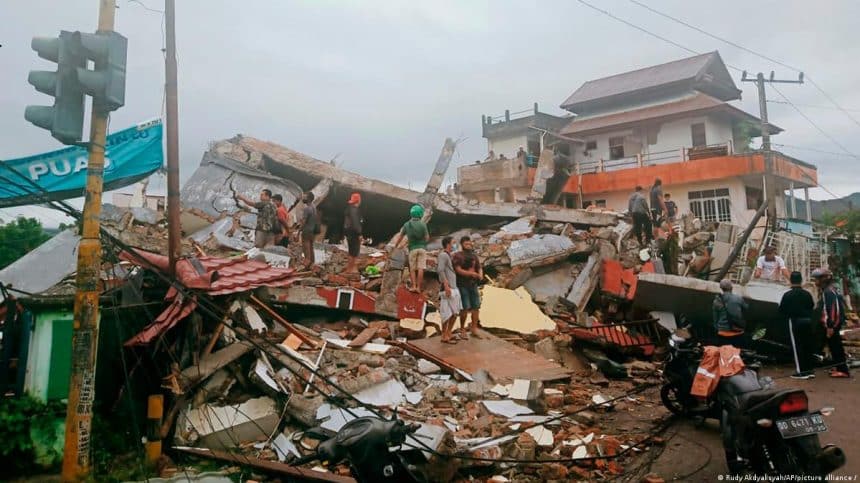
The need for disaster insurance in Indonesia is increasingly pressing due to the increasing frequency of natural disasters in various regions, from earthquakes to floods and volcanic eruptions. The Indonesian General Insurance Association (AAUI) believes that Indonesia, as a country with a high level of disaster exposure, requires a more comprehensive and sustainable protection scheme.
AAUI Chairman Budi Herawan emphasized that the main challenge is not simply mandating disaster insurance, but rather designing a system that is appropriate, affordable, and capable of covering large-scale risks. Currently, insurance penetration in Indonesia remains relatively low, making public literacy and awareness a major obstacle.
Furthermore, the industry faces challenges in premium pricing and risk mapping, which require accurate data and models. Reinsurance capacity and funding support are also crucial for maintaining the scheme’s viability during major disasters.
As a solution, AAUI is currently reviewing the development of parametric insurance focused on emergency response financing, particularly for local government assets. Going forward, this scheme is expected to be expanded to protect the broader public, with policy support and synergy between the government and industry.
Source: https://www.readers.id/asuransi-bencana-indonesia-aaui
PSAK 117 Overwhelms the Insurance Industry! OJK Considers Relaxation, What’s Going On?
The Indonesian insurance industry still faces significant challenges in implementing the new accounting standard, PSAK 117, which came into effect on January 1, 2025. The complexity of this regulation has prompted the Financial Services Authority (OJK) to consider relaxing the deadline for submitting audited financial statements for the 2025 fiscal year.
Ogi Prastomiyono, Chief Executive of the Insurance Supervisory Agency (OJK), stated that although PSAK 117 improves transparency and accuracy of financial reporting, many companies still face challenges with IT system readiness, account structure, and data integration. This situation is considered a temporary (one-off) transitional effect, so the relaxation is likely to only apply until the first semester of 2026.
From an industry perspective, the Indonesian General Insurance Association (AAUI) acknowledged that businesses are still struggling to meet the new standards. In fact, experience from other countries shows that adapting to similar standards can take up to two years.
PSAK 117 itself introduces significant changes, from recognizing service-based revenue to introducing new components such as the Contractual Service Margin (CSM). This standard also shifts the industry’s focus from simply premium growth to profitability and more disciplined risk management.
Despite the challenges, the implementation of PSAK 117 is believed to strengthen the foundation of the insurance industry through greater transparency and alignment with global standards.
Insurance Assets Reach Rp1,219 Trillion! But Premium Growth Is Starting to Stagnate, What’s Going On?
The Financial Services Authority (OJK) reported that total assets in the Indonesian insurance industry reached Rp1,219.35 trillion as of February 2026, representing a 6.80 percent year-on-year growth. This growth was primarily driven by commercial insurance performance, which remains positive, despite slowing premium growth.
Commercial insurance assets were recorded at Rp999.15 trillion, an 8.57 percent year-on-year increase. Meanwhile, total premium income reached Rp62.37 trillion, a growth of only 3.50 percent. In detail, life insurance premiums experienced very slight growth of 0.12 percent to Rp32.39 trillion. Conversely, general insurance and reinsurance premiums grew more solidly, at 7.41 percent to Rp29.98 trillion.
In terms of capital, the industry remains in very strong condition. Risk-Based Capital (RBC) ratios are recorded well above the minimum threshold of 120 percent, at 480.83 percent for life insurance and 327.98 percent for general insurance and reinsurance.
However, not all segments recorded positive performance. Non-commercial insurance assets, including the BPJS (Social Security Agency), actually experienced a slight contraction of 0.57 percent. Overall, the OJK assesses the industry remains stable, with a strong capital foundation to weather global and domestic economic challenges.
Don’t Just Go for Cheap! These Are Fatal Mistakes When Buying Car Insurance That Are Often Ignored
Having vehicle insurance is a crucial step to provide a sense of security and protection from various risks on the road. However, many people are still careless when choosing insurance products, resulting in suboptimal benefits. Allianz Indonesia reminds us that there are several crucial factors to consider before purchasing vehicle insurance.
First, prospective customers must understand the coverage, whether it covers total loss only (TLO), all risks, or includes third-party coverage. The choice of coverage significantly determines the level of protection received. Second, the insurance company’s reputation is also a crucial factor. Low premiums may not necessarily provide optimal protection if the risks covered are limited.
Furthermore, customers need to consider the deductible they must pay when a claim occurs. Many people don’t realize that this cost will arise in every accident. Another important factor is the network of partner repair shops. Having a nearby repair shop will simplify the claims and vehicle repair process.
Finally, some companies also offer repair options at authorized repair shops for an additional fee. By considering all these aspects, customers can choose vehicle insurance that truly meets their needs and provides maximum protection.
El Niño Losses Reach Trillions of Rupiah, But Insurance Companies ‘Miss Out’? Here’s the Shocking Fact!
The El Niño phenomenon has proven to cause significant economic losses in Indonesia, yet ironically, most of these losses are not covered by insurance. Indonesia Re’s Technical Operations Director, Delil Khairat, revealed that low insurance penetration is the primary cause of the gap between actual losses and claims received in the industry.
For example, the impact of El Niño in 2015 caused losses of up to US$16.1 billion, or approximately 1.9% of national GDP. Meanwhile, in 2019, losses reached US$5.2 billion. Despite these significant figures, recorded insurance claims were relatively small due to limited coverage.
In the agricultural sector, for example, the Rice Farming Insurance (AUTP) program only covers approximately 3.7% of the nation’s total rice paddy area. This makes potential claims due to crop failure insignificant for the industry, despite significant losses to farmers.
Beyond agriculture, El Niño risks also threaten the property sector through forest fires, health risks from haze, and operational disruptions in the logistics sector. However, the insurance industry also faces internal pressures, such as rising loss ratios.
Indonesia Re views this situation as an opportunity to encourage innovation, including the development of parametric insurance and strengthening collaboration with the government to increase resilience to future disaster risks.
Source: https://www.readers.id/asuransi-pertanian-terbatas-kerugian-el-nino
The Middle East War Could Hit Indonesian Banks! OJK: Credit and Purchasing Power Threatened
The Financial Services Authority (OJK) has warned that geopolitical conflict in the Middle East has the potential to have an indirect but significant impact on the Indonesian economy, particularly the banking sector. OJK Chief Executive for Banking Supervision, Dian Ediana Rae, emphasized that as an open economy, Indonesia is highly vulnerable to global turmoil.
One of the key risks to watch out for is a spike in energy prices due to disruptions to global distribution channels, including the potential closure of the Strait of Hormuz. This energy price increase could increase production and distribution costs, particularly for the transportation, manufacturing, and industrial sectors that rely on imported raw materials.
The knock-on effect of these cost pressures is a decline in people’s purchasing power. This situation risks increasing non-performing loans, particularly in the MSME and consumer segments, which are most sensitive to economic changes. In times of uncertainty, banks are also expected to be more selective in disbursing credit, potentially slowing financing growth.
Despite this, the Financial Services Authority (OJK) confirmed that the national banking system remains relatively strong, particularly in terms of capital. However, vigilance remains necessary to anticipate potential spillovers of global risks that could impact the stability of the domestic financial sector.
From these various developments, one thing is clear: the Indonesian insurance industry is not lacking in potential, but it still faces fundamental challenges in execution. Regulations are tightening, risks are becoming more complex, but literacy and penetration remain the biggest challenges.
If not addressed immediately, the gap between actual risk and protection will widen, ultimately impacting the public. This momentum should be a turning point, not only for industry players but also for regulators and the public, to see insurance not as just a product, but as a crucial necessity in an era of uncertainty.
The question now is, will the industry move faster… or fall behind again in the face of risks that continue to come without compromise?