



In recent days, various accidents and fires have occurred in several regions of Indonesia, ranging from heavy vehicle collisions and fires at industrial facilities to incidents in public areas and at sea. These incidents have not only caused billions of rupiah in material losses but also resulted in loss of life and significant operational disruptions.
This phenomenon serves as a reminder that risks can arise anytime, anywhere, and often stem from seemingly trivial factors such as electrical short circuits, driver negligence, and lack of technical maintenance. Without proper risk management, the impact can be widespread and detrimental to many parties.
As insurance brokers and consultants, it is important to view every incident not just as news, but as a risk awareness lesson that can help individuals and companies prepare the right protection.
TruckBoxA bus collided with a parked bus in Madiun, killing the driver. The bus was pushed into a house.
A tragic accident occurred on Jalan Panglima Sudirman, Caruban, Madiun Regency, on Tuesday (April 7, 2026) at around 1:00 p.m. WIB. The incident involved a box truck with license plate number AE 9588 NK which hit the rear of a Sumber Selamat bus with license plate number W 7202 UP which was parked at the roadside.
According to eyewitnesses, the impact was sudden and violent, pushing the bus forward and causing it to crash into a nearby house. The box truck driver reportedly died at the scene after being trapped in the steering wheel.
The victim’s evacuation process took quite a long time and was hampered by the victim’s condition, which was trapped inside the vehicle. It took officers over an hour to extricate the victim. Police are currently conducting further investigations to determine the exact cause of the accident.
News source: https://www.detik.com/jatim/berita/d-8433229/truk-seruduk-bus-di-madiun-hingga-tabrak-rumah-warga-sopir-tewas
Risk Accident Review
This accident demonstrates the high risk of rear-end collisions, particularly involving heavy vehicles at high speeds and with insufficient safety distance. Vehicles stopped on the shoulder of the road become a critical hazard if they are not equipped with adequate warning signs. Furthermore, driver fatigue, lack of concentration, or braking system failure can be major triggers. The impact of an accident is not limited to the vehicles involved but can also spread to surrounding property. Without risk management measures such as defensive driving, parking safety standards, and insurance coverage, human and financial losses can increase significantly.
Types of Insurance Needed
- Vehicle Insurance (Comprehensive / All Risk)
Covers vehicle damage due to accidents, including serious collisions. - Third Party Liability (TPL)
Protects against third party claims, including damage to residents’ homes due to accidents. - Personal Accident Insurance
Provides compensation for the risk of injury or death of the driver. - Fleet Insurance
Suitable for transportation companies with large fleets for more efficient protection.
This incident confirms that fatal accidents can happen in a matter of seconds, especially in heavy vehicles with high risk.
As an insurance broker and consultant, it is important to ensure driver training, parking safety standards, and comprehensive insurance coverage to minimize the impact of major losses.
Truck Swerves on Deadly Slope in Wonosobo, Hits 5 Vehicles, Kills 1
A multiple-vehicle accident occurred on the Parakan-Kertek Road, specifically in Madukoro Hamlet, Candimulyo Village, Kertek District, Wonosobo Regency, Central Java, on Wednesday (April 8, 2026) at around 6:30 a.m. WIB. The incident involved five vehicles and resulted in one death and four injuries.
According to police, the accident began when a Hino dump truck was traveling from Parakan toward Kertek. While navigating a downhill road with a left-hand bend, the truck allegedly lost control, swerved to the right, and crossed the center line.
At the same time, several vehicles were coming from the opposite direction: a Canter dump truck, a Canter logging truck, a Suzuki APV pickup truck, and a Yamaha Vega motorcycle. Due to the close proximity, a collision was unavoidable, triggering a chain-reaction accident.
The heavy impact caused severe damage to several vehicles, particularly the front. Officers arriving at the scene immediately evacuated the victims and managed the temporarily disrupted traffic. Police are still investigating to determine the exact cause of the accident.
Risk Accident Review
This accident demonstrates the high risk of downhill and curving roads, especially for heavy vehicles like trucks. The primary factors are suspected to be loss of control due to speed, braking system failure, or overloading. Challenging road conditions increase the potential for vehicles to veer off the road and collide with oncoming traffic. The risk increases as traffic volumes increase during rush hour.
Without risk management such as vehicle inspections, speed limits, and driver training, multiple accidents can result in fatalities and significant losses for many parties.
Types of Insurance Needed
- Motor Vehicle Insurance (Comprehensive / All Risk)
Covers vehicle damage due to accidents, including multiple collisions. - Third Party Liability (TPL)
Protects against third party claims for damage to other vehicles or victims. - Personal Accident Insurance
Provides compensation for the risk of injury or death of the driver and passengers. - Fleet Insurance
Suitable for companies with multiple fleets for more efficient and integrated protection.
This incident confirms that extreme routes such as descents and bends are accident-prone areas, especially for heavy vehicles.
As an insurance broker and consultant, it is important to ensure speed control, vehicle maintenance, and comprehensive insurance coverage to minimize the risk of major losses.
The roof of the Soekarno-Hatta Terminal 3 boarding lounge collapsed after a heavy downpour.
The shocking incident occurred at Boarding Lounge Gate 7 of Terminal 3 of Soekarno-Hatta Airport during heavy rain in Tangerang City. The incident began around 12:00 p.m. Western Indonesian Time (WIB), when airport operations were still operating normally and passengers were heading to the waiting area for their respective departure gates.
Approximately 90 minutes later, Aviation Security (Avsec) officers noticed water dripping from the ceiling in the area. Recognizing the potential danger, officers immediately directed passengers to move away and to a safer area.
Shortly afterward, the ceiling and part of the roof of the Boarding Lounge Gate 7 reportedly collapsed, causing a pool of water on the floor around the scene. Fortunately, the swift action of officers minimized the risk of further damage, and no casualties were reported in the incident.
News source: https://rri.co.id/berita-video/40814/kronologis-atap-terminal-3-bandara-soekarno-hatta-jebol
Risk Accident Review
This ceiling collapse incident demonstrates the risk of building structural failure due to external factors such as heavy rainfall, which triggers leaks and water accumulation. Suboptimal roof drainage and a lack of regular inspections and maintenance can cause excessive stress on the ceiling, leading to its collapse. Public areas such as airports are particularly exposed to this risk due to high human mobility. Without monitoring systems, preventive maintenance, and sound construction standards, similar incidents have the potential to cause loss of life and significant operational disruption.
Types of Insurance Needed
- Property All Risks (PAR)
Covers building damage due to risks such as heavy rain, leaks, and structural collapse. - Business Interruption Insurance
Compensate for potential losses due to disruption of airport operations. - Public Liability Insurance
Protects against third party claims, including affected passengers. - Engineering Insurance (CAR/EAR)
Provides protection against the risk of failure of building structures or installations. - Maintenance Insurance / Building Insurance
Ensures protection against damage due to lack of function or failure of building systems.
This incident confirms that risks do not only come from fire or accidents, but also from structural failure due to natural factors.
As an insurance broker and consultant, it is important to ensure regular inspections, proper drainage systems, and comprehensive insurance coverage to ensure public safety and operational continuity.
Bekasi Gas Station Explodes! Suspected Gas Leak and Short Circuit, 12 People Suffer Serious Burns
A massive fire broke out at the LPG Bulk Filling Station (SPBE) on Jalan Cinyosog, Cimuning Village, Mustika Jaya District, Bekasi City. The overnight incident resulted in 12 people suffering serious burns.
Based on initial information, the fire is suspected to have started from a gas leak at the location. Several local residents reported smelling gas before the incident. Shortly afterward, an electrical short circuit is suspected to have triggered a spark and ignited the leaking gas, causing a massive explosion.
The fire quickly spread and engulfed most of the SPBE area, causing extensive, almost total, damage. Firefighters from Bekasi City were immediately deployed with around nine fire trucks to control the situation. The firefighting effort took quite a while, starting around 9:30 PM WIB and finally extinguished around 3:45 AM WIB.
Currently, authorities are still conducting investigations to determine the exact cause of the fire, although initial suspicions point to a combination of a gas leak and an electrical short circuit.
News source: https://news.detik.com/berita/d-8426065/kebakaran-gudang-pengisian-elpiji-di-bekasi-diduga-dipicu-gas-bocor
Risk Accident Review
This incident highlights the high risks at gas storage and distribution facilities, particularly those resulting from undetected leaks. Flammable LPG can trigger a massive explosion when exposed to ignition sources such as electrical short circuits. The lack of a gas detection system, inadequate ventilation, and weak inspection of electrical and plumbing installations are key factors. Furthermore, the lack of an emergency response system can exacerbate the impact of casualties and damage. Energy facilities such as gas storage and distribution facilities (SPBE) require high safety standards due to the potential for catastrophic losses to people, assets, and the surrounding environment.
Types of Insurance Needed
- Property All Risks (PAR)
Protecting facility assets from the risk of fire, explosion and major damage. - Industrial All Risks (IAR)
Comprehensive protection for high-risk industrial facilities such as SPBE. - Public Liability Insurance
Covering claims from third parties, including affected local residents. - Workmen Compensation / Employer’s Liability
Guarantees workers who experience burns or work accidents. - Machinery Breakdown Insurance
Protects against damage to machinery and installations due to operational failure. - Business Interruption Insurance
Compensate for losses due to cessation of operations after a fire.
This incident confirms that the combination of a gas leak and an ignition source is the most fatal risk scenario in the energy industry.
As an insurance broker and consultant, it is important to ensure a gas detection system, regular inspections, and multi-layered insurance protection to avoid major losses and loss of life.
Ship Catches Fire in Belawan! Overheated Engine Causes Explosion, Killing 3 Crew Members and Leaving 5 Missing
A tragic fire struck the motor vessel (KM) Sumber Indah III in the waters northeast of Belawan, Medan City. The incident resulted in the deaths of three crew members, five others are still missing, and 13 crew members survived.
The ship, carrying a total of 21 people, was known to have set sail the day before the incident to fish. The incident began around 2:10 a.m. Western Indonesian Time (WIB) when one of the crew members noticed the ship’s engine was overheating and turning red.
The situation worsened when an engine explosion occurred, followed by a gas cylinder explosion. The fire quickly spread and engulfed part of the ship, forcing the crew to jump into the sea to save themselves.
Approximately 30 minutes later, another passing fishing boat managed to provide assistance and evacuate the victims floating at sea. The survivors were then transferred to another boat and taken to the Gabion Belawan TPI Pier. The search for the five missing crew members is currently underway by the marine patrol team and the Indonesian Navy.
Risk Accident Review
This ship fire presents a high risk to maritime operations, primarily due to engine failure and fuel or gas management. Untreated engine overheating can trigger an explosion, especially if the vessel has a gas installation. The lack of a temperature monitoring system, suboptimal engine maintenance, and limited safety procedures increase the potential for a fatal incident. Furthermore, limited firefighting equipment and evacuation at sea increase the risk of loss of life. Fishing operations require high safety standards because the risk of fire at sea is critical.
Types of Insurance Needed
- Marine Hull Insurance
Covers damage to ships due to fire, explosion and marine accidents. - Protection & Indemnity (P&I Insurance)
Protects ship owners from legal liability claims, including death and injury to crew members. - Personal Accident (PA) for ABK
Provides compensation for the risk of death or injury to crew members. - Marine Cargo Insurance (if there is a load)
Covers losses on catch or cargo on board. - Employer’s Liability / Workmen Compensation
Protecting the company’s obligations to workers (ABK). - Loss of Hire Insurance
Compensate for losses due to the ship being unable to operate after an incident.
This incident confirms that the risk of fire at sea often starts from a small technical failure that develops into a major disaster.
As an insurance broker and consultant, it is important to ensure preventive maintenance, machine monitoring systems, and comprehensive maritime insurance coverage to minimize losses and casualties.
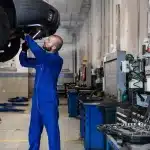
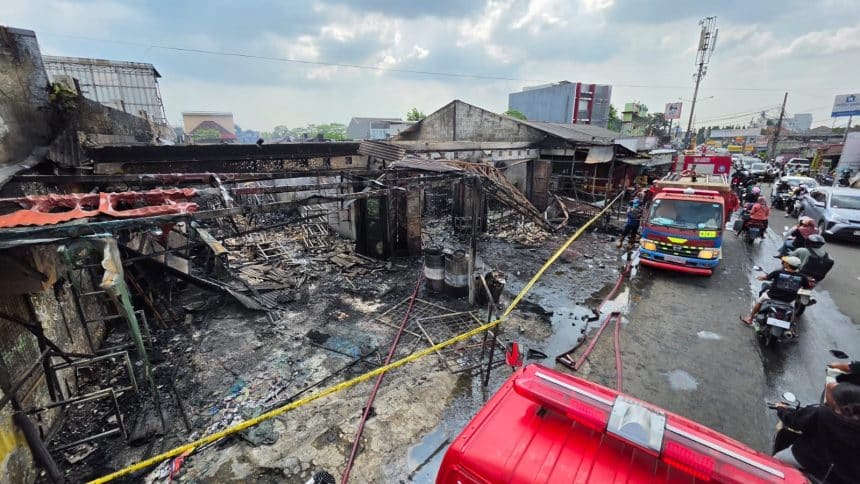
Motorcycle repair shop in Pamulang destroyed! Suspected short circuit causes losses of Rp3.5 billion
A fire engulfed a motorcycle repair shop on Jalan Raya Pondok Benda, Pondok Benda Village, Pamulang District, South Tangerang, on Wednesday (April 1, 2026). The flames quickly destroyed the entire workshop building and the four motorcycles inside.
Firefighters received a report of the fire at around 11:45 a.m. WIB, and the first unit arrived on the scene just 10 minutes later. Eight fire trucks and dozens of personnel were deployed to control the blaze.
The firefighting effort lasted until 2:20 PM WIB and was hampered by strong winds, which accelerated the spread of the fire. Although there were no casualties, the fire caused an estimated Rp 3.5 billion in damage. The preliminary suspicion is that the incident was triggered by an electrical short circuit in the workshop area.
News source: https://news.detik.com/berita/d-8425258/bengkel-motor-di-pamulang-terbakar-akibat-korsleting-kerugian-rp-3-5-m
Risk Accident Review
This workshop fire illustrates the high risk of poorly maintained electrical installations, especially in environments with flammable materials like oil, gasoline, and vehicle components. Electrical short circuits can quickly ignite widespread fires, exacerbated by open ventilation and strong winds. The lack of fire protection systems such as fire extinguishers, hydrants, and smoke detectors also increases the potential for total loss. Small to medium-sized businesses often neglect routine inspections and safety standards. Without proper risk mitigation, similar incidents can result in significant financial losses and operational disruptions.
Types of Insurance Needed
- Property All Risks (PAR)
Covers damage to buildings and contents due to fire, including workshops and equipment. - Fire Insurance
Basic protection against the risk of fire due to electrical short circuits. - Business Interruption Insurance
Compensate for losses due tostoppingpost-fire business operations. - Public Liability Insurance
Protects against third party claims if the fire spreads or harms others. - Machinery Breakdown Insurance
Covers damage to machinery and workshop equipment.
This incident confirms that workshop businesses have a high risk of fire due to the combination of electricity and flammable materials.
As an insurance broker and consultant, it is important to ensure regular electrical inspections, fire protection systems, and comprehensive insurance coverage to ensure business continuity.
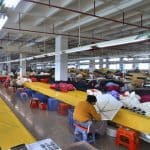
A fabric shop in North Aceh was completely destroyed! 90% of the goods were destroyed in an instant, suspected to have been caused by a short circuit.
A massive fire engulfed a shophouse belonging to the Bahgia Tex fabrics business in Samakurok Village, Tanah Jambo Aye District, North Aceh Regency, on Sunday (April 5, 2026) at around 1:00 p.m. WIB. There were no fatalities, but losses are estimated to reach billions of rupiah due to the destruction of most of the merchandise.
Based on initial police suspicions, the fire originated at the rear of the building, likely caused by an electrical short circuit in the electrical outlet. The fire quickly spread because the shophouse contained predominantly flammable materials such as fabric and business equipment.
The incident began when the shop owner was in the front of the building and received a report from an employee about smoke coming from the top of the building. Upon inspection, the fire had already spread and was difficult to control.
Firefighters, assisted by the Indonesian National Armed Forces (TNI), police, and local residents, took approximately two hours to extinguish the blaze. It is estimated that approximately 90 percent of the store’s contents could not be saved. An investigation is ongoing to determine the exact cause of the fire.
News source: https://acehsatu.com/kebakaran-ruko-di-aceh-utara-kerugian-ditaksir-miliaran-rupiah/
Risk Accident Review
This fire highlights the high risks faced by textile retail businesses that store large quantities of highly flammable materials. Electrical short circuits are a common trigger that can quickly escalate into major fires, especially if protective systems such as smoke detectors and fire extinguishers are not installed. Densely packed inventory and open ventilation accelerate the spread of fire. A lack of electrical installation inspections and risk management increases the potential for total loss. Without proper mitigation, businesses with these characteristics are highly vulnerable to significant financial losses and prolonged operational disruptions.
Types of Insurance Needed
- Property All Risks (PAR)
Covers damage to buildings and all shop contents due to fire. - Fire Insurance
Basic protection against the risk of fire due to electrical short circuits. - Business Interruption Insurance
Replacing lost revenue due to operational interruptions. - Stock Insurance (Inventory of Goods)
Guarantees losses on merchandise such as burnt cloth. - Public Liability Insurance
Protects against potential third party claims if the fire impacts the surrounding area.
This incident confirms that businesses with flammable materials such as textiles have a very high risk of fire.
As an insurance broker and consultant, it is important to ensure comprehensive electrical installation management, fire protection systems, and insurance coverage to ensure business continuity.
This series of incidents highlights that risk cannot be avoided, but it can be managed and minimized with the right strategies. Improving safety standards, regular maintenance, and education about risk sources are all crucial steps in prevention.
However, financial protection through insurance remains a crucial last line of defense. Without adequate protection, a single incident can have a significant impact on financial well-being, business operations, and even business continuity.
As insurance brokers and consultants, our role is to ensure every risk is properly identified and managed through appropriate, comprehensive, and tailored insurance solutions. Ultimately, it’s not just about avoiding risk, but about being prepared to face it.