



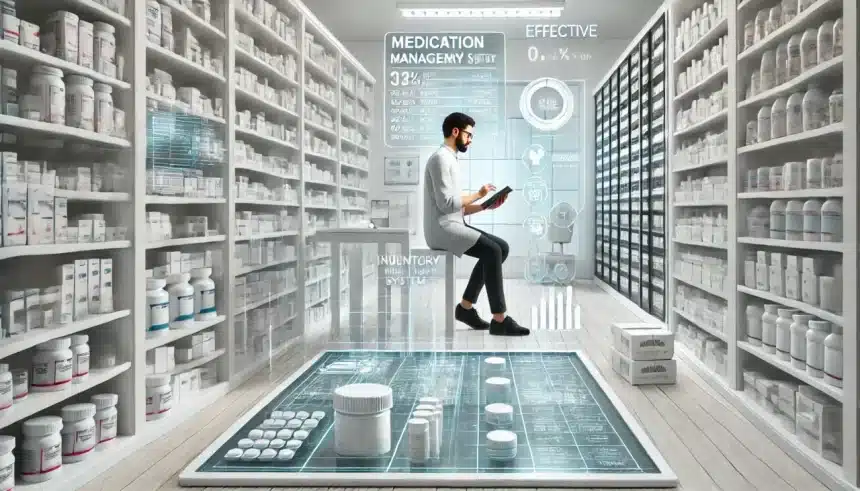
In the pharmaceutical and medical device businesses, stock is more than just inventory. It’s a valuable asset that determines the continuity of operations, client trust, and cash flow. Ironically, however, this is precisely where many business owners become complacent.
In over 20 years of managing business risks, one recurring pattern is that business owners focus too much on sales and distribution, while neglecting the risks of drug and medical equipment inventory. Yet, even a minor incident, such as a power outage for several hours, a warehouse air conditioning problem, or a minor flood, can result in losses ranging from hundreds of millions to billions of rupiah.
This article discusses the most overlooked risks of drug and medical equipment inventory, their financial impact, and how properly structured drug and medical equipment inventory insurance can be a business lifesaver.
For FREE consultation contactL&G Insurance Brokertoday!
Whatsapp: 08118507773 | Email: halo@lngrisk.co.id
Why Are Drug and Medical Device Stocks So Vulnerable to Risk?
1. High Stock Value, Margins Are Not Always Safe
Unlike traditional retail businesses, pharmaceuticals and medical devices have a high per-unit value and are often purchased in bulk. However, profit margins in this sector are not always wide. When a batch is damaged or unsold, losses are immediately felt in the financial statements.
Even more dangerous, many business owners only realize the extent of the loss after the fact, when the stock can no longer be used or claimed.
2. High Dependence on Storage Systems
Most drugs and medical devices are very sensitive to:
- Temperature
- Humidity
- Electrical stability
- Handling procedures
A small disruption in the cooling system or human error in storage can make the product no longer of good quality, even though it physically looks intact.
The Most Often Ignored Risks of Drug and Medical Device Stock
1. Damage Due to Temperature and Electrical Disturbances
This is the most common risk, and yet the most underestimated. A power outage, a generator failure, or a cold storage AC problem can ruin stock in a matter of hours.
The problem is, temperature damage isn’t always immediately apparent. By the time the damage is discovered, the stock is already unusable, and claims are often denied because the policy doesn’t clearly address this risk.
2. Risk of Expiration and Slow Moving Stock
Forecasting errors, overstocking, or regulatory changes can cause inventory to pile up and eventually expire. Many businesses consider these “normal business risks,” but the risks can be significant.
Without proper risk management and protection, losses due to expired stock are entirely borne by the company.
3. Risk of Floods, Fires, and Natural Disasters
Pharmaceutical warehouses are often located in industrial or logistics areas that are not always flood-free. Fires, whether caused by electrical short circuits or external factors, can destroy entire stocks in a short time.
Unfortunately, many business owners think standard property insurance is sufficient, when in fact, protecting sensitive stock requires special arrangements.
4. Risk of Theft and Human Error
Internal theft, record-keeping errors, mishandling during loading and unloading, and even failure to adhere to standard operating procedures (SOPs) are real risks. In many claims, losses go unpaid not because they were uninsured, but because the policy wording was not adjusted to reflect the actual operational risks.
Financial Impact If Stock Risk Is Not Managed
Losses due to drug and medical device stockouts don’t stop at the value of damaged or lost items. Frequent side effects include:
- Failure to fulfill contracts with hospitals or distributors
- Late delivery penalty
- Loss of trust of business partners
- Cash flow disruption
- Sudden re-procurement costs
In many cases, the indirect losses are greater than the value of the stock itself.
Common Mistakes Business Owners Make in Protecting Drug and Medical Device Stock
1. Relying Only on Standard Property Insurance
Property insurance is important, but it doesn’t automatically provide adequate protection for your stock of medicines and medical devices. Many specific risks, such as temperature fluctuations, are not covered unless explicitly requested.
2. Not Understanding the Storage Clause
Many claims are rejected because:
- Does not meet temperature requirements
- No monitoring records
- SOP is not documented
Business owners often only read the policy after a claim has already occurred.
3. Not Using an Experienced Insurance Broker
The main difference between a policy sales agent and an insurance broker is their approach to risk management. Brokers don’t just sell policies, but structure coverage based on real-world risks.
Types of Insurance Needed to Protect Drug and Medical Device Stock
1. Property Insurance (Property All Risks / PAR)
Property insurance is the primary foundation for protecting warehouse buildings, storage facilities, and inventory from fire, flood, earthquake, and other physical risks. However, it’s important to understand that standard PAR does not automatically guarantee optimal drug and medical equipment inventory, especially if the inventory is substantial and sensitive.
This is where the role of a broker is needed to ensure:
- Stock value is properly insured
- Location risks are taken into account
- There are no clauses that weaken the claim
2. Drug and Medical Device Stock Insurance (Stock Insurance / Goods in Storage)
This type of insurance is specifically designed to protect the value of drug and medical equipment supplies. Policies can be customized to cover:
- Physical damage
- Risk of theft
- Certain risks due to operational disruptions
Without specific regulations, many high-value stocks fall into a gray area of protection.
3. Temperature Risk and Power Outage Insurance (Temperature Deviation / Machinery Breakdown Extension)
For drugs and medical devices that rely on cold storage, the risk of temperature fluctuations is critical. This protection is typically associated with:
- Cooling system failure
- Electrical system failure
- Operational disruptions that have a direct impact on stock quality
This type of protection is not automatic and must be specifically requested and arranged.
4. Marine Cargo Insurance
If stock of medicines and medical devices is distributed to various locations, the risk doesn’t stop at the warehouse. Transportation insurance protects goods from the time they leave the warehouse until they arrive at their destination, against the risk of damage, loss, or accidents during shipping.
Case Study: Avoidable Losses
A medical equipment distributor experienced stock damage due to a power outage overnight. Cold storage ceased operations, and most products no longer met quality standards.
Insurance policies exist, but they don’t cover the risk of temperature fluctuations. Consequently, all losses must be covered out-of-pocket. If the policy had been drafted with a proper risk analysis from the outset, these losses could have been minimized or even claimed.
How Can Insurance Brokers Help Secure Drug and Medical Device Stock?
Insurance brokers are not only present when the policy is issued, but from the very beginning of the risk management process:
- Identifying real business risks
- Arranging relevant protection
- Adjusting clauses and expanding guarantees
- Accompany the claim process until completion
This approach makes protection work when needed, not just documents.
Don’t Wait for a Loss to Act!
Drug and medical device inventory risks cannot be completely eliminated, but they can be managed with the right strategies. Delaying protection only increases the potential for future losses.
If your business stocks high-value medications and medical devices, ensure coverage is provided by a party who thoroughly understands the risks. Properly designed medication and medical device insurance is not an expense, but an investment in business continuity.
For FREE consultation contactL&G Insurance Brokertoday!
Whatsapp: 08118507773 | Email: halo@lngrisk.co.id