



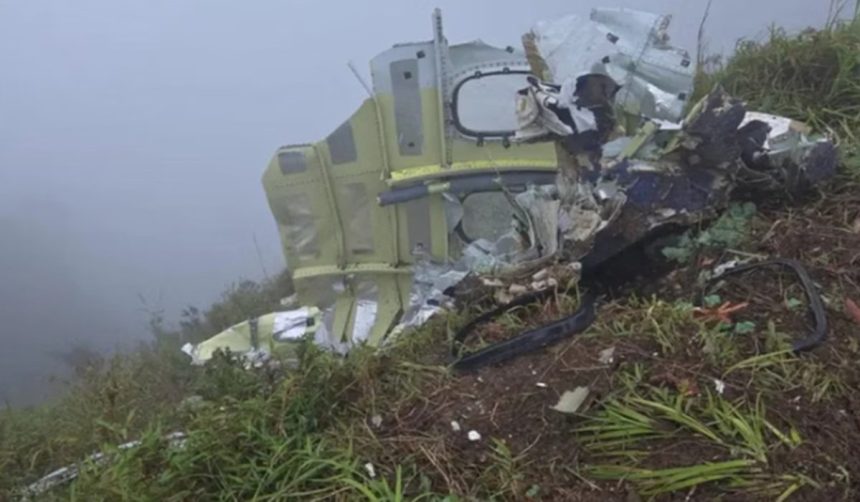
On January 17, 2026, the Indonesian aviation world was again in mourning. A plane…Indonesia Air Transport type ATR 42-500 The plane reportedly crashed in the mountainous region of South Sulawesi. All 10 crew and passengers were declared dead.
This incident is not only a human tragedy. It is also an important reminder about aviation risk management, sufficiency insurance guarantee, as well as high-insurance claim processwalking in a major event with international exposure.
In the aviation industry, a single accident can result in:
- Physical loss of the aircraft (hull loss)
- The victim’s family’s lawsuit
- Third party claims
- Reputational risk
- Operational disruption
- Regulatory investigation
This article examines the incident from a political perspective.risk management, insurance protection structure, claims process, and the strategic role of insurance brokers in crisis conditions.
Brief Chronology of the Incident
The ATR 42-500 aircraft reportedly lost contact during a domestic flight. Several hours later, search and rescue teams found the wreckage in a mountainous area. Difficult geographical conditions slowed the evacuation process.
The investigation was conducted by aviation authorities and an independent investigative team to determine:
- Weather factors
- Possibility of human error
- Technical condition of the aircraft
- Navigation system
- Compliance with operational SOPs
In the aviation industry, the results of investigations are critical as they will determine the direction of insurance claims and potential legal liability.
Aviation Risk Management Analysis
This accident can be analyzed through several layers of risk:
- Operational Risk
- Procedural error
- Decision-making in the cockpit
- Flight planning
- Human Factor Risk
- Fatigue management
- Crew resource management
- Emergency training
- Technical & Maintenance Risk
- Airworthiness
- Treatment history
- Component quality
- Weather & Terrain Risk
- Extreme weather conditions
- Navigation in mountainous areas
- Instrument landing system limitations
- Regulatory & Compliance Risk
- Security audits
- Flight documentation
- Pilot certification
In the perspective of modern risk management, airlines must have:
- Safety Management System (SMS)
- Data-based risk mapping
- Predictive maintenance
- Periodic internal audits
- Accident scenario stress test
However, even after a system has been built, residual risk remains. This is where insurance plays a crucial role.
Insurance Coverage Related to Aircraft Accidents
In aviation, insurance policies are complex and often involve international reinsurance. The following are the main relevant coverages:
- Aviation Hull Insurance
Covers damage or total loss of the aircraft.
If the aircraft is declared a total loss, the insurer will pay according to the insured value (agreed value).
- Passenger Legal Liability
Covering legal claims from the passenger’s family due to death or injury.
- Third Party Legal Liability
Covers third party losses on the ground (e.g. property damage or casualties outside the aircraft).
- Crew Personal Accident
Compensation for flight crew.
- Airport & Ground Handling Liability
If there is an element of negligence from ground service.
- War & Allied Perils (if relevant)
Additional coverage for certain risks.
In the aviation industry, liability limits can reach hundreds of millions of dollars, so the policy structure typically consists of:
- Primary insurer
- Co-insurance
- Reinsurance international
Adequate limits and policy wording are crucial for the smooth processing of claims.
Aircraft Accident Insurance Claim Process
Unlike regular vehicle claims, aviation claims involve complex steps:
Stage 1: Notice of Loss
Airlines are required to immediately report incidents to the insurer within a short time (usually 24 hours).
Stage 2: Appointment of Loss Adjuster
Insurance companies appoint independent loss adjusters, often from international firms.
Stage 3: Investigation & Technical Assessment
- Regulatory investigation
- Technical analysis of the aircraft
- Responsibility evaluation
Stage 4: Loss Estimation
- Aircraft value (hull value)
- Value of legal claim
- Potential litigation
Stage 5: Settlement
- Family benefit payments
- Total loss payment
- Legal settlement
Stage 6: Subrogation
If another party is found to be responsible, the insurer can demand compensation.
In major accidents, the claims process can take months to years.
Storytelling: The Role of Insurance Brokers in a Crisis
Imagine this situation.
In the hours following the crash, airline management faced not only public and media pressure, but also:
- Coordination with regulators
- Communication with the victim’s family
- Legal obligations
- Financial evaluation
It is at this point that insurance brokers play a role.strategic risk advisor, not just a police intermediary.
Brokers will:
- Ensure the policy is active and the wording covers the incident.
- Enabling communication with insurers and reinsurers
- Coordinate the appointment of loss adjusters
- Assist in preparing claim documents
- Negotiating a fair settlement
- Controlling the interim payment process
- Providing reputational risk advice
Brokers also help companies:
- Calculating the adequacy limit
- Evaluating deductibles
- Assess potential additional exposure
In an industry with global risks such as aviation, a broker with international market access is a strategic asset.
Risk Management Lessons for Industry
From this incident, there are several important lessons:
- Risk is never zero
Modern technology does not eliminate risk.
- Safety Audits Must Be Proactive
Not just reactive after an incident.
- Insurance Limits Must Be Adequate
Underinsurance can destroy a company’s finances.
- Review Policy Wording Periodically
Changes in regulations and exposures must be followed by policy updates.
- Integration of Risk Engineering & Insurance
Insurance is not a single solution, but part of a comprehensive risk management strategy.
Aviation Risk Management and Insurance
- Are all plane accidents automatically covered by insurance?
No. The policy must be active and there must be no warranty breaches or exclusions. - How long does it usually take for an aviation claim to be completed?
It can take 6 months to several years depending on the complexity of the investigation. - Did the victim’s family receive direct compensation?
There is usually an interim payment while waiting for final settlement. - Can a company go bankrupt because of one accident?
Yes, if the insurance limit is inadequate. - Why are brokers important in aviation insurance?
Because the policy structure is complex and involves the global reinsurance market.
Conclusion
The 2026 Sulawesi ATR 42 accident is a reminder that risks in the aviation industry are multidimensional: technical, human, legal, and financial.
Risk management must go hand in hand with appropriate insurance coverage. A policy is not simply an administrative document, but rather a business continuity protection instrument.
In a crisis, an insurance broker is more than just a liaison between the insured and the insurer. They are also strategic advisors, negotiators, and guardians of the client’s interests.
Because in the end:
Accidents are events. Risk is a system. And insurance is a business continuity strategy.
—
DON’T WASTE YOUR TIME AND SECURE YOUR FINANCES AND BUSINESS WITH THE RIGHT INSURANCE.
HOTLINE L&G 24 JAM: 0811-8507-773 (PHONE – WHATSAPP – SMS)
Website: lngrisk.co.id
Email: halo@lngrisk.co.id
—