



Series of Rig Incidents in Riau – End of 2025
The end of 2025 was a period that rocked the drilling industry in Riau. Within a short time, a fatal accident occurred in the working area of PT Pertamina Hulu Rokan (PHR), the operator of the Rokan Block.
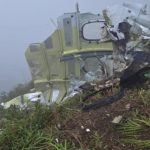
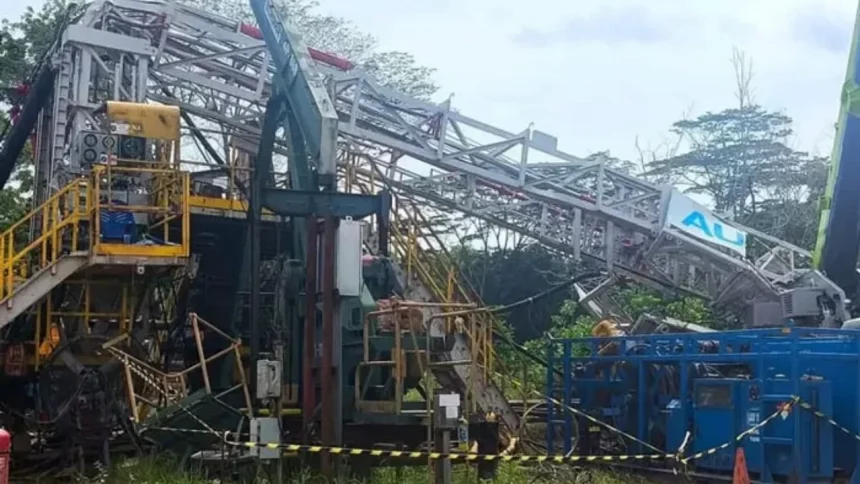
On November 24, 2025, the rig’s mast structure reportedly failed during operations at Rig AU-17 in the Duri area of Bengkalis Regency. One worker died and two others were seriously injured.
Shortly afterward, another fatal incident occurred at the Seruni-22 well in Bangko Pusako, Rokan Hilir. A floorman died after being crushed by heavy equipment during drilling operations.
Two incidents in a short period of time. Two lives lost. For some, this is news. For the drilling industry, it’s a wake-up call.
When the Rig Collapses: Risk Never Sleeps
The drilling industry is one with extreme risks. High pressures, heavy equipment, complex mechanical systems, and aggressive production targets make every rig operation a combination of precision and danger.
The main risks in drilling operations include:
- Structural Failure
Masts, crown blocks, derricks, and support systems operate under high dynamic loads. Material fatigue and connection failure can lead to collapse.
- Mechanical Breakdown
The top drive, drawworks, mud pump, and rotary system are vital components. A sudden failure could completely halt operations.
- Dropped Object & Equipment Handling
Global statistics show that dropped objects are one of the leading causes of fatalities in drilling operations.
- Human Factor Risk
Fatigue, production pressure, contractor coordination, and communication in the field are often factors that trigger accidents.
- Contractor and Subcontractor Risks
Many rigs are operated by contractors. Are their maintenance standards and insurance programs commensurate with the actual risks?
The tragedy in Riau shows that a single weak point can have systemic impacts.
Financial Impact: Bigger Than It Seems
Drilling accidents don’t stop at on-site incidents.
The impact is widespread:
- Loss of Life & Legal Liability
Employer’s liability, demands from the victim’s family, and potential regulatory sanctions. - Rig & Equipment Damage
The value of one onshore rig unit can reach tens to hundreds of billions of rupiah. - Business Interruption
Every day the rig is down means lost production and revenue. - Loss of Production Income
Well shutdowns have a direct impact on operator cash flow. - Reputational Damage
Global investors, regulators, and partners are increasingly assessing ESG and HSE aspects.
In many cases, the biggest financial impact occurs after the accident has been reported.
Is Insurance Designed for the Worst Case?
Many companies feel safe because they “already have a policy.”
But the question is:
- Does the limit reflect actual replacement cost?
- Is the deductible too large to make the claim ineffective?
- Does the policy wording match the drilling exposure?
- Is there a gap between operators and contractors?
Ideal protection for the drilling industry includes:
- Drilling & Well Control Insurance
- Machinery Breakdown Insurance
- Third Party Liability
- Employer’s Liability
- Loss of Production Income / Business Interruption
- Comprehensive General Liability
Unfortunately, many insurance programs are structured simply to meet contractual requirements, not as a risk mitigation strategy.
Insurance eventually becomes an administrative formality.
Yet in the oil and gas industry, a single mistake in insurance program design can shake a company’s balance sheet.
This is where the role of an insurance broker becomes crucial.
The oil and gas industry is not a public sector.
Drilling risk cannot be equated with ordinary construction risk.
The role of a competent insurance broker is crucial because:
- Brokers Conduct In-Depth Risk Mapping
Energy specialist brokers understand:
- Drilling contract structure
- Division of operator & contractor responsibilities
- Blowout risk and well control
- Potensi accumulation risk
- Brokers Design the Right Insurance Program
Not just buying a police, but:
- Determine realistic limits
- Negotiate a proportional deductible
- Compose wording that does not harm the insured
- Eliminating the coverage gap
- Brokers Become Advocates During Claims
When an incident occurs:
- Broker controls loss adjustment
- Protecting client interests
- Ensure claims are not rejected due to ambiguous wording
Without an independent broker, companies often find themselves facing insurance companies alone in crisis situations.
L&G Insurance Broker: Oil, Gas, and Energy Insurance Specialist
It is in this context that the role of L&G Insurance Broker becomes relevant.
As a risk broker and consultant with extensive experience in the energy sector and EPC projects, L&G understands that drilling risks are not just property risks, but multi-layered operational risks.
L&G has experience handling:
- Hundreds of millions of dollars in power generation projects
- EPC energy and gas projects
- Heavy equipment insurance for hundreds of units of heavy equipment
- Marine cargo and industrial equipment shipments
- Negotiation of co-insurance programs for major risks
L&G’s approach to oil and gas insurance does not stop at policy placement, but includes:
- Integrated Risk Assessment
Technical and financial evaluation of drilling exposures.
- Strategic Insurance Program Design
Adjust limits, wording, and policy structure to actual risk profile.
- Negotiating with a Financially Strong Insurance Company
Ensuring adequate capacity and a good claims track record.
- Professional Claim Handling
Assistance from start to settlement.
In a high-risk industry like drilling, brokers are more than just middlemen.
Brokers are strategic partners in maintaining business sustainability.
Strategic Lessons from Riau 2025
This tragedy should be a momentum to:
- Re-Audit of the Entire Rig Insurance Program
Does it cover the worst-case scenario?
- Deductible & Limit Evaluation
Is it realistic about the potential for total loss?
- Contract and Policy Synchronization
Do contractors and operators have complementary coverage?
- HSE and Insurance Strategy Integration
Risk engineering must go hand in hand with underwriting strategy.
- Use a Specialist Oil and Gas Broker
Not all brokers understand the complexities of drilling risk.
Risk is not a possibility. Risk is a certainty.
The drilling industry knows no comfort zones.
Production targets increased.
High cost pressure.
Well complexity increases.
But one incident can stop everything.
Riau end of 2025 is proof that:
- Accidents can happen in seemingly normal operations.
- Shutdowns can have systemic impacts.
- Financial unpreparedness can exacerbate the crisis.
Insurance is not a cost.
Insurance is an instrument of stability.
And specialist brokers are the architects of that stability.
It’s Time for Industry to Act
If the Indonesian drilling industry is to grow sustainably, risk management must be placed on par with production targets.
Safety isn’t a slogan. Insurance isn’t a formality. Brokers aren’t mere intermediaries. The Riau tragedy of 2025 must be a turning point. Because in the oil and gas industry, we’re not just drilling the earth. We’re risking assets, reputations, and the future of our companies. And the question now is simple: Are your risk management and insurance programs ready for the next incident? Or are you still hoping it won’t happen?
—
DON’T WASTE YOUR TIME AND SECURE YOUR FINANCES AND BUSINESS WITH THE RIGHT INSURANCE.
HOTLINE L&G 24 JAM: 0811-8507-773 (PHONE – WHATSAPP – SMS)
Website: lngrisk.co.id
Email: halo@lngrisk.co.id
—