



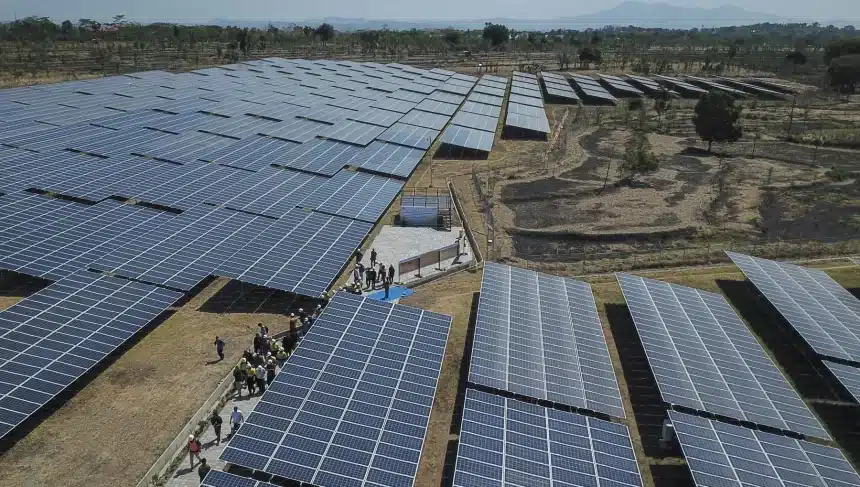
Clean Energy as a National Commitment
The Indonesian government is taking firm steps towards a clean energy transition.
One of the main pillars is Solar Power Plants (PLTS), especially the rooftop PLTS type which is now growing rapidly in the residential, commercial and industrial sectors.
Through the National One Million Solar Rooftops Movement policy, the Ministry of Energy and Mineral Resources is targeting a significant increase in solar energy capacity to support Net Zero Emissions (NZE) 2060.
This program is in line with the world’s commitment to reducing carbon emissions and sustainable development.
But behind this enthusiasm lies a major challenge: how to ensure that solar power plants continue to operate stably and efficiently throughout the project’s lifespan?
One answer is with proper and planned insurance protection.
In this context, PT Liberty and General Insurance Broker (L&G) plays a vital role as a strategic partner in maintaining the operational sustainability of solar power plants through comprehensive risk management and insurance solutions.
Why Solar Power Plant Operational Sustainability is So Important
Solar power plants are energy systems that require large initial investments and have an economic lifespan of between 20 and 25 years.
Optimal system performance depends heavily on continuous operation — even minor disruptions can reduce efficiency and extend the payback period.
Here are the main reasons why operational sustainability is key:
- Ensuring Consistent Energy Production
Every hour of downtime means lost potential electricity production and financial gain.
- Maintaining Cash Flow and Investment ROI
Operational disruptions have a direct impact on return on investment (ROI).
- Supporting Trust in Renewable Energy
If many solar power projects fail to operate stably, investor and user confidence will decline.
- Supporting ESG (Environmental, Social, Governance) Targets
Operational sustainability is a key part of ESG commitments that are now a global industry standard.
Therefore, insurance becomes an integral part of the PLTS sustainability system.
Risks that Threaten the Sustainability of Solar Power Plant Operations
Rooftop solar power plants face not only physical risks such as weather or equipment failure, but also financial and legal risks. The classifications are as follows:
- Physical Risks
- Storms, strong winds, heavy rain and flooding.
- Lightning strikes that damage the inverter and control system.
- Mechanical damage due to improper installation.
- Technical and Operational Risks
- Inverter overheating or panel degradation.
- Maintenance errors or irregular inspections.
- Digital monitoring system failure.
- External Risks
- Theft or vandalism, especially in industrial areas.
- PLN network disruptions that impact grid-connected solar power plants.
- The fire originated from the main building.
- Financial Risk
- Loss of revenue due to system downtime.
- The cost of replacing expensive components such as inverters.
- Legal Risks and Liability
Damage to third parties due to system errors (for example, a short circuit that causes a fire in a neighboring building).
How Insurance Ensures Operational Continuity
Insurance is not just about replacing losses, but is a strategic risk management tool that keeps businesses running even when disaster strikes.
Here is the mechanism by which insurance supports the sustainability of PLTS:
- Protect against Direct Financial Loss
If damage occurs to the panel or inverter, insurance will cover the costs of replacement and repair.
This ensures the system can be quickly operational again without burdening the owner’s finances.
- Covering Losses Due to Production Disruptions
With the addition of a Business Interruption (BI) policy, owners can claim for lost income due to the temporary shutdown of their solar power plant.
- Guaranteeing Liability to Third Parties
If the solar power plant causes damage to someone else’s property or causes injury, the Public Liability policy will cover the legal liability.
- Increase Project Credibility
Insured solar power plants demonstrate professionalism and readiness to face risks, thereby increasing the confidence of investors, banks, and stakeholders.
Recommended Policy Types for Solar Power Plant Operations
| Police Type | Function | Main Coverage |
| Property All Risks (PAR) | Physical protection of PLTS | Fire, lightning, flood, wind, explosion, theft |
| Machinery Breakdown (MB) | Technical damage to the inverter and system | Mechanical damage, short circuit, overheating |
| Business Interruption (BI) | Covering financial losses due to downtime | Loss of revenue, fixed operating costs |
| Public Liability | Legal responsibility | Third party losses due to the solar power system |
| Cyber Liability (optional) | Digital risk (PLTS monitoring system) | Data disruption, hacking, or sabotage of digital systems |
The Strategic Role of Insurance Brokers in Ensuring Sustainability
Insurance brokers are not just a liaison between clients and insurance companies, but independent risk advisors who work entirely in the interests of clients.
For example, PT Liberty and General Insurance Broker (L&G) plays an active role in:
- Operational Risk Analysis of Solar Power Plants
- Assess potential losses and determine mitigation strategies.
- Prepare a risk report (risk survey report) as a basis for calculating premiums.
- Comprehensive Insurance Program Design
- Combine PAR, MB, BI, and Liability policies for comprehensive protection.
- Premium Negotiation and Special Clauses
- Develop insurance wording that covers solar power plant-specific risks (such as inverter short circuits or lightning strikes).
- Claims Assistance
- Assisting with administrative processes, coordinating with loss adjusters, and expediting claim payments.
- Annual Monitoring
- Review the insurance value according to project developments or additional solar power plant capacity.
Case Study: An Insurance Claim That Saved a Solar Power Plant’s Operation
An electronic components factory in Cikarang installed a rooftop solar power plant with a capacity of 800 kWp with an investment of IDR 9 billion.
After nine months of operation, a lightning strike damaged the inverter and 30 solar panels. Total losses were estimated at Rp 750 million.
Because the factory had previously appointed PT Liberty and General Insurance Broker (L&G) to prepare an integrated solar power plant insurance program, the claims handling process was fast.
Handling Steps:
- Claim reports are submitted to L&G within 24 hours.
- L&G directly coordinated the survey with the insurance company.
- Loss adjuster conducts technical inspection on site.
- Within 25 business days, the claim was approved and paid in full.
As a result, the solar power plant returned to normal operation without any additional costs — ensuring the continuity of factory production and the stability of energy costs.
The Ideal Combination: Insurance + Preventive Maintenance
The sustainability of a solar power plant is not only determined by the insurance policy, but also by discipline in maintaining the system.
The combination of the two creates comprehensive protection.
Recommended preventive measures:
- Visual inspection of panels and cables every 3 months.
- Testing of grounding systems and surge protectors annually.
- Regular panel cleaning according to weather conditions.
- Documentation of maintenance results as supporting evidence for claims.
Brokers like L&G also typically provide a solar power plant maintenance checklist to help clients maintain their insurance coverage eligibility.
Integration of Solar Power Plants into Existing Property Policies
For home, office, or factory owners who already have property insurance, solar power plants can be included as an extension of the guarantee (endorsement).
Example clause:
“This policy also covers physical damage to the PLTS system (solar panels, inverters, and supporting systems) permanently installed in the insured building due to fire, lightning, flood, explosion, or storm.”
This way, coverage is consolidated without the need to create a new policy, and premium costs become more efficient.
Benefits of Insurance in the National Solar Power Ecosystem
- Maintaining Investor and Financial Institution Trust
- Insured solar power projects are easier to obtain bank financing.
- Encouraging Compliance with Security Standards
- Insurance requires installation to international standards, improving the quality of the project.
- Ensuring Business and Production Continuity
- Damage is no longer a major obstacle because there is financial protection.
- Supporting the Achievement of Net Zero Emissions
- Sustainably operating solar power plants make a significant contribution to reducing national emissions.
The Role of PT Liberty and General Insurance Broker (L&G) in the Solar Power Plant Ecosystem
As an experienced national insurance broker in the energy and infrastructure sector, L&G has assisted various solar power plant projects, ranging from industrial to commercial scale.residential.
L&G Advantages:
- Extensive experience in EPC and renewable energy projects.
- Supported by LIGASYS digital system for fast policy and claims administration.
- Independent, fully committed to the client’s interests.
- Extensive network with local and international insurance companies.
L&G doesn’t just sell policies, but helps clients manage risk holistically, from design to project operation.
Conclusion: Insurance is a Pillar of Solar Power Plant Sustainability
Solar power plants are a symbol of change towards a clean energy future.
But without financial protection, even a small disruption can threaten operational continuity and the large investments that have been made.
With the support of PT Liberty and General Insurance Broker (L&G), industry players, business owners, and individuals can:
- Manage PLTS risks professionally,
- Ensure the operational continuity of the system, and
- Be part of Indonesia’s sustainable energy transition solution.
Solar energy provides light for the future — insurance ensures its light never goes out.
—
DON’T WASTE YOUR TIME AND SECURE YOUR FINANCES AND BUSINESS WITH THE RIGHT INSURANCE.
HOTLINE L&G 24 JAM: 0811-8507-773 (PHONE – WHATSAPP – SMS)
Website: lngrisk.co.id
Email: halo@lngrisk.co.id
—